
All posts by Richard Ha

The Mystery of the Banana Poachers

I got this email today, which was forwarded to me by Diane Ley, interim director of the Department of Research and Development for the County of Hawai‘i.

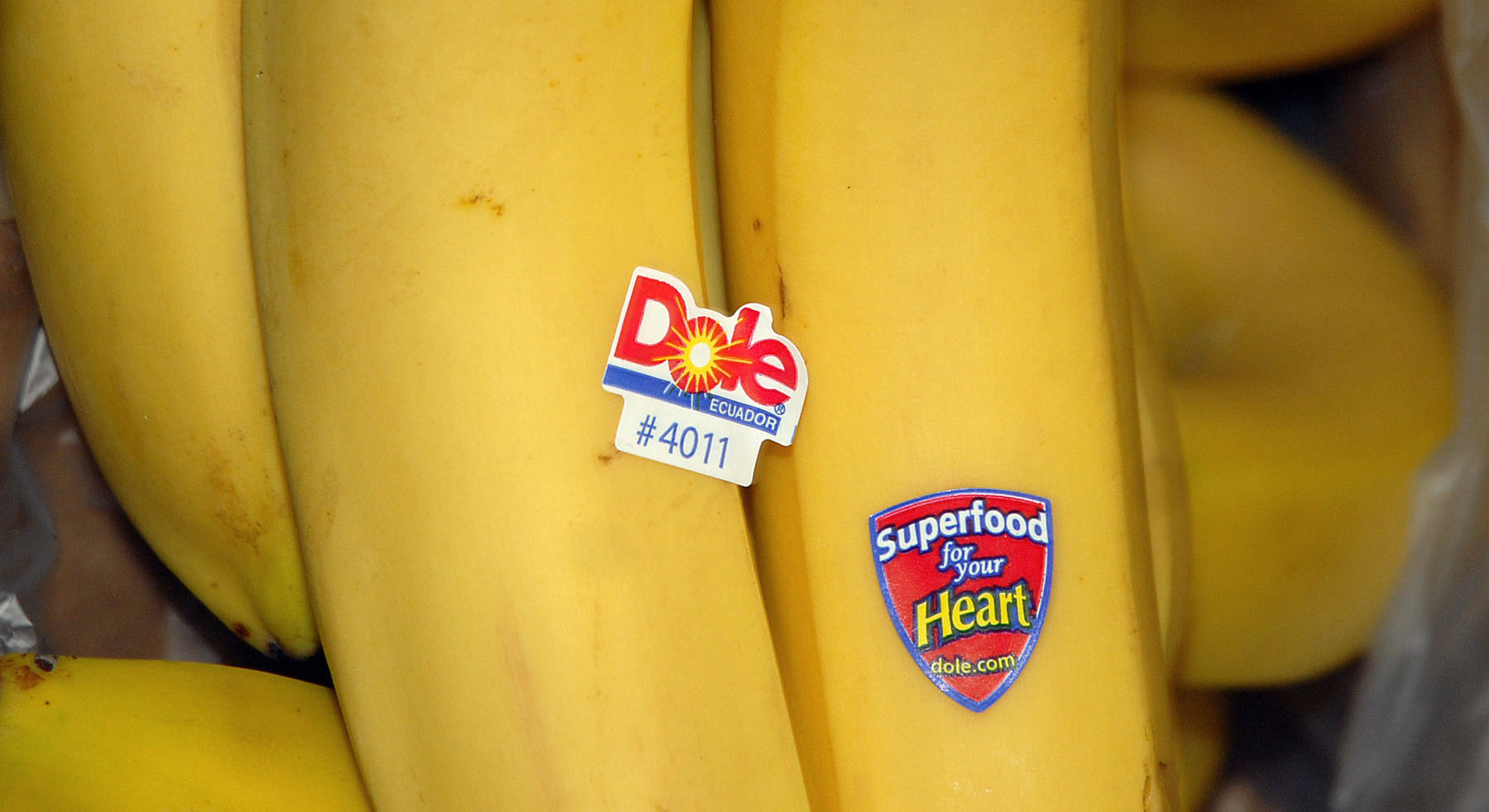
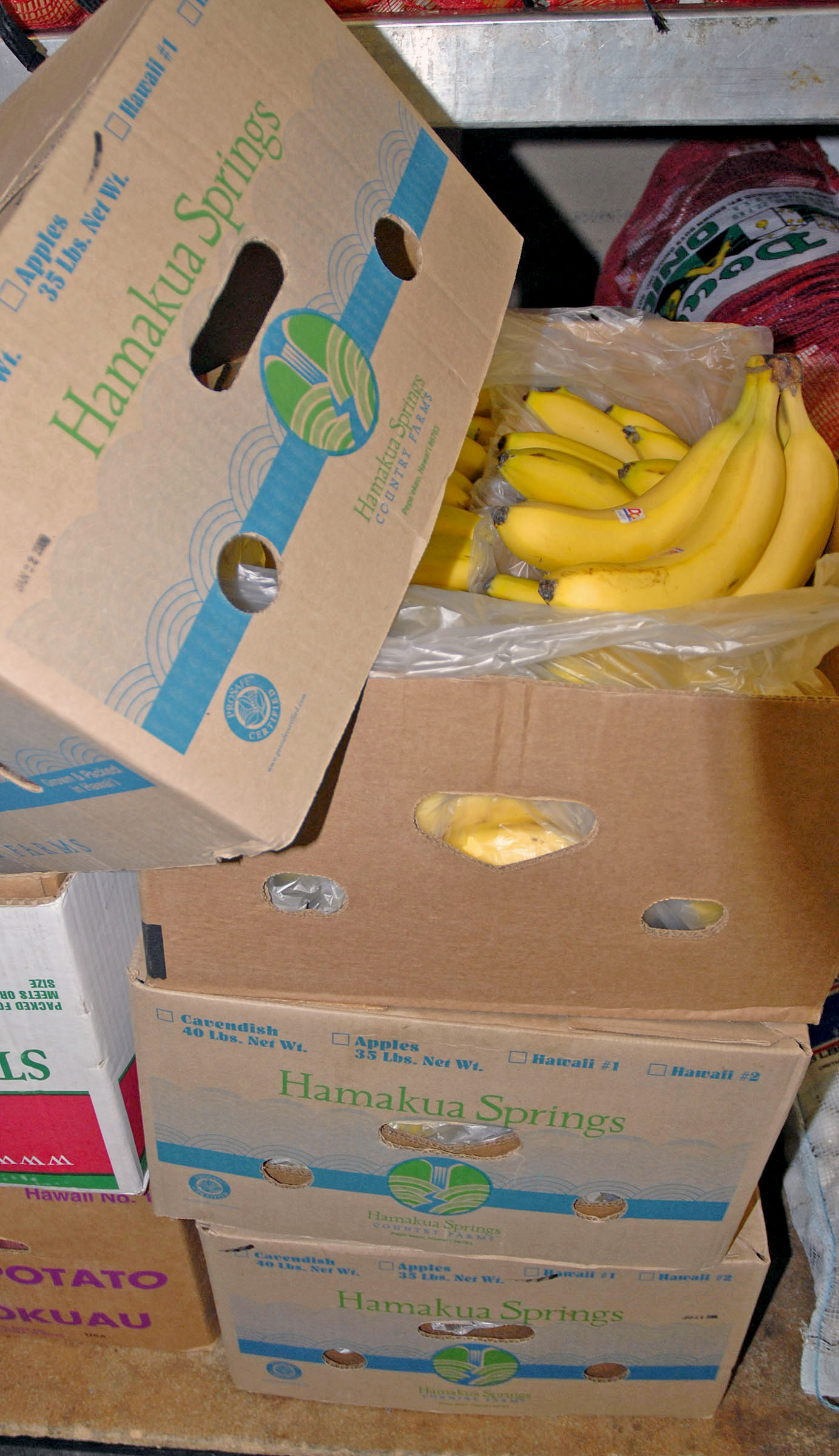
The email said that for the second time in three weeks, a grocery store in Captain Cook, which ordered locally grown bananas from a distributor, received imported Dole bananas (sticker side down) that were packed in Hamakua Springs boxes.
Ecuasticker

From: ken love
Sent: Tuesday, February 17, 2009 3:06 PM
To: Andrew G. HASHIMOTO; Alice Sherer; Betsy
Cole; Bev White; Dayday; Dean Okimoto; Jonathan Deenik; Bonnie; Elizabeth Haws Connally; Ellen Mehos; Johnsons; Eric Weinert; Follett, Peter; Joan Namkoong; Janelle Saneishi; Tane; Karin Stanton; Joan
Lamont; Brian Lievens; Matt Loke; Diane Ley; Diana Duff; Dick Bowen; Kent; Nancy Pisicchio; Nancy Miller; Nancy Redfeather; Una Greenaway; Doug Vincent; Virginia Smith; Zee, Francis; Nishijima, Wayne; miles hakoda
Subject: Imported bananas in Hamakua Springs boxes

Choice Mart & Imported Bananas

For the second time in three weeks, Choice Mart, the grocery store in Captain Cook ordered locally grown bananas from the wholesaler Cal-Kona. They received boxes marked Hamakua Springs, Cavendish & Hawaii #1 but what they received were Dole bananas from Ecuador. Photos are attached.

Choice Mart has repeatedly ordered only locally grown bananas. They buy a significant amount direct from growers but at times have to supplement that by ordering locally grown from wholesalers.

It is unknown how or where the imported bananas were packed into Hamakua Springs boxes ( With the Dole Ecuador stickers face down) but the issue of legality must be raised. This obviously deceptive practice must stop. It reflects poorly on Hamakua Springs as well as Cal-Kona. The store is working on the side of growers to support local agriculture to the best of their ability and asked me to relay this information to those who may be in a position to make sure this practice stops.

The store would like inspectors from some agency to look into this and I concur.

Ken

***

Wow, Hamakua Springs’ bananas must be popular! Why would anyone go to the trouble of disguising Dole bananas so they look like Hamakua Springs ones?
Bboxes

Of course, it wasn’t us. We don’t sell to Cal-Kona, and we don’t repack other people’s bananas into our boxes. Why would we do that? Waste time, lose money, and besides, it’s bad, bad business. It’s not our style.

We are going to be out of bananas altogether soon, but just for a couple of months while we reconfigure our banana farm. We are forced to take drastic action because the wholesaler Hilo Product started competing with us, using lower priced bananas from the Big Island as well as from O‘ahu.

We are planting our banana fields closer to the packing house and will be out of production for a couple months. We’ll crank back up when our hydroelectric plant is finished.

In the meantime, while we wait for our new fields to produce, we will ripen and sell Dole bananas. They won’t, of course, go into Hamakua Springs boxes.

I am just amazed by this. Imagine – someone is disguising Dole bananas to look like Hamakua Springs’ bananas. You know what they say: imitation is the sincerest form of flattery. Ha Ha Ha!

I am very impressed that Choice Mart and its customers are so loyal to locally grown products. They are right that someone should look into exactly what took place. This is very serious business.

Out In The Open: About the Mauna Kea Comprehensive Management Plan

On Friday, the Board of the Department of Land and Natural Resources in Honolulu met for an informational briefing on the Mauna Kea Comprehensive Management Plan (CMP).

It was an overflow crowd. People were standing in the hallway.

Because there were people from the outer islands that came to testify, the agenda was changed to move the CMP hearing up front. Five people from the Kanaka Council flew in from the Big Island.

The Kanaka Council testified against the CMP, and then also spoke about larger issues. I was very impressed with its presentation, which was clear, respectful and thoughtful.  The Council was represented by Kale Gumapac (Alaka‘i), Palikapu Dedman, Jimmy Medeiros, Rocky Jensen and Lenwood Vaspra.

It is very significant that they were able to state their position on the big picture. People hearing them for the first time might write them off as another group of “anti-everything” people. But I have worked with the Kanaka Council on various projects and I think I heard a different message than most. I heard that they are willing to discuss things because they can see the larger picture — and this is very hopeful.

From here, if there is honest give and take, there can be progress. I believe that we can find some workable middle ground.

KAHEA also gave testimony. That is a slick, media-savvy organization that has done some admirable work over the years. KAHEA has people on its staff who had prepared supporting documents, which they handed to the board as their testimony was presented.

My kuleana is sustainability, and I testified in favor of the CMP. I talked about how I volunteered for the Thirty-Meter Telescope (TMT) committee of the Hawai‘i Island Economic Development Board back when it was formed. If there was going to be a new large telescope on the mountain, I wanted to help make sure that it was done right. I talked about astronomy on Mauna Kea and our Adopt-a-Class project.

I also mentioned that I was there to represent my workers, who work hard trying to make a better future for their children. I mentioned that the astronomy industry could provide good jobs for Hawai‘i’s people. Hardly anyone wants their children to be tomato or banana farm workers.

I said that as a farmer, I worry about our ability to feed Hawai‘i’s people when fertilizer prices again soar out of sight. I said that educating our keiki will help us solve this problem. And the astronomy industry is willing to give us money to help us do this. But at the same time, that we need to make sure that we malama Mauna Kea.

The world has changed. The oil supply will, again, be unable able to keep up with demand, and we will have trouble feeding ourselves. I told the DLNR board that we are vulnerable out here in the middle of the ocean, and that we cannot give up any advantage we may have. Future generations will judge us on how wise we are today.

Chairwoman Thielen asked Dawn Chang of Ku‘iwalu, the consultant who created the CMP for the University of Hawai‘i, if the issues raised by the Kanaka Council are addressed in the CMP, and Dawn replied that some are and others are not. Dawn added that she will follow up on their concerns.

Kale told me that they are going to form an ad hoc committee, as this is going to take up a lot of their time. As long as there is dialog, we will be making progress.

Today, Kale told me they are very upset about the “power grab” bills that are going through the legislature. These were the bills that allow for enforcing the rules in the CMP. He said they have some hard questions for Dawn Chang when they speak again this week.

Hanalei Fergerstrom told me that someone’s lele (altar) on Mauna Kea was just destroyed. I called Stephanie Nagata, interim director of the Office of Mauna Kea Management, who told me that they had noticed the lele and were discussing how to protect it.

I had thought that the bill Kale told me about would enable the Rangers to protect the public safety, as well as such things as this lele. I have to admit that I have not read all the bills. Maybe they can be tweaked so this can work for all concerned.

I told Kale that I am concerned about the timeline for the Thirty-Meter Telescope.

The TMT was the 800-pound gorilla in the room. That project is on a strict timeline, because time is money. They need to make a decision by June 2009. This means that the CMP would have to be completed by April, so that the information can be incorporated into the TMT’s Environmental Impact statement.

The Comprehensive Management Plan can proceed on schedule as long as there isn’t anything in it that would trigger an Environmental Impact Statement (EIS). So the CMP cannot be a “building” or “take down” plan, because both of those things trigger an EIS. If an EIS is triggered, the TMT will go away because of time constraints.

So there it is. All out in the open.  Let’s see if we can work together on this. The world has changed and we do not have time to fool around.

Will Man Bite Dog?

I have been observing the Kanaka Council slowly evolving over the last several months. Increasingly, they are trying to affect change early in the process.

Tomorrow on O‘ahu there is an informational briefing by the Board of the Department of Land and Natural Resources. I’ll be there and so will the Kanaka Council. We are both going to comment on the Comprehensive Management Plan that’s been developed for Mauna Kea.

Most people know that I will testify in favor of the plan. Most who are familiar with the Kanaka Council would probably assume they will automatically testify against the plan.

Although we do not know what the Kanaka Council will say, I suspect we should be possibly be prepared for a man bites dog story.

Using More Energy To Produce Energy = A Poorer Society

The more energy it takes to produce energy, the poorer our society becomes.

The concept of “Net Energy Return on Energy Invested” is one of the most important concepts that will lead us to a safe future.

One of its precepts is that: “Social complexity is based on surplus energy.” The amount of energy left over from what it takes to get that energy is surplus energy – and that surplus energy is what makes our society complex and interesting.

This is why I keep asking why we aren’t trying to force more geothermal energy use. It doesn’t take much energy to produce geothermal energy, and that relationship would be stable for a very long time.

It seems like we should be bringing geothermal online faster, rather than slower. The more we do, the more we learn how to use it.

Chris Martenson describes this whole concept in two short, easy-to-understand videos. Here’s his introduction to the videos:

In the next section, we will discuss the intersection between Energy and the Economy, and I will make the point that it was no accident that our exponential, debt-based money system grew up at precisely the same moment that a new source of high quality energy was discovered that proved capable of increasing exponentially right alongside it.

Now we embark on the precise line of thinking that completely dominates my investing and purchasing habits. I call it energy economics. With sufficient surplus energy, humans can construct remarkably complex creations in short order. Social complexity relies on surplus energy.

Societies that unwillingly lose complexity are notoriously unpleasant places to live. Given this, shouldn’t we pay close attention to how much surplus energy we’ve got and where it comes from?

Here are the two short videos. They are well worth watching.

Why Not Geothermal? What Am I Missing?

Why aren’t we looking to export geothermal from the Big Island? The considerable rents and royalties could be used to benefit the most defenseless in our society, while protecting the rest of us from the energy tax of fossil or green biofuels.

Why not geothermal? This question has been on my mind since I came back from the Peak Oil conference in Houston in 2007. Is there something I am missing?

We talk about getting 70 percent of our power from renewable sources by 2030. We talk about laying a cable to Lana‘i to bring wind energy to O‘ahu. We talk about biodiesel as a way to provide fuel for transportation.

But wind energy is unstable and we would need to balance it by using some sort of stable power, so we will still have to rely on diesel generators. Though we talk about no longer depending on fossil fuel generators, we would be relying on biofuels generators to make our electricity.

We even talk about generating our own biofuels. Well, maybe and maybe not. Farming palm nuts or jatropha on a large scale is not practical, and algae and cellulosic fuel generation is not proven. We hope that these technologies will eventually work, but hoping is not a energy policy.

We can import biofuels from Asia and call it renewable and green. But we will still be exporting part of our economy, no matter what color it is.

On the Big Island we have free geothermal energy. It would be a good way to stabilize wind energy.

Why not geothermal? What am I missing?

Mauna Kea Comprehensive Management Plan Now a Public Document

The Mauna Kea Comprehensive Management Plan (CMP) is now a public document.

In the Outrigger telescope case, Judge Glenn Hara ruled
that the management plan the University of Hawai‘i submitted in its Conservation District Use Permit application was too site-specific. He ruled that the plan needed to be comprehensive – hence, this new Comprehensive Management Plan, which was created by Kuiwalu, a consultant hired by the University of Hawai‘i at the system level.

This plan now needs to be scrutinized and accepted by the Board of the Department of Land and Natural Resources (DLNR), which will meet on February 13th.

I think that this plan does a very good job of balancing the different usage on the mountain. I like that it starts out by setting the cultural context and reverence that Hawaiian people hold for Mauna Kea.

In a couple days, an op-ed piece I wrote for the OHA newspaper Ka Wai Ola comes out in the February issue. My piece on this topic is a version of this post.

I feel very strongly that the Board of the DLNR should adopt this plan. If it doesn’t, there will be no management plan in place on Mauna Kea –  and that is completely unacceptable.

The New York Times on a Geothermal Future

I couldn’t agree more with this recent editorial from the New York Times about our new administration making the advancement of geothermal a priority.

Geothermal Future

To most people the word “geothermal” means hot springs and geysers — like parts of Iceland or Yellowstone National Park where water is heated by the presence of magma near the surface of the earth. But the earth’s heat lies below everywhere, and it offers a virtually untapped energy reserve of enormous potential with a very short list of drawbacks….

Read the full editorial here.

Rat Lungworm Disease in Puna

Yesterday’s Hawaii Tribune-Herald had a front-page article about people contracting a rare form of meningitis caused by ingesting uncooked snails and slugs that carry a microscopic worm called the rat lungworm.

Symptoms are very severe and have been associated with eating uncooked, organic lettuce that has live slugs or snails on them.

At Hamakua Springs, we have been aware of this disease for many years. We don’t want you to worry about our lettuce!

We long ago implemented control measures. The rat lungworm completes its lifecycle by going from rats to snails and then back again, and it’s important to break that cycle. We do that by using a combination of slug bait and rat traps.

Our hydroponic system of growing actually makes controlling slugs much easier than if we grew our products in soil.

There have been incidents of meningitis caused by rat lungworm on all the major islands, but they seem to be the most concentrated in lower Puna. One woman is still in a coma and some of the severe symptoms are excruciating pain for hours on end.

This is an interesting video about the problem, taken at an informational community meeting in Puna. It shows the slug and snail life cycle and discusses prevention recommendations. Aaron Ueno, of the Hawaii Department of Health, is also shown speaking to the community.

Hawaii Island Master Gardeners

Every Wednesday here at the blog we are featuring someone who was at the E Malama ‘Aina sustainability festival, and this week we’re happy to tell you about the Hawai‘i Island Master Gardeners Association (HIMGA).

Master Gardeners are those who take a two-month class, pass an exam, and then do 40 hours of certification. HIGMA is affiliated with the College of Tropical Agriculture and Human Resources (CTAHR) of the University of Manoa.

The volunteer group’s mission statement: To extend to the gardening public research-based information about home horticulture and pest management.

“The main point of the Master Gardeners is to work on the phone and in the office at CTAHR,” says HIGMA president Rhea Hubbard. “We speak with the public when they call in and say, ‘What’s this little bug that lives on my corn?; what’s this rust on my plumeria?’ We also give back to the community, work in the schools, run programs at the senior center.”

At the festival, they educated people on how to recognize fruit flies and keep them out of their gardens, including bringing their lures and bait and selling their handmade traps (which are made from 2-liter soda bottles). They also gave away basil and tomato plants, and Master Gardener Janice Crowl was there with her book.

There are 50 or 60 Master Gardeners in HIGMA, who come from as far away as Pa‘auilo and South Point to attend meetings and work at the CTAHR office.

At CTAHR they answer phone calls (call 981-5199 on Tuesday and Friday between 9 a.m. and 12 noon), respond to emails (himga@hawaii.edu – you can attach a photo of your plant or pest!) and look at specimens that people bring in to the office. They are located at the Waiakea Experimental Station at 920 Stainback Highway, one mile past the zoo on N. Kulani Road.

If they cannot readily identify the plant’s problem, they can have it (and also soil) analyzed. “Nothing is more than $10,” says Hubbard.

“Our big thrust is sustainability,” she says. “I was amazed to read in the paper last week that 90 percent of our food here is still imported.”

“We want to educate people that you can do it: You can grow food on your patio. You can grow your lettuce; you can grow your tomatoes. Even if you don’t have soil, you can do raised beds. Our overall goal is to help educate the public.”

The next Master Gardener class is in the fall; call the HIGMA office if you’d like to learn more.

Pacific Century Fellows at the Farm

Yesterday, the 10th class of Pacific Century Fellows visited our farm.

Here’s a little about the Pacific Century Fellows:

The objective of the Pacific Century Fellows Program is to develop leaders with a greater awareness and sensitivity to the people and institutions of Hawaii. Based on the White House Fellows Program, the Pacific Century Fellows Program will bring together annually up to 25 of Hawaii’s most promising individuals from all walks of life, fields and professions. They’ll gain a broader view of civic duty through direct contact with senior community, social and government leaders. The program encourages the development of long-term relationships between leaders young and old, united in their commitment to find creative solutions to the challenges facing the state.

The people in this program are our future leaders; our best and brightest. What message did I want to get across? I decided to talk about the most important issue facing our state: that Hawai‘i imports 90 percent of its food. How will we make sure we can feed ourselves?

I told them that this is not rocket science. “If the farmers make money, farmers will farm.”

Modeled after the White House Fellows Program and founded by Mayor Mufi Hannemann, the Fellows are chosen on the basis of a written application and personal interview conducted by a blue-ribbon panel of judges. Individuals who are chosen have shown strong intellectual and leadership abilities in the early and mid-stages of their careers, and who have the potential to make significant contributions to the community in the future.

The Pacific Century Fellows Program will provide participants with direct contact with senior community, social, and government leaders. A goal of the program is to nurture relationships among individuals who are committed to exploring creative and constructive solutions to far-reaching challenges facing the state and nation.

I told them that we at Hamakua Springs Country Farms plan at least five years out for a future that we need to be relevant within. And that the physical layout they were seeing was planned five years ago, and is not really where we are now.

What is that future that we must be relevant within? I told them that this simple formula makes sense for us and applies to everyone in Hawai‘i: Net energy return on energy invested, minus the energy used for food production, gives us our life style.

Say it takes one barrel of oil to extract 15 barrels of oil, and it takes two barrels of oil to produce food for a certain number of people. Then our group would have 13 barrels of oil to do everything else – like run lights, pump water, drive to Kona, go fishing, etc. We would be living better than kings in years past.

But it is getting more and more difficult to extract oil. Say, one barrel now can only extract 10 barrels, and it still takes two barrels to grow our food.  Now we have only eight barrels instead of 13 to do everything else. This is not rocket science either. It is a simple formula to manipulate.

We need to figure out how we can get the best net energy return on energy invested. And we need to figure out how to lessen our dependence on oil to produce our food.

And other things flow from the principles above:

If done correctly, the Thirty Meter Telescope is a good thing. It can help educate our keiki and help future generations cope.

The E Malama ‘Aina sustainability festival is meant to show people they are not alone as oil prices rise and times start getting challenging.

I am very supportive of geothermal energy use. This is the best source of renewable energy we have here in Hawai‘i. It is a great gift.

Plug it into our formula above and we end up with a better lifestyle. In fact we have so many sources of renewable energy, we can have a relatively better lifestyle than the U.S. mainland.

The reason we pushed the alternate energy loan program through the last legislature is because “if the farmer makes money, the farmer will farm.”

It’s why we support an extra incentive for farmers to develop alternative energy projects.

It’s also why we support a discount for produce transported on Young Brothers’ barges.

We must not lose our focus. We need closer communities – we need to make more friends and we need to be closer to our families. We need to help each other as we face tougher times ahead.

Hawaiians knew how to do this.  It is called the Aloha Spirit. And it works best when everyone practices it.

I think President Elect Obama, who grew up here in Hawai‘i, carries the influence of the Aloha Spirit with him, and that is what is making this country hopeful.