The Renaissance of Agriculture in Hawaii

I was part of a panel discussion of the Hawaii Venture Capital Association, which presents a monthly professional meeting at the Plaza Club in Pioneer Plaza in Honolulu.

The topic was “The Renaissance of Agriculture in Hawaii.” Panel members were Darren Demaya of Kai Market at the Sheraton Hotel; Claire Sullivan of Whole Foods; Andres Albano of CB Richard Ellis; Kyle Datta of Ulupono Initiative, and myself.

Someone told me they thought the attendance at this event was exceptional. I thought, “Everyone likes to eat.”

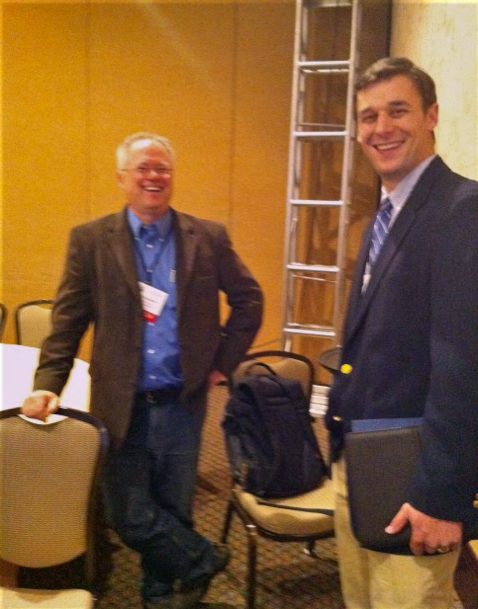
Gubernatorial Candidate Neil Abercrombie sat with Kyle Datta and I before the event started. He told us that his style of operating is to ask the folks who know a subject to give their opinions on what should be done and how to do it. He said, I rely on you guys to get it done; you’re the experts.

At the end of this post is the speech I gave, as written. But, as always, I started winging it from the start.

I began by saying that I have the answer to the problem. After I let that sit for a few moments, I told them what it is:

“Food security is about farmers farming, and if farmers make money, farmers will farm.”

That’s all there is to it, I told them; it isn’t rocket science.

I told the group that my Ag and energy blog is called hahaha.hamakuasprings.com, and that it represents three generations of the Ha family. I told them that I just got an email from Gordon Vredenberg, my buddy from 7th grade who lives on the mainland now. He told me, “I ran across your blog, and boy, things have changed. There was a time that if someone repeated your last name twice in a row, there would be a scrap right there.” The audience laughed.

I repeated my phrase, “If the farmer makes money, the farmer will farm,” several times in my talk. I could tell it stuck.

Later, when someone asked what the future of agriculture might look like, I answered, “If the farmer…”

The audience cracked up. They knew the rest of the sentence: “…makes money, the farmer will farm.” It was a fun event.

But on a serious note, it was heartwarming to hear Darren Demaya and Claire Sullivan talk about their commitment to using locally grown produce. This helps “farmers make money.” Kyle Datta gave a high-level vision of how we are going to achieve food security.

Andres Albano presented a perspective that very few of us get to see. I didn’t know they were the ones responsible for marketing the entire C. Brewer land sale, which involved tens of thousands of acres. He described the value of the sugar infrastructure for food production, especially the water system. Of course, he is right.

After the panel discussion, people came over to talk. One person asked what I thought of large-scale, mechanized agriculture. I said that in the “new economy” it will be more important to have resiliency and redundancy, and so I prefer small- and medium-sized farming entities all over the state, instead of one giant industrial farm that might need to source foreign labor. It might cost a little more, but it will be a lot safer for all of us.

Lots of the conversation revolved around “If the farmer makes money, the farmer will farm.” I said that if the discussion strays and becomes a couple of steps removed from that basic thought, no sense waste the time. People really get that.

Here’s the talk I gave:

Renaissance of Agriculture

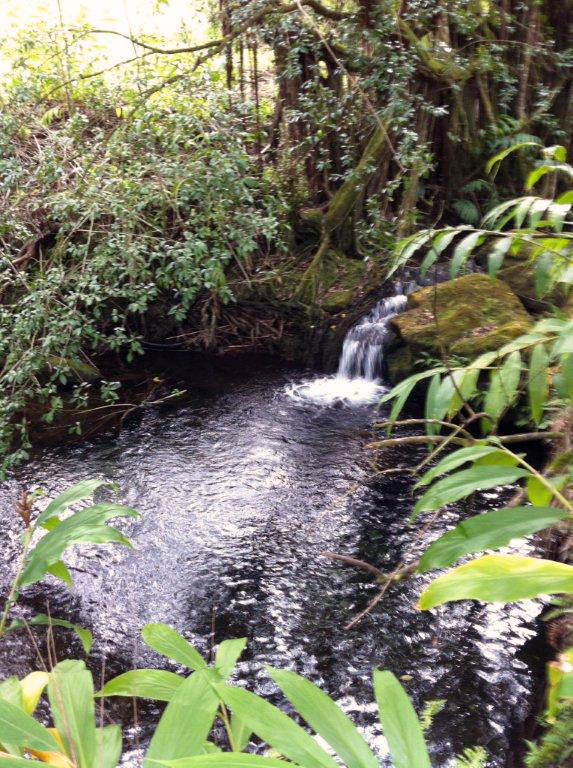
We farm 600 fee simple acres just outside of Hilo. We have 60 workers, and our primary products used to be bananas and hydroponic vegetables. Now they include sweet potatoes, sweet corn, taro, beans, etc. and will include more things. We have deep soil, three streams and three springs, and we are putting in a hydroelectric generator soon.

We are a family operation of three generations of Has. That is why our blog is called hahaha.hamakuasprings.com. We have been farming for more than 30 years.

Several years ago, we noticed our farm input costs rising, and realized it was due to oil.  We always try to position our company 5 to 10 years in the future, so in 2007 I went to the Peak Oil Conference in Houston to learn about oil. I learned that oil is finite, that the world is using 2 to 3 times more than we were finding and at some point we were going to find that we cannot produce more and then we will start down the backside of the oil supply curve. Sooner or later, we are going to face a new economy of higher oil prices.

Based on the idea that food security involves farmers farming and if the farmers make money the farmers will farm, we set out on a two-part Ag security plan for ourselves.

On a larger scale: We are promoting geothermal, the cheapest form of electricity base power. It would give folks discretionary income, so they could support local retailers and local farmers. That effort is ongoing.

And on our farm: We decided to transform our 600-acre fee simple farm from a one-entity production model to the “Family of Farms” model.

First thing we did back in 2007 was to pass legislation authorizing a special renewable energy farm loan program. It offers 3 percent, long term financing and is what we are using to help to finance our hydro project.

In June 2008, when oil price spiked and gas prices hit their peak, some of my workers asked to borrow money for gas to come to work. That was scary and clearly unsustainable.

We immediately decided to restructure our business to be relevant to the new economy. We knew that if farmers made money, farmers would farm and we wanted to add value for our retail customers. We began to implement our Family of Farms model. We decided to bring in area farmers to help keep the land in production.

To help farmers make money we:

  • Offer low-rent land, cheap water, deep soil, and plastic covered houses to grow crops
  • If farmers made money then we could make money by distributing
  • It would give all of us economic reasons to stay together.
  • Strengthen our brand by showing citizens that we are moving toward food security, giving them reason to support our brand.
  • Add value for our retail customers, who are interested in shortening their supply lines in the new economy.

Results we hope for:

  • Match our labor needs to the community.
  • Farmers from the nearby community. They have their own houses.
  • More productivity from our lands.
  • Profitability is reason for us to stick together.
  • More and varied food calories for the community.

Also, we are working with the USDA on a larger, zero waste program for the Hamakua Coast. We are working on renewable fuel projects that are appropriately scaled:

  • Biodigester for rendering plant down the coast. End products might be fertilizer, compost, etc.
  • Heterotrophic algae oil project that would get its carbon from our and others’ waste Ag products. Residual product to be animal/fish food.

To recap:

Considering the new economy is how we became directly involved in bringing the Thirty Meter Telescope (TMT) to Hawai‘i. It will help us transition and prepare our people on the Big Island for the new economy.

That is also why we are so involved in sourcing cheap geothermal for electrical base power. We are sitting on the largest battery in the world. The folks on the lowest rung of the economic ladder will get their lights turned off first if we choose expensive electricity. Too often they are Hawaiians. As oil prices rise, we become relatively more competitive to the rest of the world and our standard of living will rise relative to the rest of the world. Doing this will strengthen the aloha spirit.

The Family of Farms model brings us closer to our communities, while giving area farmers the opportunity to make money – because if the farmers make money, the farmers will farm. And for our workers we are actively planting ulu, bamboo, tilapia, etc. Since we have a difficult time raising our workers’ pay, we give them food from what we grow.

In the new economy, we will need stronger communities, we need to make more friends and stay closer to our families.

Not, no can. CAN!
Why Geothermal Will Increase Everyone’s Standard of Living

The paradox of living in Hawaii has long been that the native people give and give, and the economic system takes and takes.

Finally, we have a solution—one that is good for everyone and in multiple ways. I’m talking about geothermal.

We are using up our “cheap oil” every day now, and without cheap oil, our economy and world economies will not grow. Very soon, we will only have expensive oil, and when costs are too high we go into recession.

The growth of the world’s GDP will be less than it was yesterday, and maybe for as long as we can imagine. Neoclassical economists assume constant growth, but this is impossible when world oil supplies are decreasing as they are now.

This is why I’m such an advocate for using geothermal for energy on the Big Island. Its cost will not go up; it will stay steady even as world oil prices increase. As that happens, we will become relatively more competitive to the rest of the world. As the world’s standard of living declines, we will stay the same.

This means that our standard of living will actually increase, relative to the rest of the world.

Geothermal’s energy return on investment (EROI) is high. EROI is key:

…EROI is similar to its economic analog, which is return on investment (ROI). The idea is that you have a cost of getting a resource and hopefully you input that cost and you get some oil out. EROI is simply the energy produced from an energy extraction process divided by the energy you put in. We add up the cost of building the rig, the diesel fuel used on a rig, and what you get is a ratio of energy out divided by energy in. That number is essentially a measure of quality. It’s an efficiency calculation, but you can understand it as a measure of extraction and how difficult that extraction process is. Historically, if you look back at East Texas and see a lot of the big oil fields in the United States, the EROI was very high. Today, it’s obviously a much more complicated industry. For example, deepwater platforms cost billions of dollars and the wells are much deeper. The energy input has grown a lot. In general, EROI is this measure of extraction quality and how that changes over time…. Read more at The Oil Drum

The Train Is Leaving The Station & We Need To Act Now

We are at a real crossroads now – like hundreds of years ago, when Polynesians were sending people north in canoes – and I am serious when I ask: Are we going to do something, or are we just going to talk about it?

I am referring, of course, to our energy problem. It’s about to become critical.

  • Lloyds of London has warned its business clients to be prepared for $200/barrel oil by 2013.
  • In speaking with Forbes magazine, Charlie Maxwell predicted Peak Oil will happen in seven years. http://www.consumerenergyreport.com/2010/09/13/maxwell-forecasts-peak-oil-in-seven-years
  • The German military is also worried about Peak Oil.
  • Many, many other credible groups agree that this is a very critical problem.

We will probably hit Peak Oil sooner rather than later. There is just too much evidence indicating that oil is depleting.

Sitting out here in the middle of the ocean, we must prepare for the worse case scenario. We need to move toward solutions that make us safe, rather than sorry. And we need to move now. We have no time to waste.

My objective is to help us all to survive and still have affordable electricity.

Geothermal is something we have right here that can be considered a game changer. Are we up to the challenge?

There’s no more time for merely throwing around words. We need to act, and now.

The train is leaving the station.

Hilo Sampans Then and Now

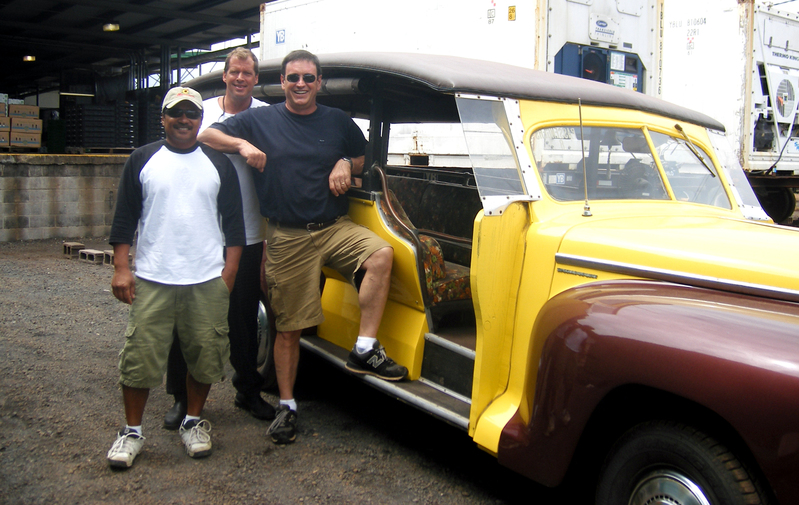
Gordon “Da Sampan Man” Cline came to visit on Tuesday. He lives in Santa Barbara, California and owns one of the old Hilo sampan buses. I bought the sampan bus that was at the Lyman Museum at an auction several years ago.

He has managed to track down every one of the 12 sampan buses that are still in existence. He dropped off some news articles and we looked at pictures of the other buses.

Here’s a picture of our sampan and Chef Peter Merriman (right), as well as Assistant Chef Dan Salvador (left) and Chef Neil Murphy (middle).

Sampan

This article was in the Honolulu Advertiser on June 21, 1959:

Hilo’s Sampan Buses
These special conveyances provide colorful transportation
By RON BENNETT

There’s nothing more distinctively Hilo than a Hilo Sampan bus.

They are an immediate delight for Visitors who’ve never seen anything quite like them before. You often see tourists congregating around a “captured” sampan. Snapping pictures for the folks back home.

For kicks the vacationers some times jump into one of the open air Jitneys and take a Hilo bus ride.

Hiloans regard their sampans bus system something in the possessive fashion that Bay City dwellers view their trolley cars.

A big hullabaloo was raised back in 1949 when exasperated Hawaii county officials tried to enforce some rhyme and reason in bus routes, pick ups and fares.

For decades the jitneys followed no set courses. They moseyed around town in a haphazard manner, picking up customers at random and taking them to entirely incompatible destinations.

Drivers complained of colleagues rustling their customers and invading vaguely defined boundaries of priority. Some were accused of cut throat tactics. And other types of unprofessional conduct.

In a nutshell, mass public transportation in Hilo was a mess.

However, some patrons—particularly those on better populated, thus better served streets—objected to any governmental changes that might adversely affect their good bus service. On rainy days they could depend on drovers taking them right up to the doorsteps, a service doomed under governmental controls.

Controls had to come and they did. Officials named a distinguished World War ll veteran, Tsuneo Takemoto, as director.  With Italy behind him, he soon brought peace and regularity out of chaos.

Today 25 sampans serve 15 Hilo routes on a rotating basis so every driver can get a crack at the plushier routes. On these busier routes commuters have no longer than about 10 minutes to wait between buses.

A common belief that the unusual body used for the sampans comes from Manila or some other foreign place is incorrect. They are made in Hilo.

The same type of bus has been in operation in Hilo for at least 40 years, according to one oldtimer. One of the first to use the design is said to be the late Fukumatsu Kusumoto, who ran a jitney between the Hilo Wharf and uptown, ages ago.

One source believes Kusumoto took the body style from a picture he saw once of a bus in Mexico.

Recent years have brought about one noticeable change in the sampan buses. Once gawdy in their color schemes, they’re now more conservative in dress.

Rainy Season at the Farm

It feels like the seasons are starting to change. This, the rainy time of year, is when the plastic covers on our growing houses are advantageous. Our crops grow, without interruption, all the way through February. During the shorter days, the ground stays damp because there are less hours of sunlight to dry up the soil.

Finally, in this past week, the stream is starting to increase in volume. We’d been starting to worry about the spring water flow. Coming back from Kona on the Saddle road recently, we noticed the pastures are starting to turn green. It feels like the dry period is over for some parts of the island.

IMG_0422

Here are some more pictures from the farm. This is the first kalo crop grown at Hamakua Springs and it looks really healthy. Tom Menezes is the farmer, and he really knows what he is doing. Among other things, he is a taro breeder.

IMG_0426

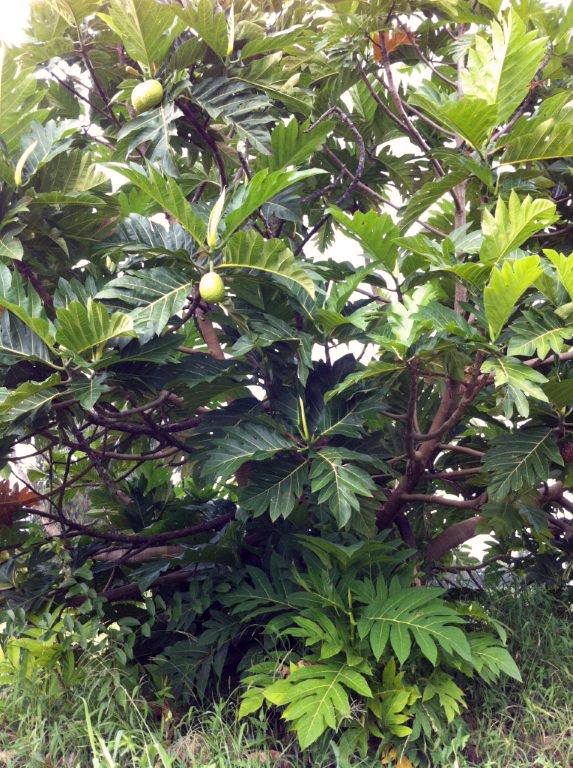
This is the first ‘ulu tree growing at Hamakua Springs. It wants to grow tall and we will have to constantly prune to keep its fruit within reach. We would rather plant a variety that is shorter in stature.

IMG_0416

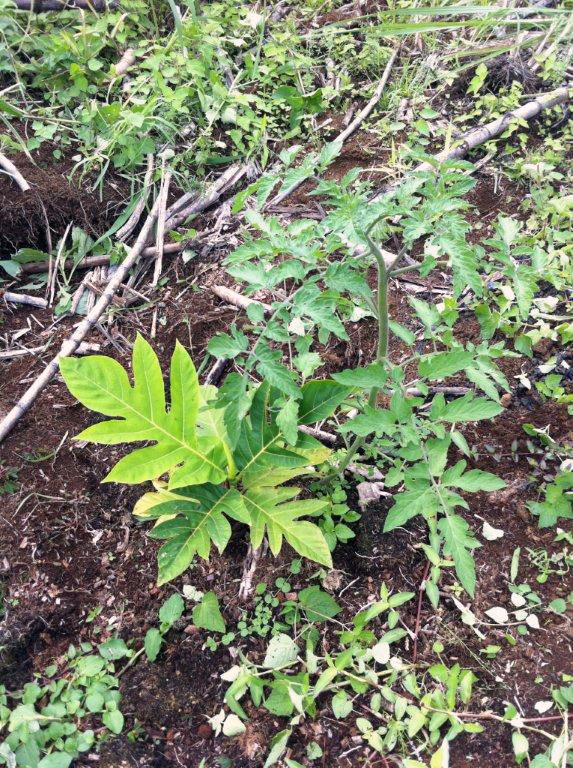
We transplanted this ‘ulu at the farm a few weeks ago. Instead of fertilizer, we used the spent coconut media that we use for our hydroponic tomato crops. The tomato plant is a volunteer that germinated from the coconut media. There is one flower cluster, and the plant is very healthy even though we did not give it any conventional fertilizer.

IMG_0419

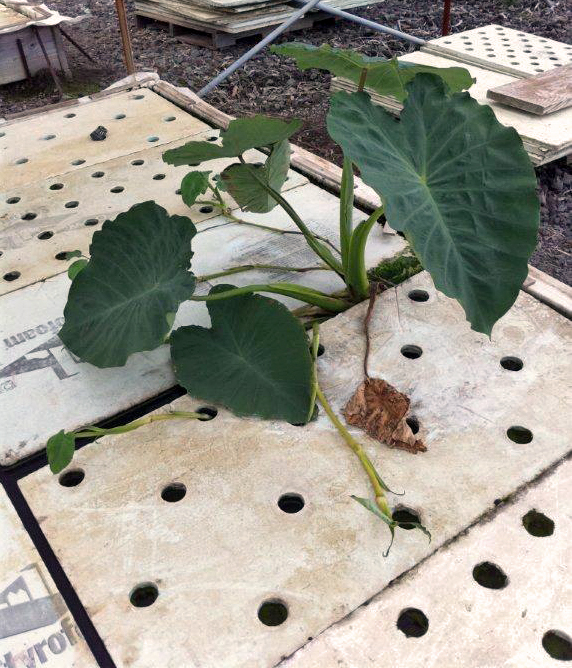
We found this kalo growing in the river and we are growing it on the hydroponic solution we use for green onions. To my great surprise, it has thrown out runners. I wonder what Jerry Konanui will say?

IMG_0425

Political Rallies in Hilo & Honoka’a

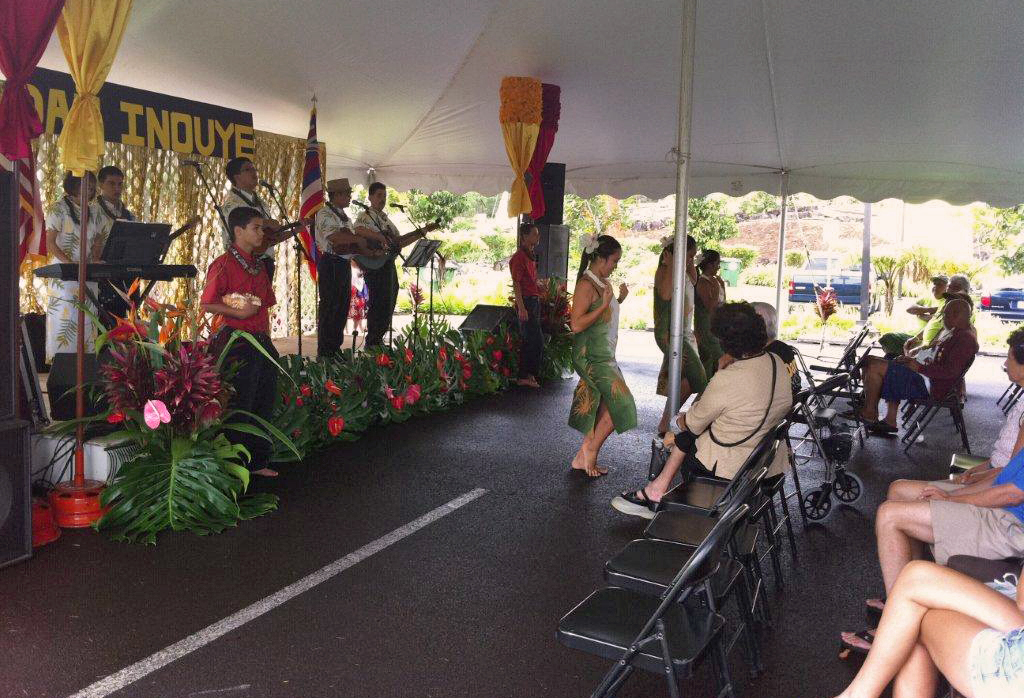
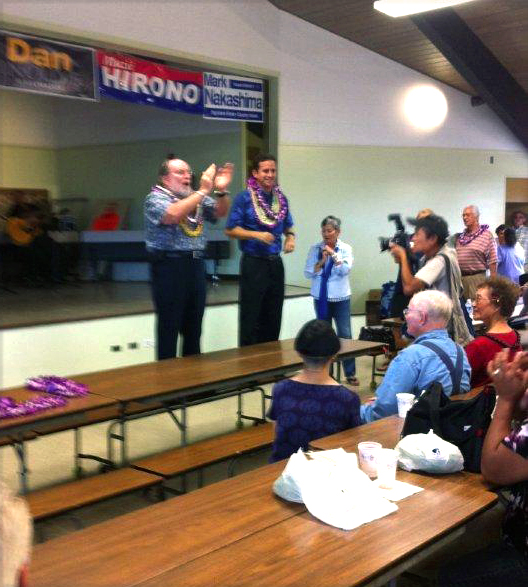
We attended a large, two-part political rally this weekend. The first part was held at ‘Imiloa Astronomy Center in Hilo, and the second at a school cafeteria at Honoka‘a. We were asked to set up a display of our vegetables at both places.

Highlights were:

  • Senator Inouye’s powerful support for gubernatorial candidate Neil Abercrombie
  • Senator Akaka’s singing of the song “Where I live there are rainbows,” and
  • Neil Abercrombie’s emotional speech talking about how our diversity is what unites us, not divides us.

The main people in attendance were Senator Inouye and Senator Akaka, Representative Maizie Hirono, Neil Abercrombie and Lieutenant Governor candidate Brian Schatz. Also present were Senator Russell Kokubun and Representatives Jerry Chang, Faye Hanohano, Clift Tsuji, Cindy Evans and Mark Nakashima.

Mayor Billy Kenoi introduced the speakers at ‘Imiloa, and Senator Dwight Takamine introduced them at Honoka‘a.

IMG_0376

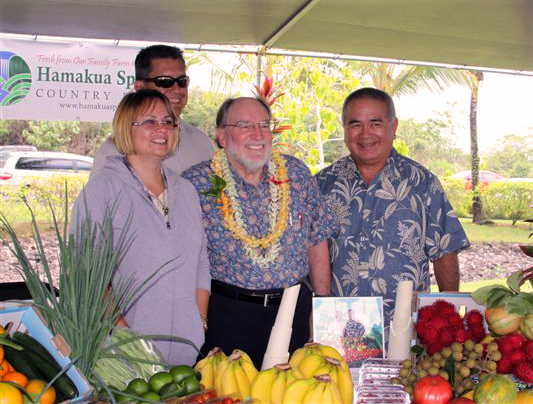
Neil Abercrombie has a very quick wit and strikes me as a really good guy. This is Tracy and Kimo with Neil and I.

IMG_3104

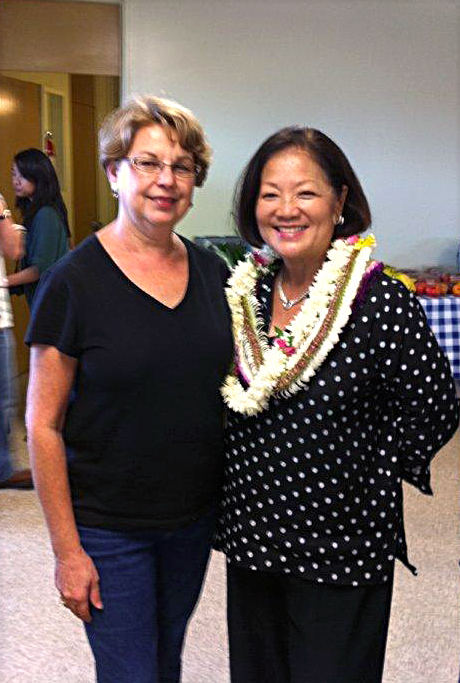
In the next photo, that’s June and Maizie Hirono. I grumbled at Maizie’s chief of staff, Anne Stewart, about why geothermal was not mentioned in her campaign ad. Anne said it was inadvertent; because the folks who did the ad were separate from the campaign.

IMG_0394

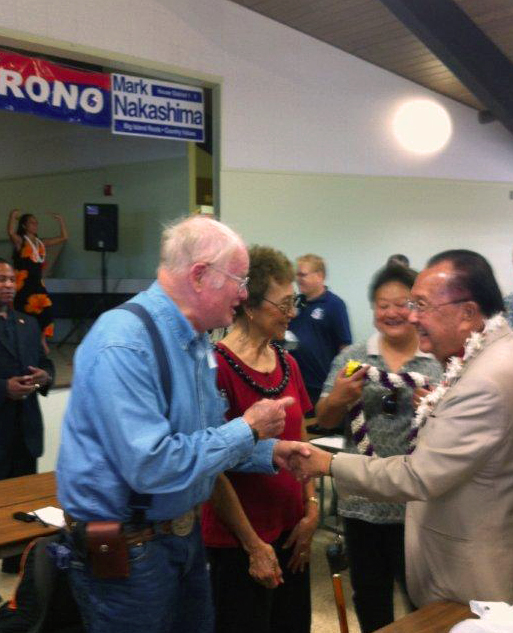
This is a picture I’ve wanted to capture for many years. It is of Senator Dan Inouye, President Pro Tem of the United States Senate, and Monty Richards, national officer of the Republican Party. These two men have been partners in the effort to transition Hawai‘i’s agriculture after sugar’s demise in the early 1990s. Monty, a knowledgeable farmer and rancher, worked with Senator Inouye to develop and administer the Regional Economic Transition Assistance Hawaii program (RETAH). They are good friends and often kid each other about belonging to the opposite political party.

They worked together to make the transition happen. And they were successful. Today ag is worth more than it was when the plantations shut down.

IMG_0404

Governor candidate Neil Abercrombie and Lt. Governor Candidate Brian Schatz at the Honoka‘a rally. Senator Inouye gave a powerful endorsement of Neil Abercrombie.

Abercrombie gave a rousing and emotional speech about unity, trust and hopefulness. I had never felt so much emotion run through a room after a political speech as I heard then.

It made me feel like we are absolutely going to be successful in getting geothermal on line as the primary base power for the Big Island. At one point, I glanced over at Mayor Kenoi and felt like we were thinking the same thing, at the same time, about geothermal: “Not, no can. CAN!” And it made me feel that it will happen for the right reasons – because it is the right thing to do for the “rubbah slippah folks.”

IMG_0399

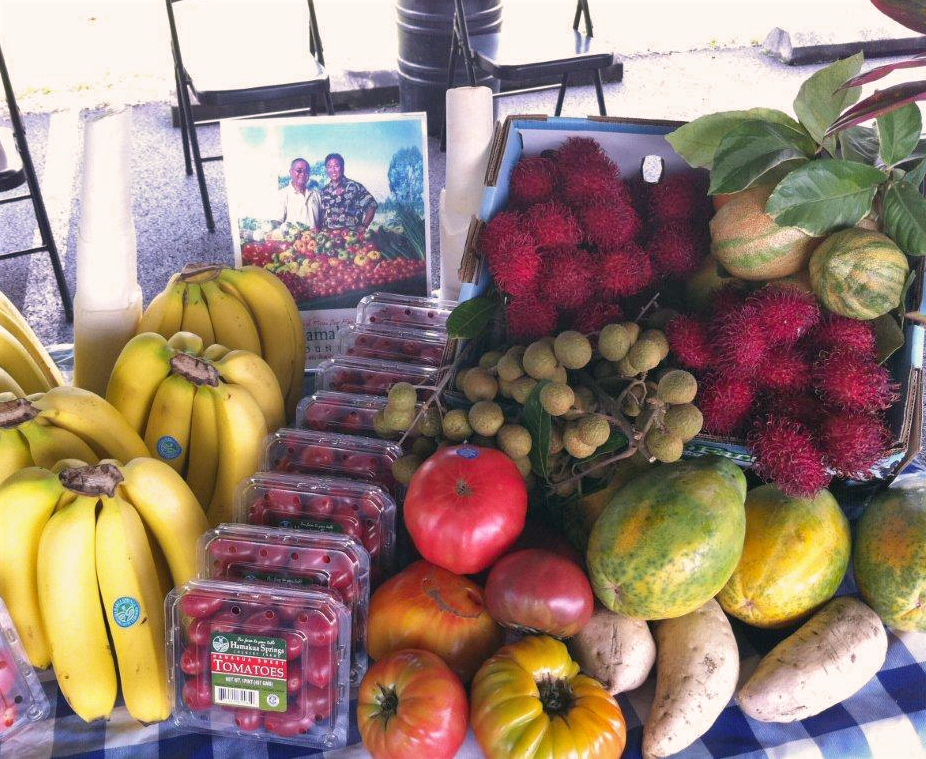
Hamakua Springs set up a display as part of the festivities at the ‘Imiloa rally, as well as the one at Honoka‘a.

IMG_0364

Bob Stanga had a nice assortment of the mushrooms they grow.

IMG_0357

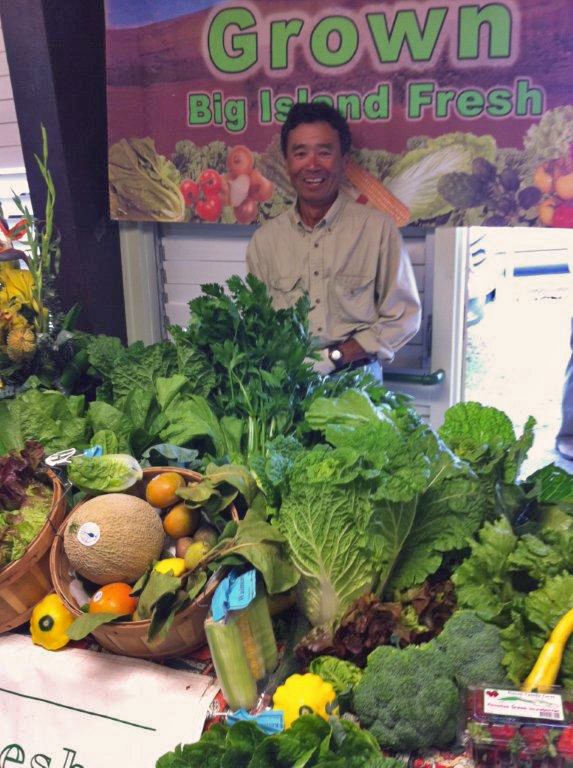
Roger Hirako and some of the best of his Kamuela Grown products.

IMG_0391

Keeping the kids occupied.

IMG_0366

The Impending World Energy Mess

I bought Bob Hirsch’s book The Impending World Energy Mess at the Peak Oil conference. If you want to understand why we will have an oil crisis in two to five years, this is the book to read.

Energybulletin.net wrote about the book:

James Schlesinger, President Carter’s Energy Secretary, wrote the foreword to a book written by Dr Robert Hirsch, an former US official who predicts a fall of the oil production within 5 years.

Never before has a high-ranking political figure like Schlesinger given his support to such a prognosis. The book will be published in the US on October the 1st. Here is an exclusive interview with its author.

Dr. Robert Hirsch has a unique place in the ‘peak oil’ issue. Back in 2005, he was the main author of the first pessimistic report ever published by a public administration (presentation on Wikipedia).

Not just any public administration : the Department of Energy of President George Bush.

Robert Hirsch has been a manager of petroleum exploratory research at Exxon, a senior staff member at the RAND Corporation, and director of the US research program on nuclear fusion energy.

His 2005 conclusions did not get any attention from the mainstream or financial media.

Today, Robert Hirsch perseveres. According to him, it’s now obvious: we will soon face a decline of world black gold supplies.

They also published an interview with Robert Hirsch:

Bob Hirsch: In years past, there was considerable uncertainty in my mind about when the decline of world oil production might begin. Recently it became clear to me that it’s going to be sooner rather than later. I believe that the onset of the decline of world oil production is likely in the next two to five years. And when I say “oil,” I mean all liquid fuels.

Our thinking is that what happened in the two sudden oil shocks of 1973 and 1979 is very likely to be repeated when oil decline sets in. Those were two real world examples of oil shocks surprising people and causing panic. We believe that the same kind of thing is going to happen again, except that the problem is going to last much, much longer because, unlike before, there will be no unused oil supply valves to turn on this time. Read more

Big Island Geothermal Projects Drawing Much Interest

More and more people are looking into the possibility of doing geothermal projects. Mililani Trask and the Honolulu-based Innovations Development Group, a Native Hawaiian renewable-energy development firm, are interested in pursuing a geothermal model that benefits the local community, not only the developer. They have been doing just that in New Zealand.

Ku‘ulei Kealoha Cooper-Springer, trustee of the Kealoha Estate, told me that Jimmy and Miulan Kealoha, her grandma and grandpa, told her many, many years ago that she should pursue geothermal. She said the trust has 89 acres in the geothermal subzone, and that now the time seems to be right.

I have spoken with a representative of another group that is very interested, too, as well as another landowner.

If HELCO were ready to purchase geothermal power, many people would step forward right now.

There has been a major change in how geothermal is perceived by the native Hawaiian community, compared to in the 1970s, when it was done in a heavy-handed, “top-down” manner. The old technology that existed in the 1970s has been replaced by much safer production methods. Puna Geothermal has been in operation for many years now as a good neighbor.

And the world around us has changed since then. The evidence is everywhere – it’s indisputable – that oil will soon start to decline, and that we must find alternatives to fossil fuel oil. The cost of electricity made with fossil fuel oil will rise with increasing oil prices. And it will be the poor folks whose lights will be turned off first. Too often, those folks will be native Hawaiian.

Geothermal is the cheapest form of “base power.” Base power is approximately 85 percent of the electric utility’s needs – it’s the dependable power that prevents our lights from flickering. Geothermal gives off no greenhouse gases, and it has a small footprint compared to solar and biofuels.

And off-peak geothermal power, which would otherwise be wasted, can be used to make H2 and NH3 for use in internal combustion engines. All that takes is electricity, water and air. We have everything we need right here in Hawai‘i to help future generations.

The tide is turning.

Platts News Service Reports on the Peak Oil Conference

When I attended the Association for the Study of Peak Oil and Gas (ASPO USA) Conference in Washington, D.C. last week, I happened to be sitting next to the reporter for Platts News Service, Leslie Moore Mira.

Here are two reports she wrote about the conference, which sum things up well:
Peak oil panel debates severity, timing of potential crisis
Washington (Platts)–7Oct2010/553 pm EDT/2153 GMT

A panel of geologists and energy analysts debated Thursday the severity and timing of an anticipated oil crisis, with one saying during a Washington briefing that crude oil production has now peaked.

“The global rate of production of oil is peaking now,” said Tad Patzek, professor and chairman of the department of petroleum engineering at the University of Texas-Austin. “The size of accumulation [of oil] is not equated to the rate of production,” he said.

Frank Rusco, an energy director at the US Government Accountability Office, estimated some 45 years of “proven reserves,” though current and future oil demand will stress supplies.

“Higher oil prices can retard economic growth and even cause a recession in the right circumstance,” Rusco said at the briefing, which was organized by the Association for the Study of Peak Oil & Gas. He declined to say after the briefing what a gasoline price ceiling might be for US consumers.

“The remaining hydrocarbons will be more costly to get from underground,” from a “policy perspective,” Rusco said, citing the Middle East as a “fairly unstable” region.

Robert Hirsch, an energy adviser at MISI and former manager of Exxon’s synthetic fuels research laboratory, put the state of looming shortages in more dire terms, saying “in the next two to five years oil shortages will get deeper and deeper.”

Meanwhile “mitigation” of oil dependency by transitioning into other energy sources will take upward of a decade to come into play.

“Some time after a decade, mitigation will take impact and things will start to flatten out,” Hirsch said.

GHAWAR COULD MORPH INTO A CANTARELL: PROFESSOR
New reserves from Brazil and production from unconventional sources in the US will not be enough to compensate for depleting reserves, panelists said.

The Ghawar oil field in Saudi Arabia, still a bright light in the
petroleum world, could see a sharp and imminent decline in production, Patzek said.

If Ghawar “peters out, to replace it [with production elsewhere] will be a very difficult task,” he added. He estimated Ghawar’s current production at between 4.5 million-5 million b/d, though added that actual production figures are unknown as they are a “top secret.”

Later on the sidelines, Patzek said Ghawar could become the region’s Cantarell, referring to Mexico’s offshore oil field that has seen production plummet by over half from a peak 2.1 million b/d in the mid-2000s.

Patzek said that the ongoing water-flood efforts into the Ghawar field to stimulate production will eventually taper off. “You’re injecting twice as much water into the well,” he said. “Your field is watering out,” Patzek said in an interview.

Patzek told the briefing that that Norway’s reserves have peaked, while he characterized the decline rate in the US Gulf of Mexico as “very high.” BP’s Thunder Horse well in the Gulf “has not reached its potential and it’s declining faster than people thought,” Patzek said.

A BP spokesman was not immediately available for comment on Patzek’s remarks about Thunder Horse.

– Leslie Moore Mira, leslie_moore@platts.com

Collapse then surge predicted for oil prices at peak oil meeting
Washington( Platts)–11Oct2010/415 am EDT/815 GMT

A looming collapse in credit markets and liquidity could lead to wildly gyrating prices for crude oil within the next five years, with prices falling to $20/barrel, then possibly rocketing to $500/b, a peak oil theorist and commentator told the Association for the Study of Peak Oil and Gas conference.

“This is not a recovery that we’re in,” said Nicole Foss, a former fellow at the Oxford Institute for Energy Studies, who predicted “chaos” in foreign currency and equity markets within years. A severe deflationary plunge will contribute to a liquidity crisis among the financial sector, Foss said on a peak oil panel late last week. The meeting in Washington wrapped up Saturday.

“Oil will bottom early in this depression,” Foss said. She and fellow
panelist, energy analyst Chris Martenson, predicted that foreign currency markets will become more volatile, with domino effects on global money supply.

“It’s not unthinkable that the US will have another financial crisis,”
Martenson said, adding that he gave the US a “50%” shot at having a fiscal crisis and a “50%” chance of experiencing a currency crisis. “We’re going to see severe dislocations in the foreign exchange markets.”

“Deflation is tomorrow’s problem,” Foss said, adding that a lack of
purchasing power will undermine price support for crude oil. Then “printing [money] is a few years off,” she said. “We could see $20/barrel and then $500/barrel within the space of five years,” Foss said.

Foss runs the Agri-Energy Producers’ Association of Ontario, where she has focused on farm-based biogas projects and grid connections for renewable energy. At Oxford, she researched electricity policy at the EU level, according to her website. She was previously editor of the Oil Drum Canada, where she wrote about peak oil and finance.

Speaking on the sidelines of the conference, Foss said that natural gas holds no promise as a safe hydrocarbon haven in a scenario of volatile crude oil prices. There is a “perception of a glut” of natural gas reserves and other resources from new shale plays and coalbed methane, and tight formation gas, Foss said.

“I would argue that this is an illusion,” Foss said. The environmental cost of extracting unconventional resources “is tremendous,” Foss said, adding that the energy resource “bang for buck” is unappealing. “We’ll end up with natural gas price spikes,” after years of low natural gas prices, she said.

As a side event to the meeting, a panel of geologists and energy analysts debated at a Congressional briefing the severity and timing of what they believe will be an oil crisis, with one saying crude oil production has now peaked.

“The global rate of production of oil is peaking now,” said Tad Patzek,professor and chairman of the department of petroleum engineering at theUniversity of Texas-Austin. “The size of accumulation (of oil) is not equatedto the rate of production.”

Frank Rusco, an energy director at the US Government AccountabilityOffice, estimated that there are some 45 years of “proven reserves,” thoughfuture oil demand will stress supplies. “Higher oil prices can retard economicgrowth and even cause a recession in the right circumstance,” Rusco told thebriefing. He declined to say after the briefing what a threshold gasoline
price might be for US consumers.

“The remaining hydrocarbons will be more costly to get from underground,” from a “policy perspective,” Rusco said, citing the Middle East.

Robert Hirsch, an energy adviser at MISI and former manager of
ExxonMobil’s synthetic fuels research laboratory, put the state of looming shortages in more dire terms, saying “in the next two to five years oil shortages will get deeper and deeper.”
Meanwhile, the “mitigation” of transitioning into other energy sources will take upward of a decade to come into play. “Some time after a decade, mitigation will take impact and things will start to flatten out” on the demand side, Hirsch said.

-Leslie Moore Mira, leslie_moore@platts.com

At the Peak Oil Conference 2010

I’m at the Peak Oil Conference in Washington, D.C.

This is my third ASPO conference. By now, I know most of the main players.

From left to right: My friend Gail Tverberg, editor at The Oil Drum; Jeff Rubin, former chief economist of CIBC world markets; me, and Debbie Cook, former Mayor of Huntington Beach, CA and board member of ASPO-USA.

Photos2

This is Chris Martenson on the left, the author of The Crash Course, and David Murphy, author of Energy Return on Investment, on the right. It was nice to talk story with David about EROI and geothermal.

I am really pleased that State of Hawai‘i’s Department of Business, Economic Development & Tourism sent Tim Ming their staff economist. He really gets it.