All posts by Richard Ha

The Canoes Are Coming: Te Mana o Te Moana

A couple days ago I went to breakfast at ‘Imiloa with my friends Wallace Ishibashi, of the Big Island Labor Alliance and the Royal Order of Kamehameha, and Clyde Hayashi,of Laborers-Employers Cooperation and Education Trust.

Kalepa Baybayan, ‘Imiloa’s Navigator-In-Residence, stopped by to tell us about the progress of the canoes coming up from the South Pacific on the voyage called Te Mana o Te Moana (“The Spirit of the Sea”).

From the website:

The Goal

We’re sailing across the Pacific to renew our ties to the sea and its life-sustaining strength.  The ocean is the origin of life, and it continues to give us air to breathe, fish to eat, and nourishes our soul as well. As threatened as the ocean is now, however, it soon can no longer provide us with these essential life services.

Sailing together, we seek the wisdom of our ancestors and the knowledge of scientists to keep the Pacific healthy and give our grandchildren a future.

We have chosen a motto for the whole project, which reflects the spiritual thinking in Polynesian culture about the sea, which has the same life-force running through its water as runs through our bodies, and how to treat this precious resource to not disturb Tangaroa, the God of the Sea. The following saying is a poetic way to say “be respectful and gentle”:

“Move your paddle silently through the water”

Later, I had a meeting with Patrick Kahawaiola’a and Mapuana Waipa, the president and vice president respectively of the Keaukaha Community Association, and our conversation went to the schedule for the arrival of the canoes. Patrick folks are going to arrange the ceremony.

As of Thursday, the canoes passed the equator and were in the doldrums. You can follow their progress. The first place they will arrive in Hawai‘i is Hilo harbor.

I was tickled that Mapuana was so pumped up about there being women in the crews. I thought to myself: I bet they sent equal amounts of men and woman when the first people came to Hawai‘i many years ago. How could it have worked any other way?

Here’s the most recent blog entry, straight from the vaka/va‘a/wa‘a (“canoe” in various Polynesian languages):

Day 55. This is our home. This va’a (canoe), simple with inspiration from our Polynesian ancestors, its smooth wooden platform connecting two sturdy hulls lying below- this is our island… this is our world. I heard someone say recently “our canoe is our island, and our island our canoe,” as such the lessons and practices inherent on one are reflective in the other. Gaualofa, this island which has sheltered us, transported us and looked after us all so soundly, has been able to do so only as a result of care and consideration from everyone involved. We are constantly reminded to look after her should we expect to be looked after in turn. On this va’a, all are aware of the finite nature of the resources w… READ THE REST

Learn more about the voyage here.

What’s Wrong With This Picture?

What is wrong with this picture?

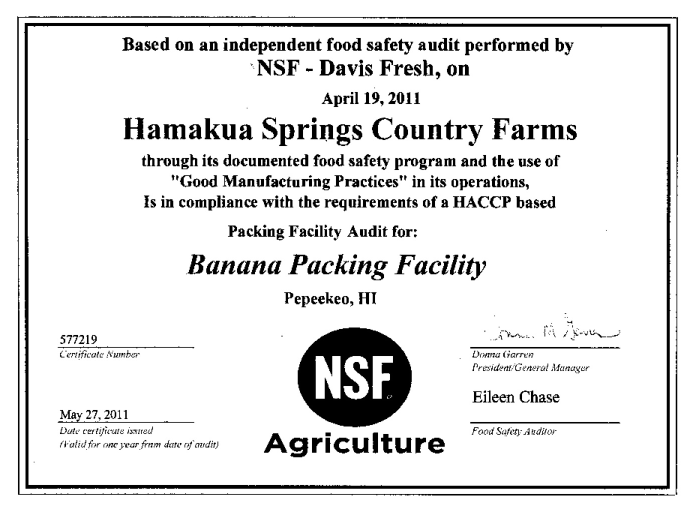
Hamakua Springs bananas are Food Safety Certified.

Screen shot 2011-06-10 at 9.52.15 PM

We were also the first banana farm in the world to be certified ECO-OK by the Rainforest Alliance.

We, and other local banana growers, refuse to use insecticide-impregnated bags because we cannot stand the thought of our workers having to carry those bags in close contact with their skin.

Yet our bananas can only be sold in Chinatown, because they are not blemish-free enough.

I write this because a friend of mine from O‘ahu asked me yesterday: “Where can I find local bananas?” He told me his family prefers local bananas – because they taste better, not because they look better.

What is wrong with this picture?

The World Has Changed: Big Island Supports Geothermal

I’ve attended at least 10 organized group geothermal meetings on the Big Island within the last two years, and I have talked to numerous individuals.

It is my sense that an overwhelming majority of Hawaiians on the Big Island support geothermal.

It is also my sense that folks on O‘ahu have no idea that opinions have changed from 20 years ago.

I was directly involved with the Thirty Meter Telescope process. Many more people support geothermal than supported the Thirty Meter Telescope. And Robert Lindsey, Big Island OHA trustee, testified at an OHA hearing that it is his sense that the overwhelmingly majority of Hawaiians support the Thirty Meter Telescope.

The rubbah slippah folks here on the Big Island are well aware of the connection of oil prices to high electricity costs. And they are well aware that the folks on the lowest rungs of the economic ladder will get their lights turned off first – and too often they will be Hawaiians.

Everyone knows that geothermal is proven technology, cheap, gives off no emissions and occupies the smallest footprint. Those who don’t know it probably don’t live on the Big Island.

Geothermal, assuming it is developed in a pono way, is a right of the native people to have a better life for themselves and for future generations

Local Banana Mo Bettah

Someone who commented on one of my blog posts mentioned that bananas grow all over his home island of Madeira. He said that their bananas have some marks on them, but the tourists like them.

It reminds me of the time an engineer from Chiquita Banana in Costa Rica called me when he stopped over on O‘ahu on his way to the Philippines. He knew we were one of two banana farms in the world about to be certified “ECO-OK” by the Rainforest Alliance.

Although we were actually the first to be certified, we had to wait until a Central American farm could officially be certified at the same time with us. We heard that it would not have been good for a farm outside of Central America to be declared ECO-OK first.

We were at the Ritz Carlton with Kate Heaton from the New York office of the Rainforest Alliance, and she was in contact with the Costa Rica office, waiting to hear if we could go ahead and make the announcement. Exciting times. The large banana plantations in Central America were resisting having to become certified, and here we were — a banana farm in Hawai‘i — causing them so much grief.

Anyway, the Chiquita engineer told me he was going to the Philippines to help set up a high-elevation banana plantation. The objective was to get the bananas to mature more slowly, so they would taste better — just like the ones in Hawai‘i and Taiwan.

So that is the story of why Hawai‘i bananas taste better. They are further north of the equator than Central and South American bananas, and because of that they take longer to mature. This allows more complex tastes to develop.

Hawaiian Perspectives in Support of Geothermal

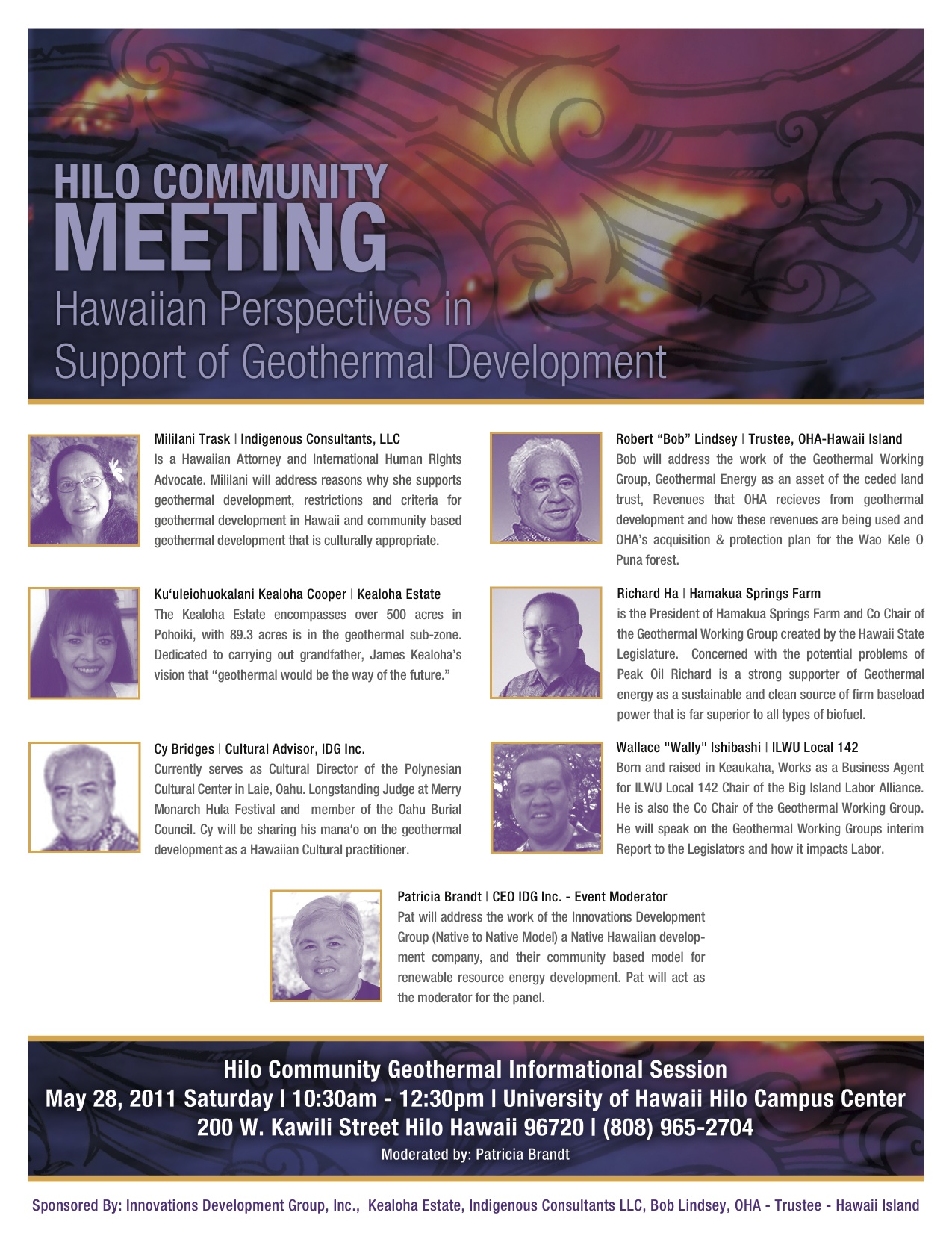
Over the weekend I was on the panel of a Hilo Community meeting called “Hawaiian Perspectives in Support of Geothermal Development.” It was held at the UH Hilo, and I estimate that about 50 people attended. By far the majority of the folks there were in favor of geothermal development, provided it is done in a pono way.

Flyer2-UH-Hilo-Mtg-5.28.11
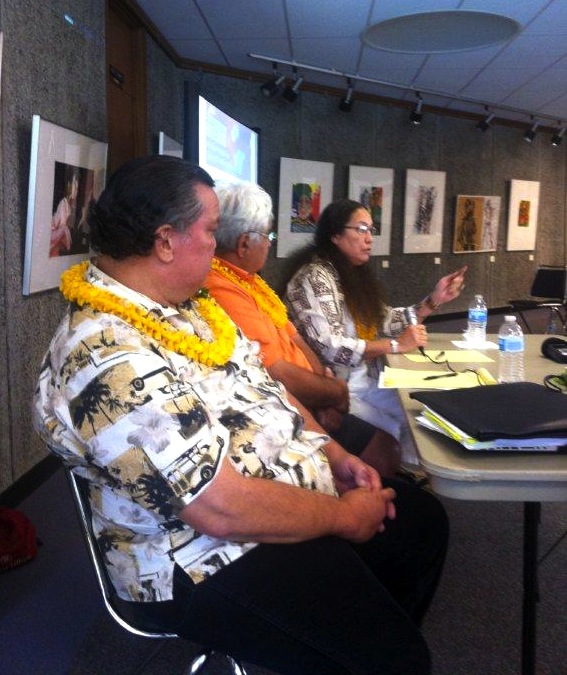
Each panel member spoke about his/her area of interest.

IMG_0912

From left to right, this is Wallace Ishibashi, co-chair of the Geothermal Working Group, and member of the Royal Order of Kamehameha; Robert Lindsey, Big Island OHA trustee, Geothermal Working Group member; Mililani Trask, Hawaiian legal rights attorney and consultant to Innovations Development Group

I talked from the point of view of a banana farmer who, five years ago, found his operating costs rising, and attended three Peak Oil conferences to learn how to position his business in a future of rising oil prices.

I talked about how there are serious outside forces at work. The world has been using twice as much oil as it has been finding, and has been doing so for the last 20 years. The winds of change will soon be blowing and oil prices will be rising. It is very serious, and we cannot afford to insist on individual agendas. It is no longer about us now; it is about future generations.

There are many ways that we can deal with depleting oil.

HECO’s plan of fueling with biofuels will cause electricity rates to rise. Rising electric rates means that folks on the lowest rungs of the economic ladder will be the first to have their lights shut off.

There are people who advocate small scale, individual solutions to energy independence. This approach will encourage those who are able to leave the grid to do so, and leave the folks that are unable to leave to pay for the grid.

Another, much better, alternative is to bring more geothermal on line. Geothermal is proven technology, clean and lower in cost than other base power solutions. The more geothermal we use, the more we protect ourselves from future oil shocks.

I told the group what I had asked Carl Bonham of the University of Hawaii Economic Research Organization: If we can maximize geothermal as our primary source of base power, will we become relatively more competitive to the rest of the world as oil prices rise? He said yes.

I told the group that we are lucky to have the options that we have, especially geothermal. Very few in the world are as lucky.

In modern Hawaiian history, our economy has taken, taken, taken and the culture has given given given. We are at a unique time now when the economy can give and the culture can receive.

Do we dare dream of prosperity for future generations? I believe that most felt that geothermal was the way to get us there.

There are a thousand reasons why “No can.” We are looking for the one reason why “CAN!”

Eat Local; Everybody Else Is

We are noticing a strong trend here in Hawai‘i toward people preferring and supporting local food products.

A recent survey from the National Restaurant Association supports this trend nationwide. It’s from the national produce newspaper The Packer.

Local produce near the top of hot menu trends

05/24/2011 / Bruce Blythe

Attendance at the National Restaurant Association’s annual Chicago show May 21-24 appeared to be comparable, and possibly higher, than last year, association representatives say.

Local is the way to go in 2011, so say many of the nation’s chefs.

Based on the National Restaurant Association’s annual What’s Hot survey, locally sourced meats and seafood and locally grown produce ranked No. 1 and No. 2, respectively, among the top 20 industry menu trends….

Read the rest

Mopping the Deck of the Titanic

In October 2008, the Hawai‘i Clean Energy Initiative (HCEI) – which aims for 70 percent of the State’s energy needs to be met by renewable energy by 2030 – was outstanding for its ambitious approach to the challenges facing Hawai‘i’s future. It anticipates a 30 percent reduction in oil dependency through efficiency improvements, plus a 2 percent/year reduction in fossil fuels over 20 years.

Now we are realizing that 40 percent less oil dependency in 20 years is not ambitious enough. And as we move to implementation, we are finding that some of our assumptions may not work out as planned. A key question is whether or not we are flexible enough to react to the rapid changes taking place.

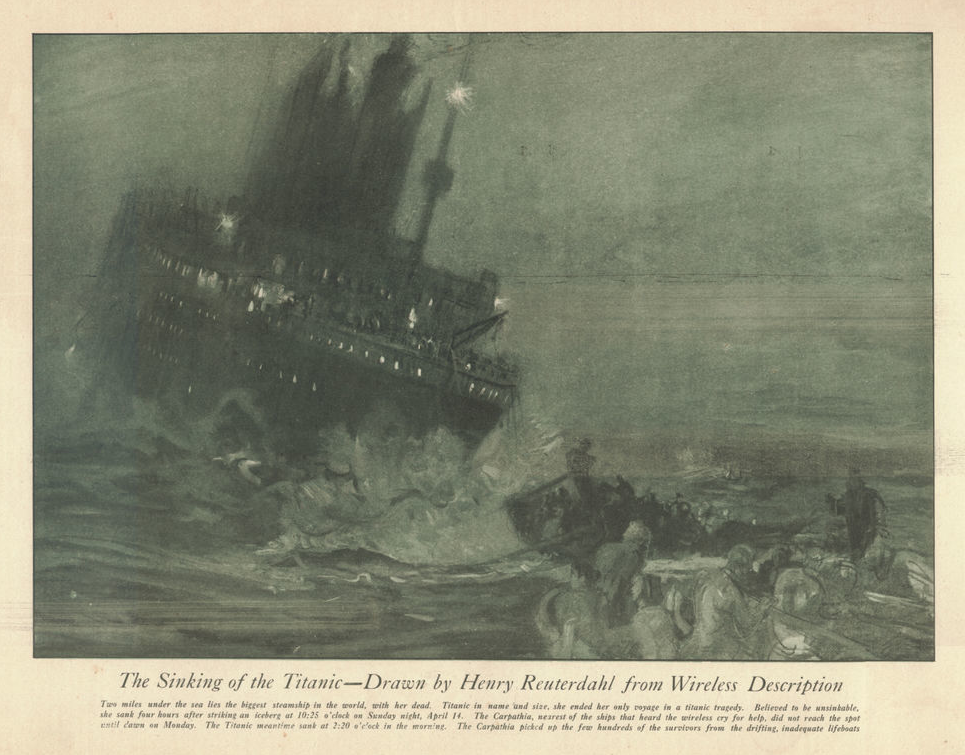
It is clear to me that we are furiously sweeping and mopping the deck of the Titanic.
Picture 7


The Hawai‘i Clean Energy Initiative was enacted into law in April 2010. But by then, the world oil supply situation was changing rapidly. Two months later, Lloyd’s of London advised its business clients to be prepared for $200/barrel oil by the year 2013. Economists at the University of Hawai‘i Economic Research Organization told me that $200/barrel oil would devastate our tourist industry.

I asked, “Is it fair to say that if we used geothermal as our primary base power, Hawai‘i would become relatively more competitive to the rest of the world as the price of oil rises?” The answer was “yes.”

In a report last week, the Economic Research Organization at the University of Hawai‘I (UHERO) pointed out that the State’s current weak recovery is being fueled by the tourism industry—which is dependent on future oil prices.

Hawaii has liquid fuel, transportation and electricity problems. The mainland fixed its liquid fuel electricity problem, after the oil shocks of the 1970s, by switching to natural gas and coal.

This past October, when I attended a Peak Oil conference in Washington D.C., they pointed out that the U.S. mainland is less than 9 percent dependent on petroleum oil. A large part of that 9 percent, they then said, was due to the Hawaiian Electric Company (HECO) in Hawai‘i. I was shocked!

To think that we have done nothing about this for the last 20 years. And now we hear the excuse that, since nothing has been done, it will take 10 years to ramp up geothermal, so we cannot wait for geothermal.

Here is a comparison of Energy Return on Investment (EROI) for fossil fuels: In the 1930s, to get 100 barrels of oil, it took the energy of just one barrel. In the 1970s, one barrel would get you 30 barrels. Now, the average EROI is that one barrel will get you 10. Clearly, the trend is not good.

The ratio for geothermal is also around 10 to 1. The difference, though, is that this ratio will not decline for a very long time. Jim Kauahikaua, Scientist-in-Charge of the Hawaii Volcano Observatory, told me that the Big Island will be over the hot spot for 500,000 to a million years.

Instead of fossil fuel, HECO wants to use biofuels to generate the electricity for most of its base power. The problem is that the EROI for biofuels is close to 1 to 1. And it should also be a warning that SunFuels, a company that actually knows about green diesel, is closing up shop in Hawai‘i. Not to mention that farmers knew three years ago that they would not grow biofuels, because it was obviously a money loser for them.

I am not against biofuels, but I think if we are to grow liquid fuel it should be used for jet fuel or transportation fuel—not electricity. I support biofuels through Pacific Bioldiesel. These folks use waste oil to support their capital costs. To the extent they can integrate feedstock from farmers, I think that their model has a reasonable chance of success. I also support UH Hilo’s College of Agriculture and Forestry’s initiative to study palm oil cultivation. This, too, is proven technology.

Geothermal is cheap, proven, gives off no carbon emissions and occupies a very small footprint. And through the generation of NH3 from its off peak power, which can fuel internal combustion engines, geothermal can put future generations into a position so they can win.

NH3 can also help with food security. Eighty percent of NH3’s present use is as fertilizer.

Furthermore, electricity generated from geothermal to power electric cars is clean and cheap.

So geothermal both takes care of us today and can take care of future generations. To farmers, this is not rocket science. It’s just common sense.

We can and must use every renewable energy option available to us, and to its maximum potential. By diverting excess electricity production to alternatives such as NH3 (ammonia), geothermal offers a safety valve that can allow more renewable energy in.

Can we imagine prosperity, instead of doom and gloom? Not, no can. CAN!

The Hawaii Clean Energy Initiative:

On October 20, 2008, an Energy Agreement was signed by the State of Hawai’i, the Hawaiian Electric Companies, and the State Consumer Advocate to accelerate the accomplishment of Hawai’i’s energy objectives in the regulated electric utility sector.

In April, 2010, the Hawaii Clean Energy Initiative Program was added to State law, in Chapter 196 of the Hawaii Revised Statutes.

The Challenge

Hawai’i relies on imported petroleum for nearly 90% of its primary energy

Up to $7 billion flows out of the state annually to meet Hawai’i’s energy needs

Hawai’i’s economy is extremely vulnerable to fluctuations in global oil prices

Hawai’i residents pay among the nation’s highest prices for electricity and fuel

The Solution

The Hawai’i Clean Energy Initiative is helping transform Hawai’i from the most fossil-fuel dependent state in the nation to one run on Hawai’i Powered clean energy within a generation

Its goals and objectives:

Hawaii is the most fossil fuel dependent state in the nation.

This can be explained in large part because of our dependence on tourism and the military – together, they make up roughly 50% of our total economy. That’s a dangerous scenario for the future because of the finite nature of fossil fuel and the fact that our state is more and more vulnerable to fluctuations in oil prices and availability.
A Matter of Leadership

It’s a matter of leadership.

Geothermal – We have it. It works. It’s cheap. It’s safe. It’s a gift. Let’s go!

It’s ironic that Third World countries are moving into geothermal so quickly, while Hawai‘i is moving backward fast, by using biofuels to make electricity.

  • The Great Rift Valley, an area of Eastern Africa with strong tectonic activity, offers immense potential for large-scale geothermal projects. Some estimates put the resource potential along the rift at 15,000 MW.
  • Today, Nicaragua produces electric power by burning oil and coal. Tomorrow (or, at least in the not-too-distant future), the small Central American nation intends to tap the chain of volcanoes it sits above as a source of geothermal energy.
  • In the Philippines, geothermal energy already provides 27 percent of the country’s total electricity production generated in power plants. Geothermal power plants are on the islands Luzon, Negros, Mindanao and Leyte.
  • Ormoc City, a city on the island of Leyte, has a population of 184,000 and produces 708 MW of geothermal. Here on the Big Island, where we have a very similar population (185,000), we only produce 30 MW.

Let’s go!

HECO on County of Hawaii & Aina Koa Pono

HECO is protesting the right of the County of Hawai‘i to participate in the start-up biofuel company Aina Koa Pono’s contract before the PUC.

BEFORE THE PUBLIC UTILITIES COMMISSION  OF THE STATE OF HAWAI’I 

In the Matter of the Application of  HAWAII ELECTRIC LIGHT COMPANY, INC.  HAWAIIAN ELECTRIC COMPANY, INC.  MAUI ELECTRIC COMPANY, LIMITED 

For Approval of the Biodiesel Supply  Contract with Aina Koa Pono-Ka’u LLC and  for Approval to Establish a Biofijel Surcharge  Provision and to Include the Biodiesel Supply  Contract Costs in the Companies’ Respective  Biofuel Surcharge Provision and Energy Cost  Adjustment Clause. 

Docket No. 2011-0005  HAWAII ELECTRIC LIGHT COMPANY, INC.’S,  HAWAIIAN ELECTRIC COMPANY, INC.’S AND  MAUI ELECTRIC COMPANY, LIMITED’S  MEMORANDUM IN OPPOSITION TO COUNTY OF HAWAII”S  MOTION TO PARTICIPATE WITHOUT INTERVENTION…

Read the rest here

First, HECO wanted to keep the details secret. Now it’s saying that the County is late, so it should not participate.

What about the County’s responsibility to look after the best interests of the people? That should count for a lot.

HECO says that the County has not stated the specific type of expertise, knowledge or experience it holds, now how it relates to the issues on this docket.

How about common sense?

The problem with this contract is that HECO is allowing Aina Koa Pono (AKP) to pass on its costs, over and above the oil cost it replaces, to the rate payer.

Sun Fuels, the most experienced company in Hawai‘i in terms of biofuel to liquid, has closed its Hawaii company because it does not think it can be competitive with diesel. One of the main issues is the company does not feel the process is scalable in Hawai‘i.

Sun Fuels’ principal, Michael Saalfeld, a Waimea resident, has actually put this process into production via a company he owns in Germany. He knows how this process works.  There is no one in Hawai‘i more experienced.

So we have the most knowledgeable company in the state closing up shop because it knows it’s uneconomical to do biomass to liquid fuel here – while the company with no experience in the field gets a contract allowing it to pass on its costs of operation to Hawai‘i’s people.

AKP has settled on a Napier grass feedstock after proposing all kinds of others, which left people with the impression that they were like drunken sailors bouncing off the walls.

And HECO is protesting Hawai‘i County’s right to participate?

What is up here?

Tomato Tomato Tomato, & More

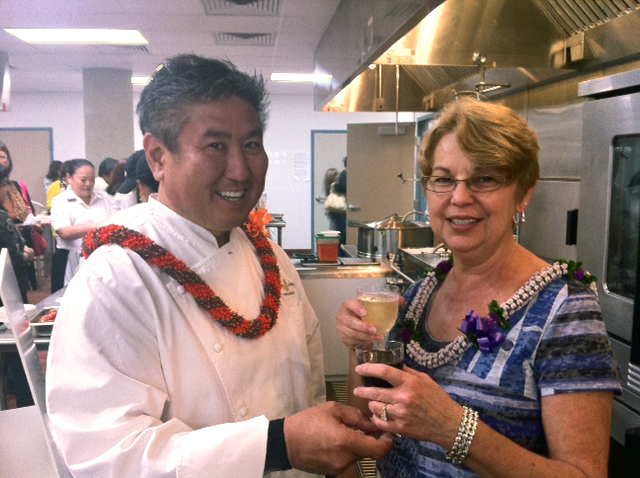
June and I went to the Leeward Community College culinary gala L’Ulu this past Saturday night. It was a fundraiser for the college’s culinary students, and each chef was paired with a farmer. We were paired with Chef Alan Wong.

Alan and june

Here’s Chef Alan, making sure his farmer is properly supplied with a glass of Reisling, and below, June stands with a display of Hamakua Springs tomatoes.

Hamakua springs display

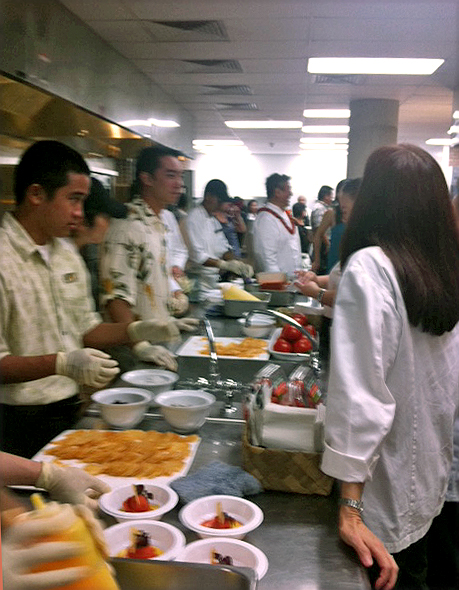
Chef Alans crew making tomato 3 ways

Chef Alan selected “Tomato, Tomato, Tomato” as the dish he would prepare for samples. That is a two-colored, cold tomato soup made from yellow and red tomatoes. In the center is a scoop of tomato sorbet with li hing mui dressing. On the side are two roasted grape tomatoes – one red and one yellow. The taste combination is incredible.

Tomato tomato tomato

His “Tomato, Tomato, Tomato” recipe can be found in his new, award-winning cookbook The Blue Tomato. Read about the cookbook’s recent Ka Palapala Po’okela award.

Nishimoto

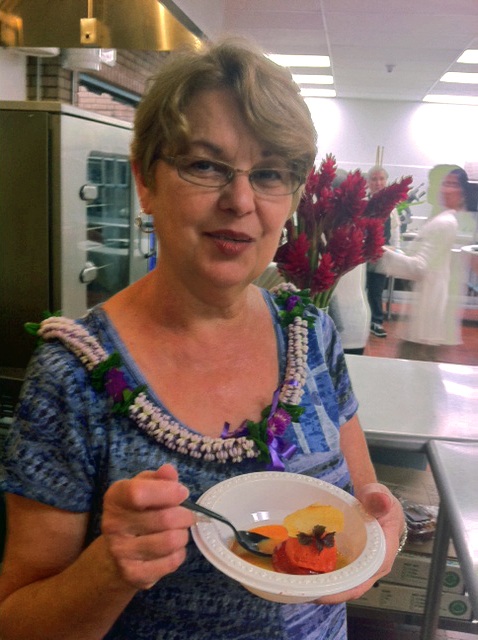
This woman, Mrs. Ishimoto, told us she was a great fan of Hamakua Springs tomatoes. It turned out she is the grandmother of Brian Clay, the Olympic athlete. We were thrilled to meet her even before we found that out.

June and I enjoyed talking to the people there. We felt the strongest sentiment of supporting local farmers that we ever have anywhere.