All posts by Richard Ha

Who Will Be Our True Leaders? We’ll See

Who will be our true leaders?

From International Energy Association data, we know that future oil supply will start to decline in a very short time. Oil fields age and decline naturally. It is estimated that all the world oil fields combined decline in production at the rate of 4 million barrels per day every year.

Today we have about 6 million barrels of oil per day of spare capacity, mostly in the Middle East.  In a year and a half,  due to the natural decline rate of 4 million barrels per day, we will use up all the 6 million barrel spare capacity.

When that happens we will start down the back side of the world oil supply curve  — never to return. This means that every two and a half years we will need to find the equivalent of a Saudi Arabia (which produces a little more than 10 million barrels per day) just to keep up with aging and declining oil fields.

But it is estimated that we will only be able to bring on 2 million barrels per day in new production when we need 4 million barrels per day just to keep up with the aging oil fields. After we go through the spare capacity, in about a year and a half, we will then be short two million barrels per day every year after that. In short time we will see $200 oil. That will mean gas will be higher than $7 per gallon. It will cost more than $100 to fill a small car’s gas tank.

Folks who can afford to will leave the electric grid as fast as they can, leaving the rubbah slippah folks and small businesses to pay for the cost of the electric grid.  We cannot let that happen if we can avoid it.

Unlike most of the people in the world we in Hawai‘i are very fortunate; we do have a solution.

We can go to cheap geothermal for our base power. If we get cheap electricity as a result, then more people are apt to stay on the grid. Cheap electricity makes electric cars more attractive. More people on the grid spreads the cost of the grid, resulting in lower rates for everyone.

As we all know, it’s the folks on the lowest rungs of the economic ladder that will get their lights turned off first. It’s a good chance they will be our Hawaiian brothers and sisters.

We cannot let that happen and profess to value the Hawaiian culture.

And here is a practical benefit: When the price of oil rises over time, as we know it will, our stable electricity rates will make us relatively more competitive to the rest of the world. Our people will have a higher standard of living compared to others.

For the sake of our future generations here, let’s get off that oil train and switch to geothermal.

Many of our leaders know about the oil situation. But many of them are afraid to take a stand, fearing that it might be too controversial.

We will soon find out who our true leaders really are!
Energy Meetings

I’m getting myself up to speed for a Hawai‘i Clean Energy
Initiative
steering committee meeting on Thursday.

I’m on O‘ahu right now, for three days of meetings with
various energy-related Department of Business, Economic Development & Tourism working groups. They’ve been working on biofuels, electricity, end-use efficiency and transportation issues for a couple of years now. Among other things, I heard an update on various possible configurations of undersea cables.

These working groups will be handing off their work to the
steering committee for policy making and implementation.

The whole energy subject is very complex. I’m glad I bring a
farmer’s perspective; it helps me cut to the chase very quickly.

This is very interesting! And it is very serious business.

Touring the Maui Quarantine Inspection Facility

A couple weeks ago I went over to the Maui quarantine
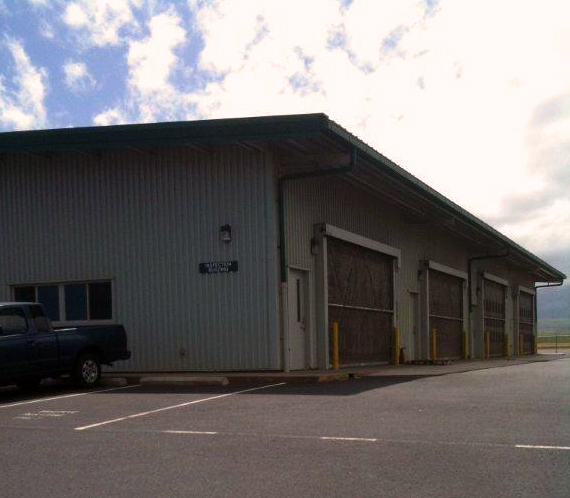
inspection facility, which I was told is the best facility in the State for dealing with invasive species.

Master cho 2d trip 015

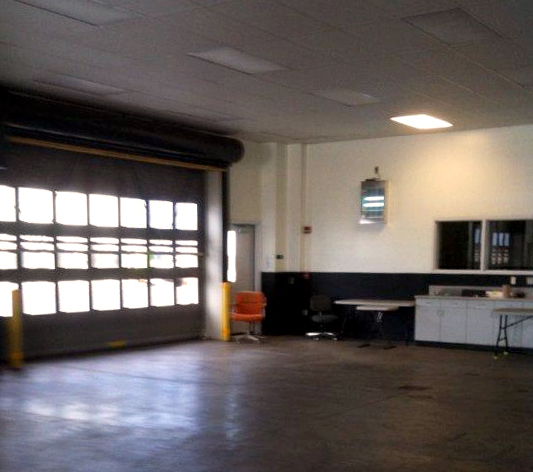
Kyle Yagi took me around and showed me how the facility works. First, it’s located right next to the commercial air cargo operators. So when air cargo arrives with produce, it travels just a short distance to a place where the air cargo containers are placed in a secure facility.

Master cho 2d trip 013

There are two rooms where several air containers can undergo simultaneous inspection
 The containers are opened up and inspectors go through each
box inspecting for invasive pests. This is all done in a secure area where insects, if found, cannot escape.

Master cho 2d trip 003

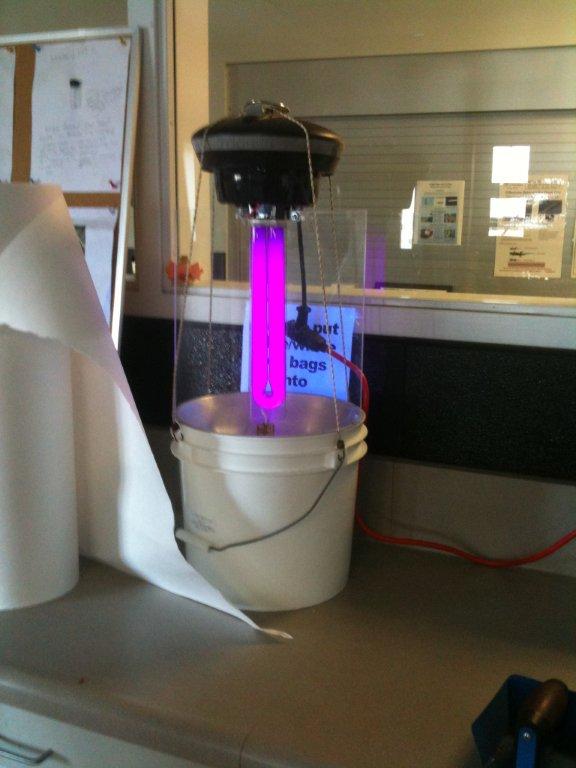
Giant bug light to attract any flying insects that might have escaped after inspections are completed

If the containers are found to be contaminated, the infested produce goes into an area where the temperature is set below freezing. That ensures that, when the minimum time elapses, all the insects are dead, and then the load is disposed of in the landfill.

Master cho 2d trip 012

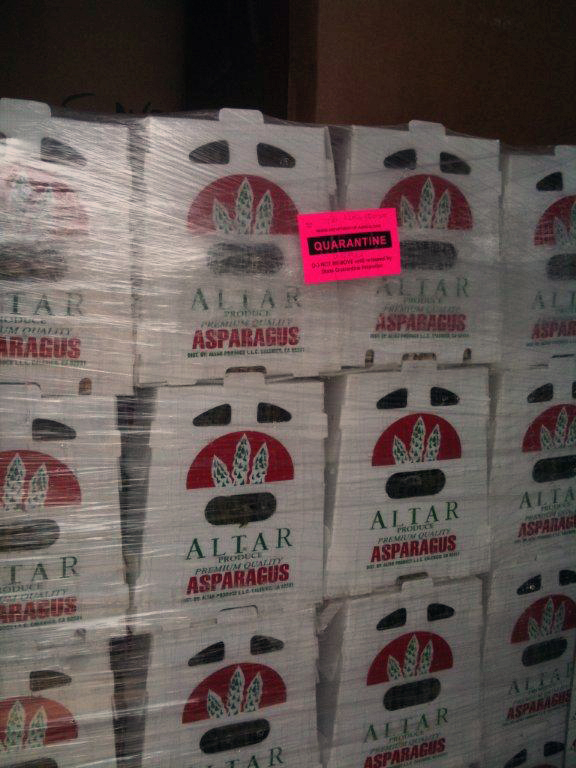
A pallet of asparagus contaminated with invasive insect species

Master cho 2d trip 011

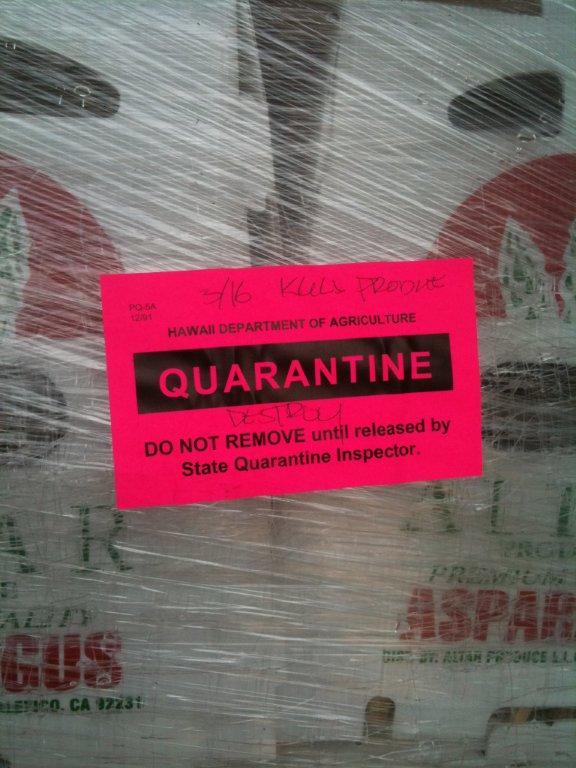
It’s being completely frozen until they are sure no insects survive; then they will dispose of it

The Department of Agriculture has told us that it is going to start posting the “frequency of contamination” on its website. Farmers would like to know what imported produce is routinely contaminated, so they can assess whether or not they can produce those products here.

It’s a very impressive facility. It would be good to have one at all the critical points of entry and departure.

Mauna Kea Management Board Unanimously Approves TMT

On Wednesday, the Mauna Kea Management Board (MKMB) met to discuss whether or not to approve the Thirty Meter Telescope (TMT) project on Mauna Kea. I was first to testify. This is what I said:

I recall meeting Henry Yang [TMT Board Chairman and Chancellor of UC Santa Barbara] for the first time in UH-Hilo Chancellor Rose Tseng’s office, when he was in town to find out if siting the Thirty Meter Telescope in Hawai‘i was even possible. At that time, it was a foregone conclusion that the telescope project was going to Chile.

I told him the most important thing to do in order to turn things around was to go talk story with the people. His face lit up, and he told me that was exactly what he wanted to do, because it was about talking to people and building relationships and trust.

In a short time, I could tell that this was a person you could do business with on a handshake. I knew that with Henry, we would not have to watch our backs. I even called my brother Kenneth to tell him that I thought things had changed.

Henry came to Hilo about 15 times, along with Jean Lou Chameau, president of Cal Tech. He did not come here seeking publicity; hardly anyone ever knew they were here. He visited with the regular folk.

He even visited Keaukaha Elementary School four times. The last time was when they had a free hour on Kupuna Day. We went over, sat on a bench and listened to kupuna giving advice to sixth graders.

After the program was pau, people asked them, “Where you guys going? Come, come; go eat.” People had made plates of laulau, poi, lomi salmon and haupia. Henry and Jean Lou dug in to eat and talked story with the folk. I could see that in the people’s eyes, they had become just Henry and Jean Lou.

In their trips talking to the regular folks, Henry and Jean Lou discovered that the lowest common denominator, which people on all sides of the issue could agree upon, was keiki education. As Kumu Lehua (principal of Keaukaha Elementary) says, “Not for only the best; what about the rest?”

The TMT folks committed to an annual million dollar education fund for the keiki. Funding would start as soon as all permits were obtained, and it would last through the construction and the life of the project—more than $50 million in all. This proved to us all that they heard the people.

As we went around visiting people, Patrick Kahawaiola‘a, president of the Keaukaha Community Association, told me that it’s about “the process.” And since the process would result in the best possible result, we need to aloha everyone who participates in the process, no matter which side of the issue they are on. Therefore, we must mahalo Kealoha, Nelson, Debbie, Paul, Ku, Hanalei, the Kanaka Council, Jim, Cory, Moani and many others. We would not be here today had it not been for their passionate advocacy.

The whole state has noticed that we on the Big Island are doing this differently. Our approach is based on mutual respect, collaboration
and trust. The TMT folks, led by Henry Yang, did it the right way. It
would not have worked any other way.

I have much aloha for Henry. My Pop used to tell me when I was a small kid – “Get thousand reasons why no can; I only looking for the one reason why can.”

The MKMB voted unanimously to approve construction of the TMT on Mauna Kea. I am convinced that the countless volunteers did the best they could to make sure that this project is pono.

Richard Appointed as Co-Chair of Working Group to Analyze Geothermal on Big Island

The Big Island Labor Alliance’s Geothermal Committee initiated SCR99:

REQUESTING THE ESTABLISHMENT OF A WORKING GROUP TO ANALYZE THE POTENTIAL DEVELOPMENT OF GEOTHERMAL ENERGY AS THE PRIMARY ENERGY SOURCE TO MEET THE BASELOAD DEMAND FOR ELECTRICITY ON THE BIG ISLAND.

Senator Kokubun wrote the bill. It was heard at both houses’ energy committees, as well as the Senate’s Water, Land, Agriculture, and Hawaiian Affairs committees. It passed unanimously through all the committees.

I gave testimony to the Senate committees, pointing out that geothermal is the cheapest form of “base power.” I told them I am concerned that the utilities are encouraging the use of biofuels to power electric generators. Biofuels are much more expensive than geothermal-powered electricity. And it is the folks on the lowest rungs of the economic ladder who will get their lights turned off first, I reminded them, and that is most likely to be Hawaiians.

The County of Hawai‘i will be the lead agency, ensuring that this project will be accomplished in a timely manner. Mayor Billy Kenoi indicated that Wally Ishibashi and myself would be co-chairs of this working group. Wally and I work together seamlessly. We agree that we are both in favor of transparency and an open process.

The legislature wants a report 20 days before the start of the next legislative session. We will be ready to go in a few short weeks.

It is clear to us that we need to maximize geothermal energy. High electric rates don’t do anyone any good.

Here’s how SCR99 starts:

WHEREAS, in 1881, King David Kalakaua visited Thomas Edison  in New York to discuss extracting power from Hawaii’s volcanoes  and using underwater cables to carry power between islands; and

WHEREAS, at the time, his strategy did not prove to be
feasible, and hydropower was used to generate electricity to  light Honolulu; and

WHEREAS, today, technology advances make geothermal energy  not only feasible, but a top source of renewable energy; and

WHEREAS, geothermal energy is a more reliable source of
energy than solar or wind energy, because when the wind does not  blow and the sun does not shine, the heat from the volcano  continues to produce a steady flow of power; and

WHEREAS, Hawaii’s ratio of renewable energy generation (ten  per cent) to fossil fuel generation (ninety per cent) ranks  third in the nation; and

WHEREAS, the United States Department of Energy has
indicated that Hawaii is one of the best positioned states for  renewable energy potential; and…
read more

Help Our Food Bank With Your Vote

Vote for Rose’s project! Rose Acevedo is a board member of the Sierra Club. Here’s what she’s up to:

Pepsi Co. Refresh Project is offering a million dollars every month for great ideas that support local communities.

My idea, FRUITBUSTERS, to help feed the hungry in Hilo was approved by Pepsi on May 1st.  The goal of FRUITBUSTERS is to develop a small crew who will rescue all the ripe fruit from trees whose owners can’t do their own picking.  This abundance of fruit will then be donated to food banks and meal programs in our area.


The grant money will be awarded to those ideas that have the most votes.  FRUITBUSTERS is a finalist, so I have all of May to get as many votes as I can!  We need your support, so please log on to:

http://www.refresheverything.com/fruitbusters

to find out more, register and vote. Everyone who registers can vote EVERY DAY until May 31. 

Muchas gracias!

Rose Acevedo
roseacevedo@hotmail.com
756-5990

Picking fruit, that would otherwise just fall to the ground and go uneaten, and donating to the Foodbank  is a wonderful idea.

Let’s all vote for Rose so we can help her to help our community.

Punahou Project Citizen: We Are In Good Hands

Remember that Punahou School 8th-grade student who’d heard local farmers are having a tough time and  decided to do something about it?

I received an invitation to attend her class’ final Project Citizen presentations.

I felt that I should go and represent Hawai‘i’s farmers. After all, if they made such a commitment, the least I could do was go on behalf of local farmers.

 Aloha,

I would like to invite you to attend my class’ final Project Citizen presentations so you can be able to see what we’ve been working on for the past year. Our presentations will be on Friday, April 23, 2010 in Miyawaki Building #8-102 in Case Middles School at Punahou School from 12:30 to 1:00. Attached is a document with more details and information about the presentations. I hope you will be able to attend!

Thanks,
L-

I did attend, and told the students how proud I was of them, and that I feel Hawai‘i is in good hands with them as representatives of their generation. I told them that other farmers would be very appreciative of their efforts, too, and that I would tell as many of them as I could.


I explained that they can make a great difference just by asking produce managers at their local supermarket to carry local products. I told them that the management keep track of inquiries and that is responsive to its customers’ wants. Retail stores do not want to lose customers to their competition down the road.


Afterward, I heard again from the student L.:

I’m so happy you came to see our presentations, it was nice to meet you. Here’s my description:

Every year Punahou School has a Sustainability Fair outside, on Middle Field, which is open to everyone, the public, parents, and students. People from different environmental organizations come and have their own booths to teach people about different environmental problems and solutions. Also, there is a local farmers market where local farmers can sell their fresh produce, and artists can sell things like recycled caprisun bags out of recycled products. Students also sell recycled art that they’ve made like bracelets and earrings. Students, like my class, have their own booths, like how my class did. At our booth, we had a contract where people could sign to pledge to buy local at least once a week, and then they would get a green wristband that said “Buy Local!” to remind them to always try to buy local as much as possible to support Hawaii’s local farmers. We got over 450 signatures, which really helped. We got so many signatures, because so many people showed up and wanted to make a difference in the world and for our local farmers.

One of the highlights of our presentations was that we knew that we were making a big difference for local farmers and for us, and that we were reaching out to them. We knew that just with our presentations, we were giving local farmers hope in these tough economic times and letting them know that they are very important to Hawaii’s culture, and if we loss them, then we would loose a part of Hawaii. With the presentations, we were doing good, not just for the local farmers but for us, making us a more self-sufficient state. With the presentations, we were reminding ourselves of the importance of buying local and how it can make a big difference in our economy, the state, and for local farmers.

I hope this helps, and thank you again for coming to our presentation and representing Hawaii’s local farmers, it meant a lot to us knowing you were there.

I flew to O‘ahu just to attend the presentation, and I was so glad I did. It was great to see the students’ determination to support local farmers because it is a matter of survival for all those who call Hawai‘i home. They are very aware that we are vulnerable living out here in the middle of the ocean, and it is nice to know that they know.

A lot of the time, farmers don’t know if anyone cares. From attending Project Citizens at Punahou School, I can tell you that these young people absolutely do care.

I thank them all on behalf of all Hawai‘i’s farmers. And thank you, L., for asking me to participate.

Generating Electricity Is Not Hu Honua’s Biggest Challenge

From the Hawaii Tribune-Herald (5/7/10):

Hu Honua Bioenergy LLC wants to take over the 1985 special management area or SMA permit that allowed the former Hilo Coast Processing Co. to operate a coal-burning power plant near the ocean….

…Eucalyptus trees growing along the Hamakua Coast will be harvested for fuel during the plant’s first decade of operation, according to Hu Honua’s application. The company would then look to obtain trees from private landowners clearing their properties, and also is working with the University of Hawaii at Hilo to develop a “sustainable biomass farming plan.”

On Friday, I went to the Windward Planning Commission meeting in support of Hu Honua. From the company’s website:

Hu Honua Bioenergy, LLC is a Hawaii-based company created to meet local electricity needs using renewable resources. The facility is located in Pepeekeo, Hawaii, on a 25.57-acre site on the Big Island of Hawaii.

I am supporting Hu Honua because the company says it will use biomass to generate “base power” in HELCO’s grid.  Base power is a steady, dependable source of electricity. More than 85 percent of HELCO’s electricity usage is base power.

The Hu Honua project has the potential of replacing fossil fuels in HELCO’s grid with biomass.

From my own farming experience, I feel that Hu Honua will face some challenges in sourcing its feedstock. Several years ago, when the land around the Hu Honua power plant was subdivided and put up for sale, we were informed that C. Brewer wanted to sell the land on three sides of our banana packing house. We were growing bananas there on a short term lease and were told we needed to move our bananas to a different location. When we completed that move, instead of our packing house being in the middle of our banana growing operation, it was stuck way out on one side of the farm.

In order to maintain the same amount of production, we needed to acquire more land that was even further to one side of our farm, and this made our operation inefficient. And because our packing house was no longer centered in our fields, our labor and maintenance costs went way up, to the point that we had to downsize and reorganize our entire farming operation.

Similarly, Hu Honua’s generation plant would have benefitted from being sited in the middle of its production supply. This is not possible, though, since it is bordered by the ocean on one side and subdivisions on the other. Consequently, labor and fossil fuel costs will be a larger part of their operation than would have been optimum.

When they try to grow their own sustainable biocrop in 10 years, they’ll have the same problem we did. I’ve tried to guess where the large land parcel supporting five to six trucks of biomass per hour will be located, and I don’t know where that place will be.

For 10 miles in either direction, rainfall averages approximately 120 inches per year. Our farm, just a couple of miles up the road, has an average rainfall of 140 inches per year. High rainfall, deep soil and steep terrain make for a challenging agricultural environment.

I do support Hu Honua, but I worry they may not be successful in developing a “sustainable biomass farming plan.”

Korean Natural Farming in Pepeekeo

Master Cho Han Kyu is the founder of “Korean Natural Farming,” a farming method that uses no imported fertilizers or chemicals. He visited our farm today and pointed out alternate methods that I could use to control white flies and increase fruit set, as well as yields. They will write out instructions for us on how to implement Korean Natural Farming techniques.

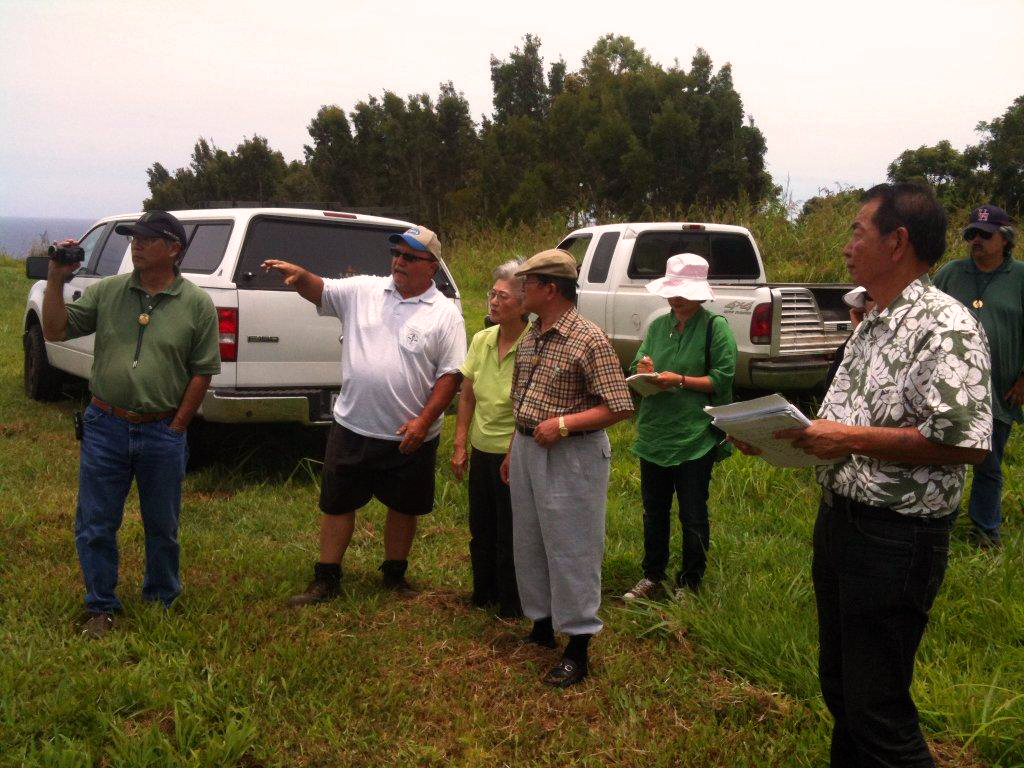
MasterChoOrganic Ginger Grower Dean Pinner points out his farm site to Master Cho, the founder of Korean Natural Farming

A reent Hawaii Tribune-Herald article discussed Korean Natural Farming, and Master Cho’s visit to Hawai‘i:

Farmers in Korea use less water, no chemical fertilizer and yet increase production. The system’s beneficial byproducts include healthier soil conditions, reduced water pollution and other environmental pluses, healthier diets and a stronger agriculture economy.

Natural farming focuses on living soil and indigenous micro-organisms that convert organic material into the inorganic minerals and nutrients plants can utilize. Read more here.

I’m going to be working on a controlled trial with University of Hawai‘i extension agents to see if I can get positive results. I’ll report here periodically on how things are progressing.