All posts by Richard Ha

TMT Selects Mauna Kea, Promises Big Island $50 Million For Education

After deliberating for two days, the Thirty Meter Telescope Observatory Corp. board voted yesterday to site its new telescope here on Mauna Kea, not in Chile.

Although I’ve been working on this project for almost three years now, I was not prepared for the emotional rush that came when Henry Yang, president of the TMT, called to tell me of the decision.

All I could think about was how this would help our people launch their kids into the middle class. All that most of us want is for our kids to do a little better than we did.

The median family income in Hawai‘i is around $56,000. Here on the Big Island, it is $46,000. But on the east side of the Big Island, the median family income is in the mid-$30,000s. And in some communities it is in the low-$30,000s.

We all know that low family income is sometimes associated with social problems. And Hawaiian families occupy the lowest rungs on the family income ladder.

Education is directly related to family income. The more education, the higher the family income. Education is the great equalizer.

The Thirty Meter Telescope folks have pledged $1 million dollars annually for 50 years, which will be administered by carefully selected community members, primarily for K-12 education.

We all know that many of our students who enter college fail, or lower their aspirations, because they are not prepared to succeed. We want this TMT fund to prepare students to succeed.

So if we are truly interested in elevating our people and taking them away from drug problems, abusive relationships and other social ills, then we must help parents to launch their kids into the middle class. For those who are prepared to succeed, the sky is the limit.

My pop influenced me at an early age. When I was 10 years old, he inspired me with the attitude of “Not, no can. CAN!”  So I know the value of influencing elementary school kids. They are very impressionable, and with the right environment and the right teachers, anything is possible.

This is why we created the Adopt-A-Class project. Sometimes the Keaukaha School kids come to our farm on their excursions. I tell them stories and give examples of how a positive attitude can overcome any problem. And at the end of the tour when I yell out “Not, no can!” they all yell back: “CAN!”  Right on!

I see the annual $1 million Education Fund as a way of opening up kids’ minds and making them understand that they can do anything. We do not want our kids to wallow in victim-ism. That is waste time.

What we need is for them to have an optimism and a pride that our people were astronomers and the best navigators in the world. We want all kids, not just Hawaiians, to feel that high aspirations and goals are normal and not out of the ordinary.

The TMT leadership—Henry Yang and Jean Lou Chameau—listened to our advice very early on. They went and talked to community folks, like Kumu Lehua and Patrick Kahawaiola‘a, and they understood that the common denominator on which people on all sides of the issue could agree was the education of our keiki.

We have our eye on a goal, and so yesterday’s announcement that the TMT Board has decided on Mauna Kea for its new telescope is a huge, huge deal.
Today is the Day: The Thirty Meter Telescope Site Decision

RToday is the big day – The Thirty Meter Telescope Corporation’s board is meeting to decide where to site the TMT.

Will it be in Chile?

Or will it be in Hawai‘i?

We’ll have to wait and see.

We’ve come such a long way. It was three years ago when we first heard the TMT folks were interested in siting their telescope on Mauna Kea. Back then, the community was torn apart over astronomy and control issues.

Together with Roberta Chu and Bob Saunders, I volunteered to sit on the newly formed TMT committee of the Hawai‘i Island Economic Development Board. I was determined that if a new telescope was to be sited on Mauna Kea, it needed to be done right.

To me, “done right” meant doing things local style. And local style is all about building relationships. One must go talk story, again and again, until a certain level of trust is built. This takes time.

Spending time is an essential part of trust building. One cannot avoid spending the time.

Fortunately, Henry Yang, President of the TMT Corporation and Chancellor of U.C. Santa Barbara, and Jean Lou Chameau, President of Cal Tech and one of the TMT Corporation partners, both understood the importance of relationship building. They took the time to meet and get to know the people. They did this for its own sake.

If we are successful and the TMT is sited on Mauna Kea, it will be because of the foundation that was laid in the first few meetings. From there, we all just went out and built relationships.

A little at a time, in wider and wider concentric circles, people started talking to others and common ground was found. Groups started talking to groups – labor unions, business organizations, astronomy folks, university and community college folks, as well as many other groups and organizations that joined this coalition, which had as its purpose, the common good.

One of the most important things we learned from the Hawaiian community was that the process is the most important thing. Follow the process. Following the process meant that all participants in the process made for a better end product.

And, following that logic, we acknowledge and appreciate the contribution of all involved. So the process made all of us contributors to the end product. It was not “us against them.” It was just us. All of us!

We also need to aloha the early, loud voices for bringing up issues that needed to be addressed.

This is what I envisioned when I said that if the TMT comes here, it needs to be done right.

It also means that if the TMT selects Mauna Kea tomorrow, our work is not done. We must make sure that the four sub plans for the CMP are done right. We need to continue working hard to protect the rights of all the parties.

No matter whether Mauna Kea is selected or not, we did this right and we will have no regrets.

Aloha, mahalo and congratulations to all.

The State of the Future

Two reports of note appeared recently.

The first is the 2009 State of the Future.

This is the stark warning from the biggest single report to look at the future of the planet – obtained by The Independent on Sunday ahead of its official publication next month.

Backed by a diverse range of leading organisations such as Unesco, the World Bank, the US army and the Rockefeller Foundation, the 2009 State of the Future report runs to 6,700 pages and draws on contributions from 2,700 experts around the globe. Its findings are described by Ban Ki-moon, Secretary-General of the UN, as providing “invaluable insights into the future for the United Nations, its member states, and civil society.”

…Jerome Glenn, director of the Millennium Project and one of the report’s authors, said: “There are answers to our global challenges, but decisions are still not being made on the scale necessary to address them. Three great transitions would help both the world economy and its natural environment – to shift as much as possible from freshwater agriculture to saltwater agriculture; produce healthier meat without the need to grow animals; and replace gasoline cars with electric cars.”

This is very interesting for us here, trying to live sustainable lives out in the middle of the Pacific Ocean. The idea about shifting to salt water agriculture has to do with limited amounts of fresh water worldwide. In Hawai‘i, we have the option of doing both.

The second idea, about producing meat without having to raise animals, is driven by anticipated grain shortages worldwide. In Hawai‘i, we can use the sun’s energy to grow grass for feed to make protein. That reduces our dependence on imported feed grains.

And the third idea has to do with decreasing fossil fuel energy and transitioning to electricity. On the Big Island, we have the opportunity to bring geothermal on line as base power so we can utilize maximum amounts of renewable energy.

The sooner we get away from thinking that we must depend on liquid fuel for transportation, the better.

The second article I found of interest, written by Lester Brown, was in the May issue of Scientific American. Brown founded the World Watch Institute, and headed that organization for many years. It was an article in the World Watch Magazine many years ago that led us (Kea‘au Banana) to become the first banana farm in the world certified by the Rainforest Alliance as ECO O.K.

In this article, Brown points out that the rise in grain prices is now trend-driven. For example, Saudi Arabia just announced that it will be decreasing its grain production by 1/8 each year. This is because they would use up the water in the non-rechargeable aquifer. So they are leasing land in other countries to grow grain for their population. Similarly, 120 million Chinese and 165 million of India’s population depend on grain growing on non-recharge aquifers. Many countries are making deals to protect their populations right now.

Those countries with rapidly rising middle classes want to eat higher on the food chain, putting further pressure on grain prices. People just cannot wait to jump in a car and drive to McDonalds.

If global warming detrimentally affects China’s mountain glaciers, which provide water for summer crop production, it is likely China will go on the open market and compete with the U.S. for its own grain supply. Knowing that is possible, we need to see about growing our own cattle and fish food. Fortunately, we can.

The prospect of peaking oil production has direct consequences for world food security, as modern agriculture depends heavily upon the use of fossil fuels. Most tractors use gasoline or diesel fuel. Irrigation pumps use diesel fuel, natural gas, or coal-fired electricity. Fertilizer production is also energy-intensive. Natural gas is used to synthesize the basic ammonia building block in nitrogen fertilizers. The mining, manufacture, and international transport of phosphates and potash all depend on oil.

But surprisingly, the most energy-intensive segment of the food chain is the kitchen. Much more energy is used to refrigerate and prepare food in the home than is used to produce it in the first place. The big energy user in the food system is the kitchen refrigerator, not the farm tractor. While oil dominates the production end of the food system, electricity dominates the consumption end.

In Hawai‘i, farmers need to get out from under the dominance of oil in the production end of agriculture. The grass fed beef cattle industry is doing just that. Avoidance of petroleum-based packaging wherever possible helps, too.

Legislation and incentives that help farmers move toward renewable energy sources are very helpful. It is very important that Ag and energy policies be coordinated. We need to address questions like: “Should we plant trees for transportation fuel, instead of grass for cattle feed?” We need a detailed analysis of the consequences. We know for sure that grass equals beef at any scale. At what scale will trees make biofuels?

How about someone figure out how to convert internal combustion engine farm tractors to ones that are battery driven? Can our Community College folks do that? Can we make our own nitrogen fertilizer from renewable sources? How about it, U.H. Engineering School?

The 2009 State of the Future report suggests: “Replace gasoline cars with electric cars.” Absolutely, and use our geothermal resource to produce that electricity.

We on the Big Island have exciting opportunities ahead of us if we just focus on the future. Not, no can. CAN!

For Rent: Farming Opportunities

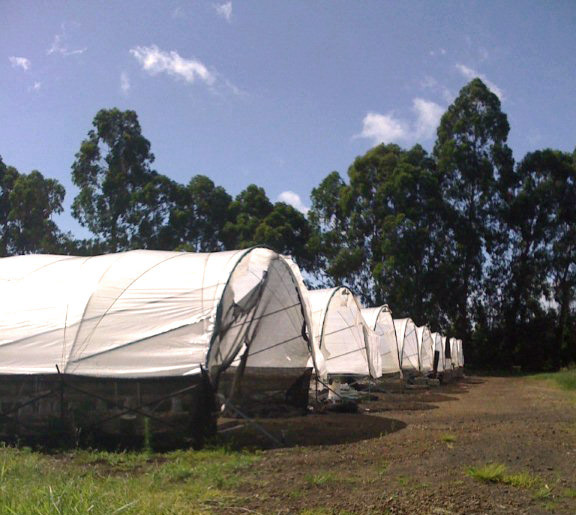
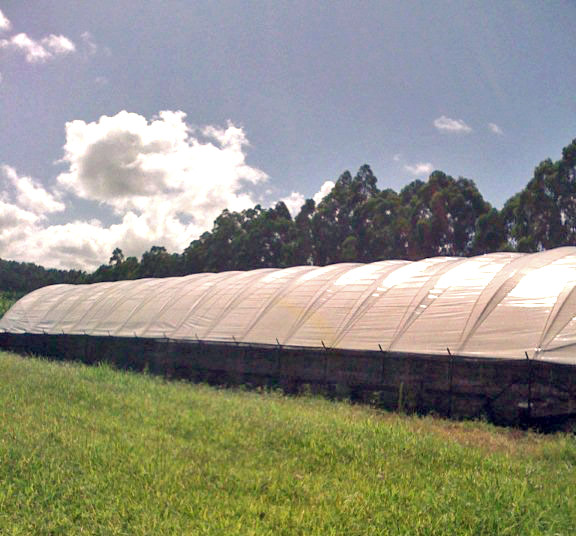
We are going to rent out seven of our nine hoop houses here at the farm.

Hoop houses

A side view

Side view

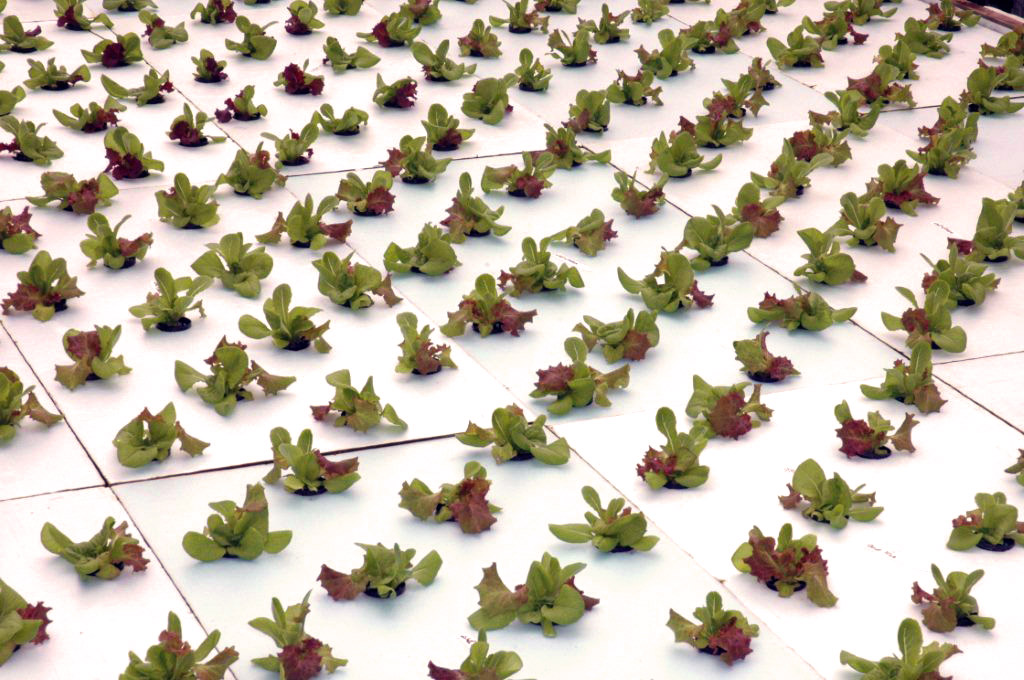
They have been in continuous production for nearly two years, and are set up with a hydroponic system of floating rafts.

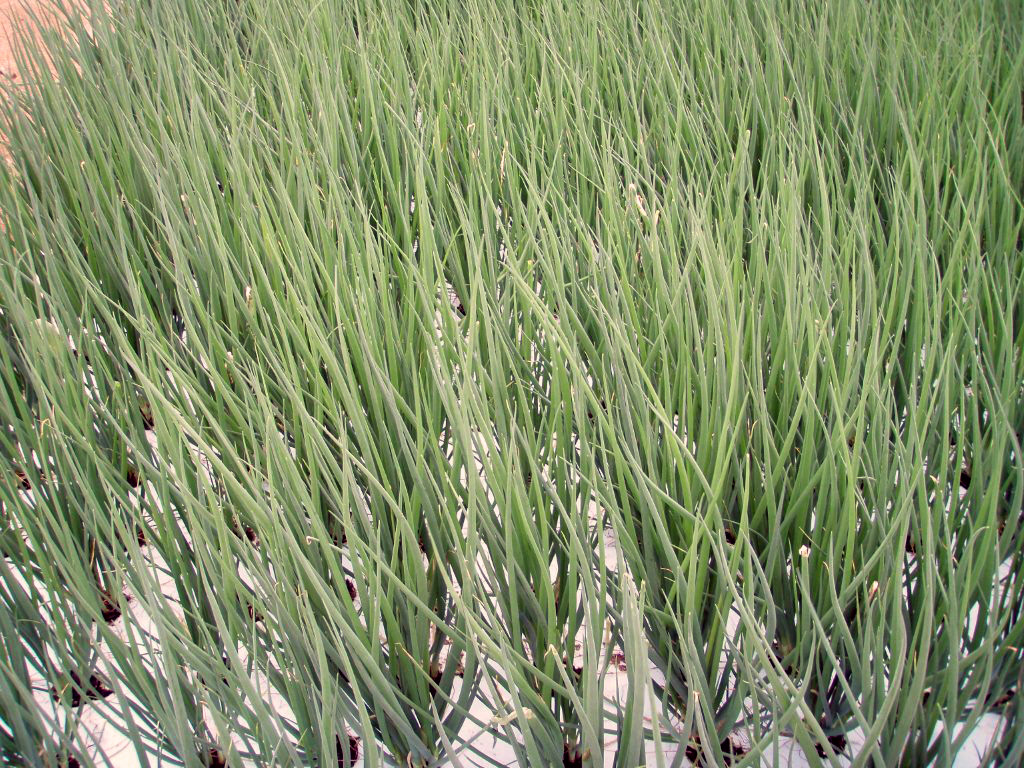
Here’s our green onion production in the floating rafts.

Green onion prod in floating raft

A bouquet of our green and red lettuces.

Bouquet green and red lettuces

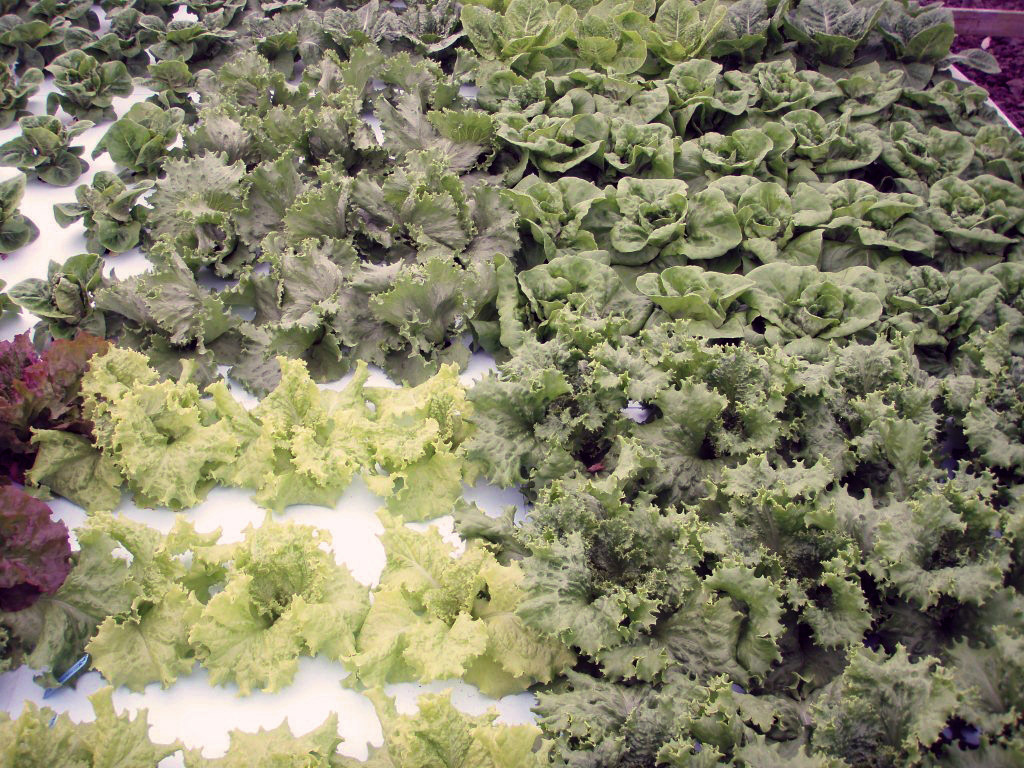
Some of the different lettuces we have grown in the hoop houses.

Different lettuces

Each hoop house is about 100 feet long and has two raceways that are each 10 x 96 feet. Both spring and county water are available. Electricity is available at the site as well. I think that a family unit would be more practical to run this system than a corporate type like us. We are renting each house for $175 per month. Interested parties can reach me on my cell at 960-1057.

As for us, we have been simplifying our operations. We are now concentrating on bananas, tomatoes and Japanese cucumbers. We have leased some of our land to farmers growing sweet potato, apple bananas and for field vegetable crop production. We want to encourage poi taro production, as well.

Our goal is to achieve a balance of our own production with other folks’ production.

We are planning on constructing Value Added Processing so we can help farmers move their number 2 and 3 products, and make poi and other products.

When we finish building our hydroelectric plant, we will be able to refrigerate and consolidate Hamakua area farmers’ crops and ship them together with our products to O‘ahu. This will be mutually beneficial as we try to grow more food for Hawai‘i’s people.

Spring Fever (Where Is It?!)

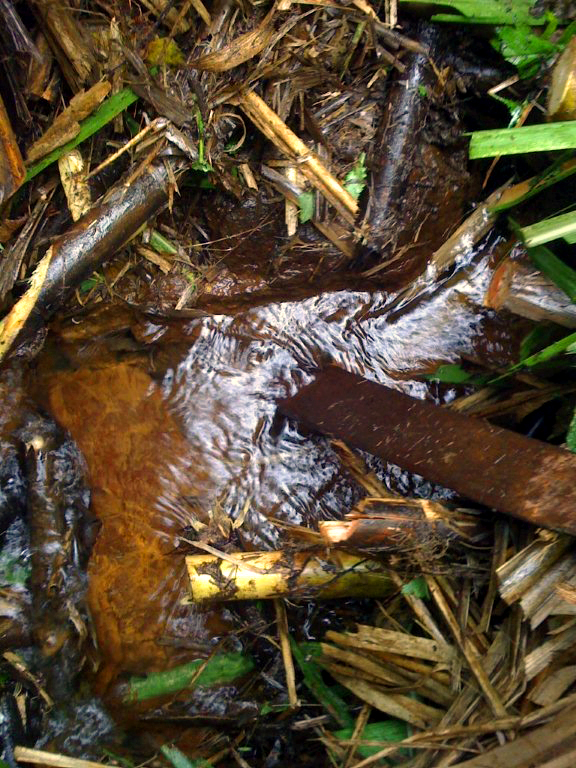
RLast week I took some photos of water coming from a spring  we have not yet uncovered on the farm. The land area where the spring is located encompasses maybe five acres. We can see water coming out of the makai end of the block, running under the road through a culvert that the sugar plantation built.

Springs 3 007 (2)

If I drive about 50 yards mauka on the left side of the block, I can hear the spring running about 10 feet from the road. About 30 feet further up the road, the sound disappears. I think the spring water moves away from the road toward the middle of the block, which is about 50 yards wide.

About 200 yards further up the road, there are banana fields completely surrounding our mauka border. There are maybe five acres of wild sugar cane growing where the terrain is too tough for growing bananas.

At that top boundary, Kimo showed me a spot where we can again hear the spring running. That was yesterday, and today I went back with a cane knife to see if I could find the spring source.

I cut my way through the thick sugar cane as the sound of running water got louder and louder. The sugar cane was maybe two feet thick, and matted. I cut my way down into the ravine and had both feet on the ground, straddling the ravine and facing makai.

There was no water behind me – but in front of me, water was coming out of the right side of the ravine. It was running along the top of a solid rock formation, and out the side of the hill.

In the next few days, I’m going to clear away the sugar cane there and explore around the spring intake – see what I can find. This is very exciting.

Sustainable Agriculture

From the Los Angeles Times food section:

THE CALIFORNIA COOK
‘Organic’ label doesn’t guarantee quality or taste
Just because it’s organic doesn’t mean it’s the best. Let flavor dictate.

By RUSS PARSONS
July 1, 2009

…The real world isn’t black and white at all. Between pure organics and the reckless use of chemicals, there is a huge gray area, and this is where most farming is done.

Ignoring this means that not only are you being misinformed, but you’re also taking your eye off the real mission of supporting small farmers who grow wonderful food.

The sustainable agriculture movement recognizes this, claiming as one of its central tenets the much vaguer requirement of “environmental responsibility,” and plainly state that this doesn’t necessarily require growing strictly organically.

At Hamakua Springs, we try to grow our crops sustainably. This gives us the flexibility to do the common sense kinds of things we need to do for the long run.

At most places on the mainland, it is easier and cheaper to grow crops organically, because the winter cold kills off lots of the bad guy bugs every year. In Hawai‘i, organic farmers need to use more chemicals than their mainland counterparts. The intense insect and disease pressure in our subtropical Hawai‘i climate is probably why organic farming is such a small part of the total food produced here.

At Hamakua Springs, we use organic techniques whenever it makes sense, but having the flexibility to choose the best solution for a situation helps us to produce lots of food.

And as far as the image of organic farming being the domain of small family farms, that is, for the most part, no truer than with conventional farms. A study by UC Santa Cruz professor Julie Guthman, included in her splendid book “Agrarian Dreams,” found that the sizes and ownerships of working organic and conventional fruit and vegetable farms are not that different.

The real problem with most farming today is with a commodity marketing system that demands that every decision be made based on what will be cheapest, not what will result in the best flavor. That — not a simple choice between organic and conventional — is what makes even small farms behave like industrial giants and ship fruits and vegetables that may look great but have no taste.

At Hamakua Springs, we have made a conscious decision to grow what tastes best. Then we do what we need to do to get the crop to market. Could we grow tomatoes with a longer shelf life? Yes, if we wanted tomatoes with no flavor. Could we grow more disease-resistant tomatoes? Absolutely, if we did not care about taste. Could we grow tomatoes that are shinier and more attractive than what we now grow? Sure, and we would grow those if they tasted as good as what we grow.

Farming has evolved quite a bit in the last few years.

In large part, this is a credit to the organic farming movement, as many of the ideas and techniques it pioneered have now worked their way into the mainstream, reducing the use of chemicals even among farmers who aren’t completely organic.

It’s Called “Hamakua Springs”

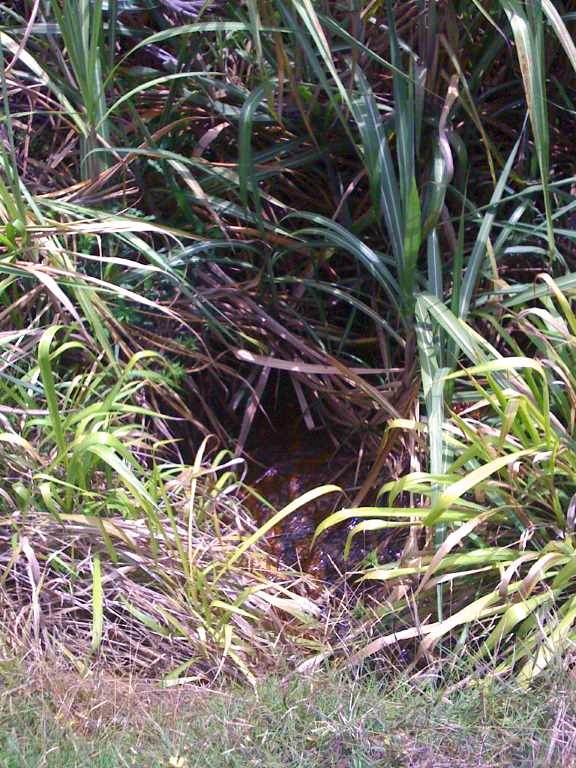
Lately we’ve been thinking about cleaning out the sugarcane to see what that mysterious spring under the vegetation looks like. Is there a series of ponds under there? Could someone grow kalo there? What was it in the old days?

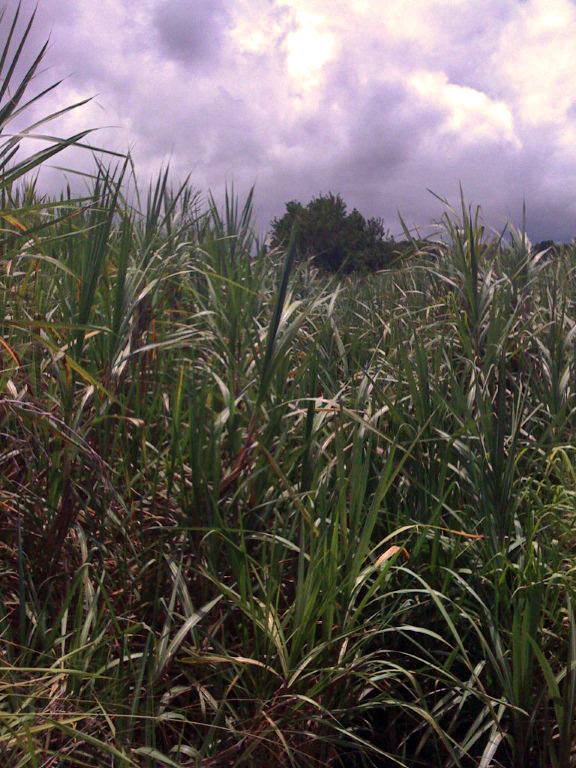
There’s water underneath this tangle of cane, running through a culvert under the road. It’s coming from a spring a short distance away.

New spring 025

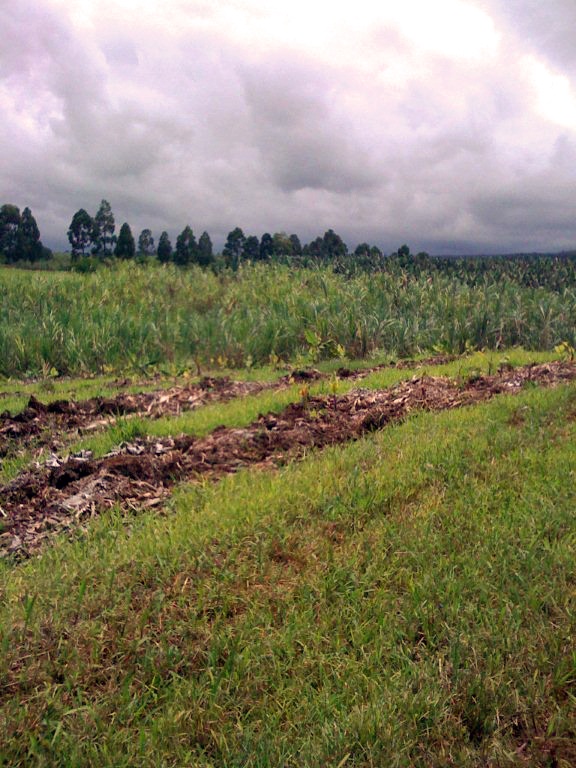
A road runs in front of those trees In the foreground. That road bends around and joins up to the road that I am driving on.  There is no evidence of running water anywhere; just at that one place. That is why we know there is a spring in the tall cane.

New spring 030

The electricity from our hydro project will run right in front of the spring. Could we grow fish, or prawns, or something else?

Could we work with a non-profit that might want to do subsistence farming methods?

Where do we even start looking?

New spring 027

Curiosity is getting the better of us.

Ulupono Initiative

Pierre Omidyar, founder of eBay, and his wife Pam just announced the launch of their Ulupono Initiative. It’s:

a Hawai‘i-based business and social investment initiative rooted in the local wisdom that a healthy environment and a healthy economy go hand in hand. The Ulupono Initiative will invest in and help scale innovative Hawai‘i-based organizations to catalyze economic and social change in the areas of waste reduction, local food production and renewable energy. By growing a progressive, thriving economy based on sustainability, the Ulupono Initiative ultimately aims to improve the quality of life for Hawai‘i’s people.

This will make a major difference in Hawaii’s ability to survive into the future.

I see this as a way to support free enterprise projects that can move the ball downfield in the areas mentioned. I see that this initiative can also support non-profits where applicable. All in all, it’s a very good way to utilize the energy of the people.

From the Ulupono Initiative website, some examples of the types of investments the organization is making:

The Ulupono Initiative invests in organizations and companies working to improve Hawai’i’s economy by expanding the supply of renewable energy. For example:

Sopogy is a solar energy solutions provider dedicated to inventing, manufacturing and selling the worlds most innovative and affordable solar collectors. The Honolulu firm started as an Energy Laboratory incubator initiative. The Omidyars recognized creative leadership with an innovative product that was scalable to a global level. Sopogy demonstrated the qualities of an ideal Ulupono investment. It’s a local firm with a better business model that is ripe for expansion. With catalytic investment, Sopogy has expanded to supply a global marketplace with its trademarked concentrated solar power technology.

The Ulupono Initiative invests in organizations and companies working to expand Hawai’is supply of locally grown food. For example:

MA’O Organic Farms is a certified organic farm run by the Waianae Community Redevelopment Corporation (WCRC), a non-profit organization established by area residents, traditional practitioners, teachers, and business experts to address important needs of the Waianae community: youth empowerment, sustainable economic development, agriculture, health, and Hawaiian culture. Young people are engaged through a pathway of educational opportunities while they work to operate an organic farm that grows premium quality fruits and vegetables. With Omidyar family matching funds of the Legacy Lands Act and with support from Hawai’i Community Foundation, MA’O purchased land to triple its acreage. Because high growth creates new management challenges, strategic assistance has also been provided in formulating the plans to scale the farm to its new size, with the end goal of helping the program increase the number of students served and meet growing demand for its local, organic produce.

The Hawai’i Island School Gardens Network is managed by The Kohala Center on the Island of Hawai’i. By supporting dedicated staff and offering small matching grants, the program is expanding the number of school gardens and is sparking excitement within the community. Children are growing food locally, selling and marketing their product, and tracking production. The program hopes to inspire a new generation of Hawaii farmers while it increases the production and consumption of locally produced, nutritious food.

Hawai’i BioEnergy LLC is a limited liability company established by three of Hawai’is largest landowners (Kamehameha Schools, Grove Farm Company, and Maui Land & Pineapple Company), in partnership with global leaders in the venture capital community with an emphasis in sustainability (Khosla Ventures, Finistere Ventures, and ourselves). Hawai’i BioEnergy’s mission is to reduce Hawai’is energy costs, greenhouse gas emissions, and dependence on fossil fuels and improve local agriculture through research and development of local renewable bioenergy projects. Among Hawai’i BioEnergy’s initiatives are projects conducting research and development on various sites in Hawai’i to lead to the commercialization of producing biofuels from micro-algae in Hawai’i. Learn more about Hawai’i BioEnergy.

The Ulupono Initiative invests in organizations and companies using technology in innovative ways to engage the entire community in creating Hawai’is sustainable future. For example:

Kanu Hawai’i is an innovative social movement supported in part by a matching grant from the Omidyar family. It utilizes the power of web 2.0 tools to catalyze individual commitments into community action in harmony with island values. Kanu is pioneering new methods of engaging the citizens in the effort to build more compassionate, self-reliant, and sustainable communities. It is a model for civic engagement and social change with incredible potential, here and in other communities.

You can read more about the Ulupono Initiative in its press release.

What About The Rest?

I went to O‘ahu last night for the last of the Thirty Meter Telescope Draft EIS hearings, which was held at Farrington High School’s cafeteria and where I said a few words.

What I keep coming back to again and again is what Kumu Lehua Veincent told me the first time I asked him what the TMT should offer the Big Island as an introductory, good faith gift. I asked him if it would be appropriate to ask for “full ride” scholarships for at least five native Hawaiians to attend the best colleges in the nation.

He asked me, in a very sincere way, “And what about the rest?”

I felt so stupid that I could feel my ears getting hot.

That is the essential question: “What about the rest?” This is about the keiki, the future generations—all of them.

Three years later, University of Hawai‘i President McClain has announced that if the TMT comes to Hawai‘i, in addition to its other negotiations there will be an annual, $1 million benefit package for education emphasizing K-12. It will be effective for the life of the project—50 years—and will begin as soon as all the permits are in place.

It will be set up to address Kumu Lehua’s question: “What about the rest?”

Motivation

What is it that motivates me to support the Thirty Meter Telescope, Geothermal energy and the E Malama ‘Aina sustainability festival?

Those three subjects, I firmly believe, give us some transition time as we deal with Peak Oil – a scenario in which global oil production has peaked and every barrel of crude oil drawn from the earth from that point forth is more difficult and more expensive to extract than the barrel before it. This will have enormous, detrimental effects on being able to provide people with cheap food.

I believe we have time to adjust, but, for the sake of our people, we just cannot afford to waste the opportunities available to us.

I am no doom-and-gloomer, but I do believe in being smart about it. For example, when oil was first discovered in Pennsylvania in the 1850s, it would have been foolish to invest in the old technology – a harpoon factory in Lahaina.

Hanalei Fergerstrom and I are both very concerned about “Peak Oil” and its implications. I am a farmer whose kuleana is feeding people. Hanalei belongs to the House of Lono. Lono is one of the four major Hawaiian gods; he ruled agriculture, harvests, weather, sports, and medicine.

Palikapu Dedman and Tom Anthony were distressed the other night because they thought that I was anti-Hawaiian, but nothing could be further from the truth. I am concerned about Hawaiians; I am concerned about all of us.

It is about giving ourselves “transition” time toward a better, more sustainable future. It certainly is not about selling more tomatoes, and I don’t get paid from anything having to do with the Thirty Meter Telescope.

Here is an interesting article about “Peak Oil” and transition.  I think that it is a bit overstated, but the general ideas are valid:

…Fridley, like a few other thinkers, activists and pessimists, could talk all night about “peak oil.” This catch phrase describes a scenario, perhaps already unfurling, in which the easy days of oil-based society are over, a scenario in which global oil production has peaked and in which every barrel of crude oil drawn from the earth from that point forth is more difficult to extract than the barrel before it. According to peak oil theory, the time is approaching when the effort and cost of extraction will no longer be worth the oil itself, leaving us without the fuel to power our transportation, factories, farms, society and the very essence of our oil-dependent lives. Fridley believes the change will be very unpleasant for many people.

“If you are a typical American and have expectations of increasing income, cheap food, nondiscretionary spending, leisure time and vacations in Hawaii, then the change we expect soon could be what you would consider ‘doom,'” he says soberly, “because your life is going to fall apart….”

Read the whole article here.