All posts by Richard Ha

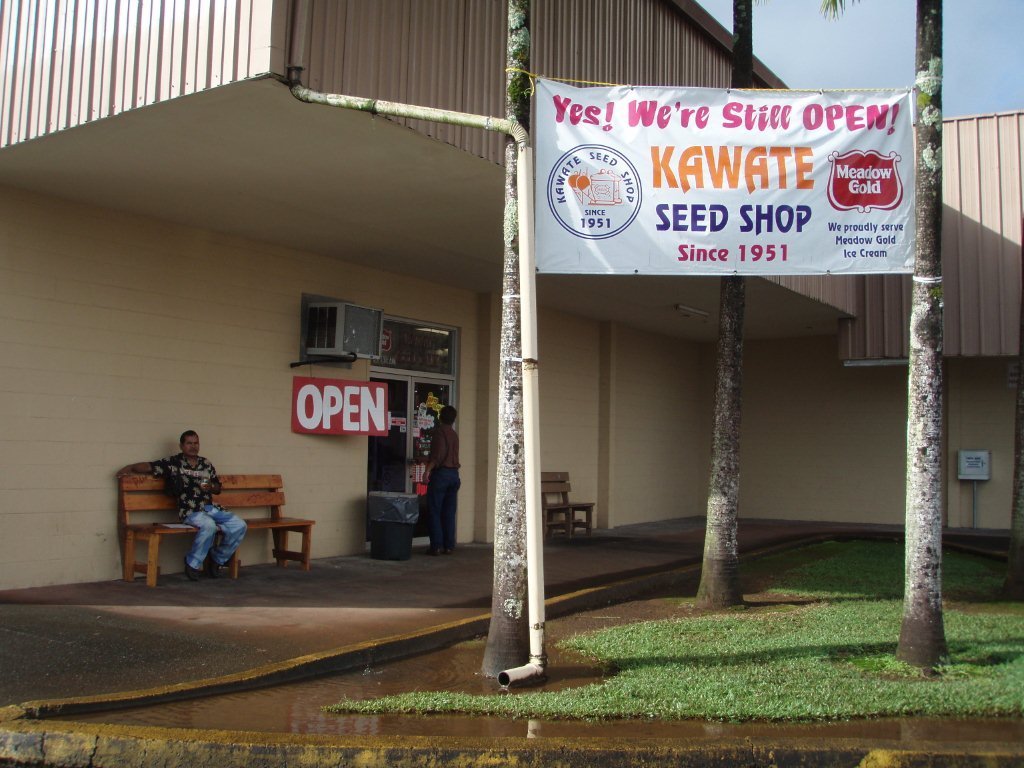
Kawate Seed Shop, Hilo

Kawate Seed Shop is next door to the Kino‘ole Farmers Market, where we bring our produce on Saturday mornings.

Kinoole farmers market 026 (2)

All I knew is it always existed and it always will exist. I do not go to the crackseed shop very often; it is enough for me to know that it is there.

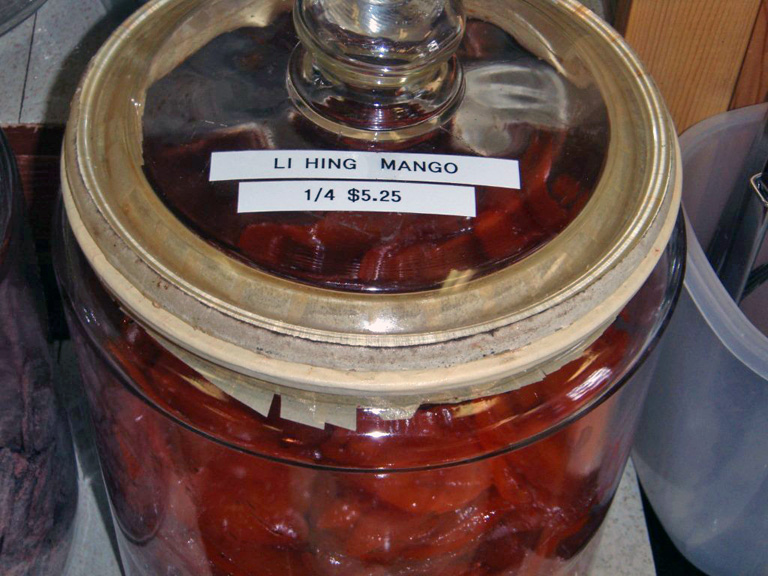
But my salivary glands do not forget. They start to work before I even bite into a li hing mui or honey lemon. Hawai‘i without crackseed is unimaginable.

Kinoole farmers market 029 (2)

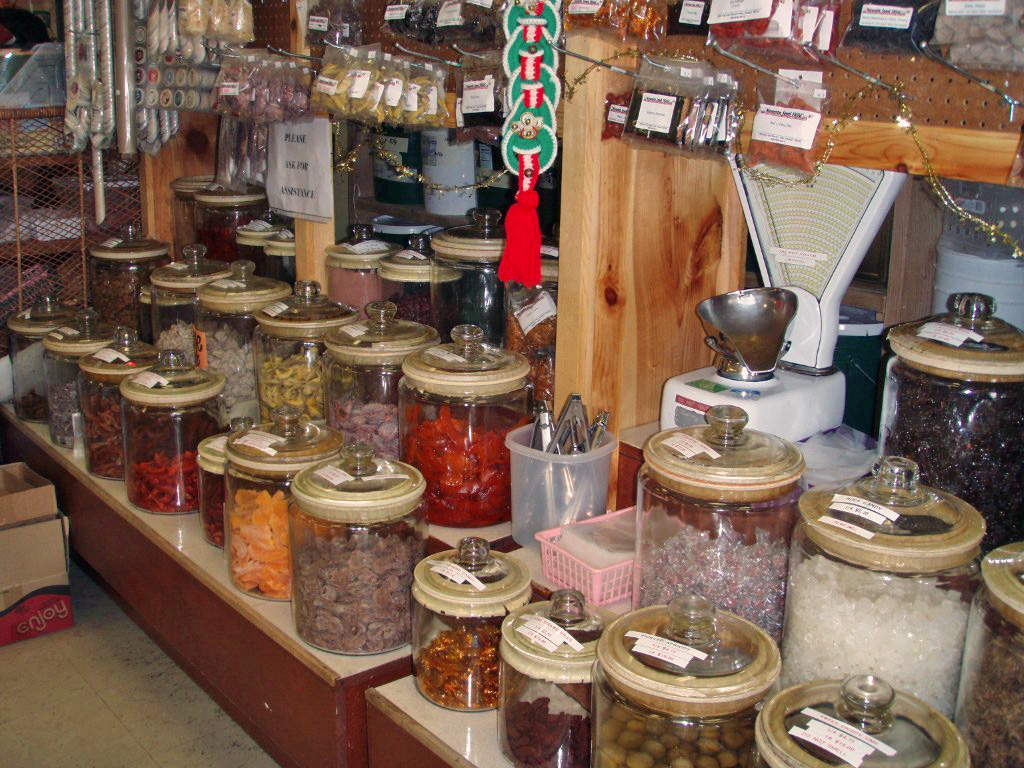
Crack Seed Center is an online store that sells crackseed (in case you cannot get to Kawate Seed Shop in Hilo), and they have a good explanation of what the stuff is.

Kinoole farmers market 027 (2)

What on Earth is Crack Seed?

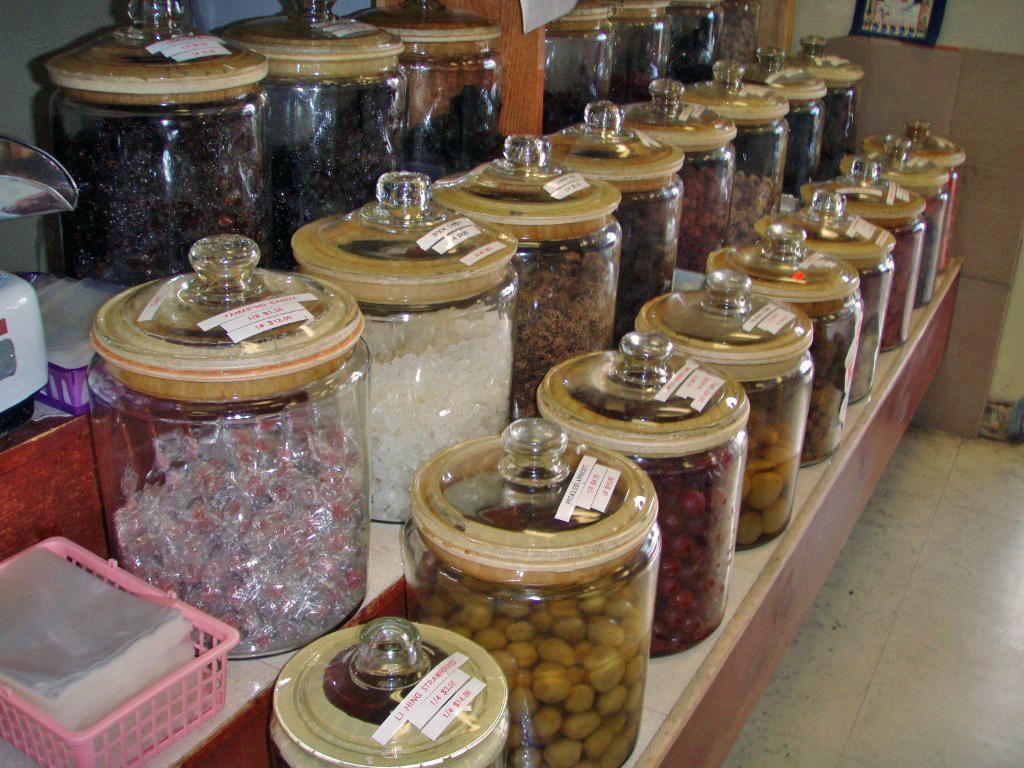
Crack seed, a popular local snack in Hawaii, comes in a variety of shapes, sizes, and flavors. Also known as Li Hing Mui or See Mui, crack seed is actually a variety of dehydrated and preserved fruits. If you’ve never tried this local favorite, read on!

Kinoole farmers market 028 (2)

Why Preserve Fruit?


Before canned goods were available, merchants heading west across the rugged terrain of China carried dehydrated fruits to supplement their meals of plain rice. The salt in crack seed was useful for long distance travelers in several ways: besides replenishing the salt lost by the body in perspiration, it also helps the body retain water and lessen muscle cramps.

The concept of fruit preservation is simple: salt absorbs the natural moisture in fresh foods and inhibits the growth of germs that need water to survive. Salted seeds can be stored for extended periods of time. Moreover, crack seed had the desired illusion of quenching thirst.  Read more here.

If you come by the Kino‘ole Farmers Market one Saturday morning, remember you can also stop in to Kawate Seed Shop.

Adopt-A-Class, Year Three

Last night I sent in testimony supporting the Senate Bill that would give authority to the University of Hawai‘i at Hilo’s Mauna Kea Rangers to implement the Comprehensive Management Plan. (See below.)

The Senate passed the bill today, which was good.

But I kept on thinking about our Adopt-A-Class project, and wanting to make sure the Keaukaha Elementary School children can continue to go on excursions. Six hundred dollars adopts a class at Keauakaha Elementary School and sends the students on an excursion they would otherwise not take.

This is the third year we are seeking donations for our Adopt-A-Class program. At our website, you’ll see that a person or group can sponsor the whole excursion for one class ($600), or make a donation of $100 or more and contribute toward that class excursion.

If you can help, please look at the website and tell us which class you’d like to sponsor, and for what amount. There is more information about the process here.

In the meantime, here is the testimony I sent in. Among other things, it explains how we came to start the Adopt-A-Class program in the first place.

Dear Senators,


I am testifying in very strong support of HB 1174, HD3, SD2, the bill that enables us to malama Mauna Kea. Mauna Kea is our kuleana. We know what to do.

I am Richard Ha and I’m a native Hawaiian and a life-long Big Island farmer. We farm 600 acres at Pepeekeo. We have farmed bananas for 25 years and hydroponic vegetables for the last five. Over the years we have produced millions of pounds of food. We sell under the Hamakua Springs brand in the supermarkets. Nearly 70 of us work on the farm. We are concerned with food security and sustainability, especially since we sit out here on islands in the middle of the Pacific.

I would like to share with you how I came to be involved with issues related to Mauna Kea. Three years ago, when I was a new member of the Hawai‘i Island Economic Development Board, the Thirty-Meter Telescope people inquired about siting their telescope on Mauna Kea and the HIEDB formed a special TMT committee. I had strong feelings about the way it should be done: It should be done right! So I volunteered to sit on that committee. Before that, I was just a banana farmer.

When you talk about Mauna Kea you automatically talk about the Hawaiian culture, and when you talk about that, you end up in Keaukaha, the oldest Hawaiian Homes community on the Big Island (75 years). I found that the elementary school there is the center of the Keaukaha community.

I went to see Kumu Lehua Veincent, principal of Keaukaha Elementary School, with what I thought was a good proposal: “The TMT wants to come to the Big Island; what happens if we can convince them to give some kids from the community five, full-ride scholarships to the best schools in the nation?”

Kumu Lehua listened, and then he asked me: “What about the rest?” I could feel my ears getting hot and I felt kind of stupid. Yes, what about the rest?

Also, because the TMT had intentions to do things for the community, I expected the community would be receptive. Instead, I found that the Keaukaha people were very wary, wanting to know: “What do you really want?” They had been promised things many times before.

In the meantime, the TMT board decided to deal directly with UH system. But having met and liked the people in the Keaukaha community and elementary school, I went back again and again to talk story.

One day, I offered to sponsor an excursion to my farm. In the course of that trip, I asked Kumu: “Eh, where you guys go on excursion?” He told me they did not go. “No more money.” Instead, they walked around the neighborhood. I said: “What you mean?” He said, “The bus costs $300 and we don’t have enough money for all the classes.”

I was shocked. How could this be? There were hundreds of millions of dollars’ worth of telescopes on Mauna Kea and there was no evidence of any benefit to Keaukaha, the most Hawaiian of Hawaiian communities?  This no can! We needed to do something.

So, myself, Duane Kanuha, Leslie Lang and Macario decided to copy the Adopt a Child template—where you pay $20 a month and the child sends you a letter and a picture every so often. We decided to do an Adopt A Class project so each class could go on excursions.

We figured $300 for the bus and $300 for entry fees to ‘Imiloa – the world-class Hawaiian culture astronomy museum. So for $600, people could adopt one class and send them on excursion. In four months, we had all the classes going on excursions both semesters.


The idea was contagious. Gordon and Betty Moore heard about the project and donated money to send all classes on the Big Island, from kindergarden to high school – in all public, private and charter schools – to ‘Imiloa. That was nearly three years ago. Now I hear they plan to expand this idea to the San Francisco Bay area.

And due to Kumu Lehua’s leadership, Keaukaha Elementary, a perpetually low-achieving school, had two consecutive years of improvements and came off the No Child Left Behind non-performing list. It was the only elementary school on the Big Island to achieve this distinction. Now they are role models. Imagine that.

Kumu Lehua told me this story: He said a teacher recently came in to interview to see if she could teach at Keaukaha Elementary. He rolled his chair back and told me, “She said it was a career move!”

I have attended at least eight public hearings about Mauna Kea, and many regular meetings of the Keaukaha Community Association, as well as meetings of the Kanaka Council. I have friends on all sides of the issue.

I see myself as a bridge between the shiny shoe crowd and the rubbah slippah crowd. I think that if we all can move toward the center a bit, we can make this work for all of us and especially for future generations.

It is no secret that I think that the TMT can bring benefit to the community. But when I first volunteered for the TMT committee, I insisted it be done right.

So we must malama Mauna Kea before we do anything else. HB 1174, HD3, SD2 helps to enforce the rules that the Comprehensive Management Plan proposes.

I started off by saying that we should not let the perfect be the enemy of the good. When I was a young boy, my dad told me: “There are a thousand reasons why, no can; I only looking for one reason why: CAN!

Richard Ha, President, Hamakua Springs Country Farms

Kinoole Farmers Market on Saturday Mornings

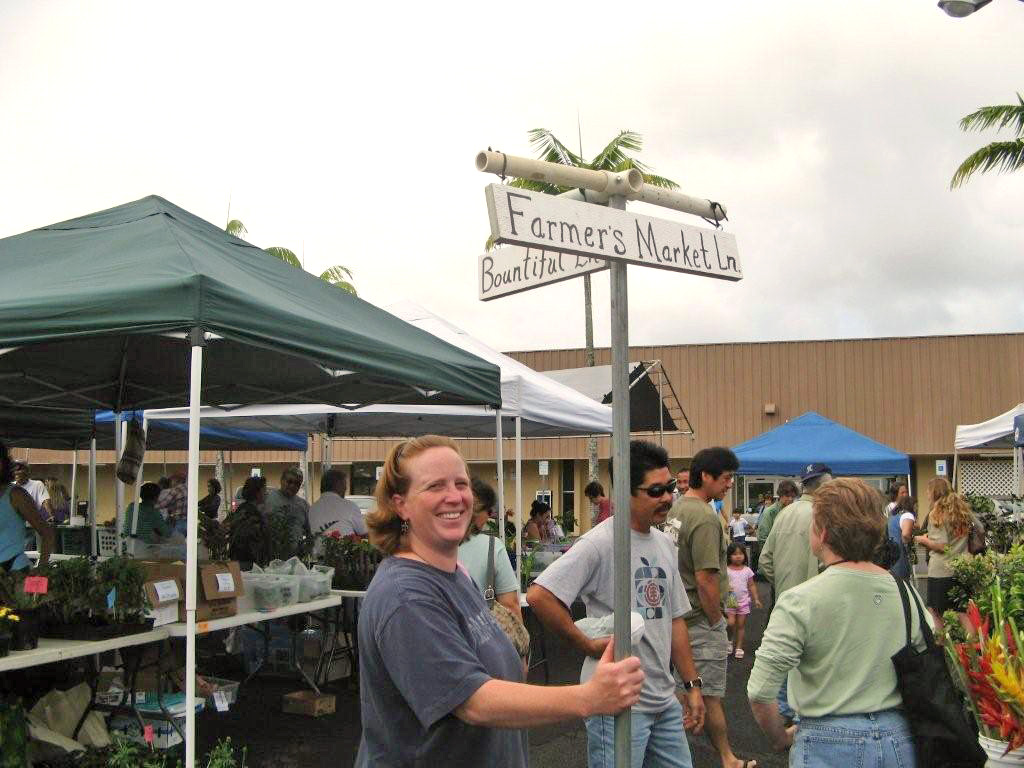
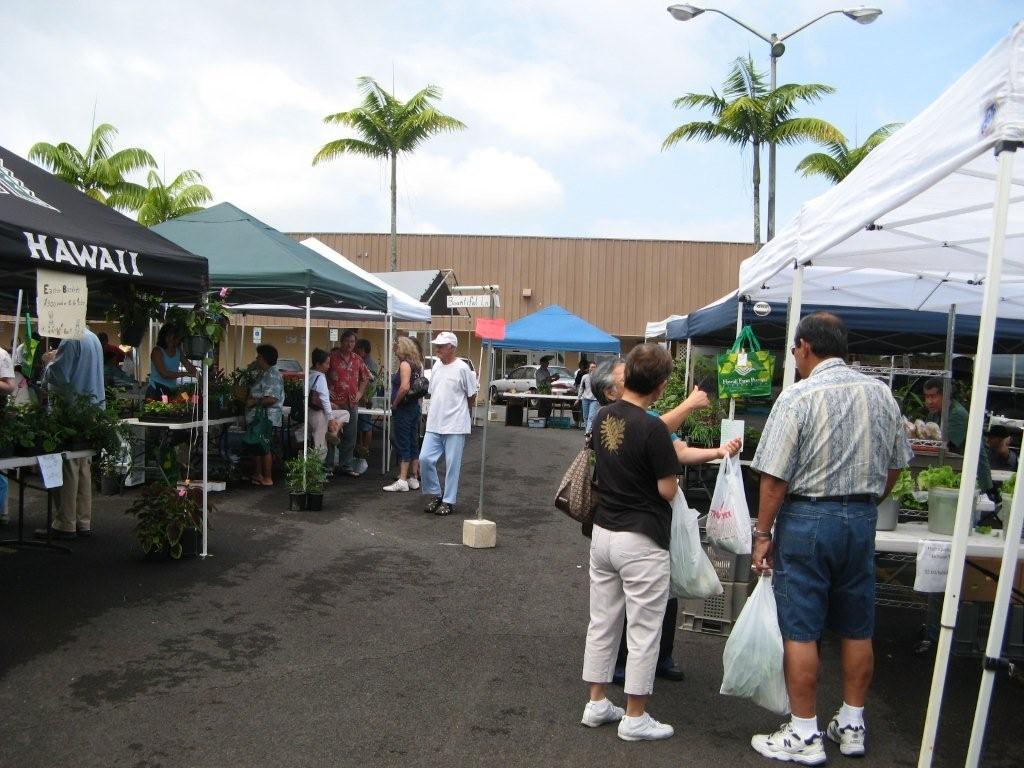
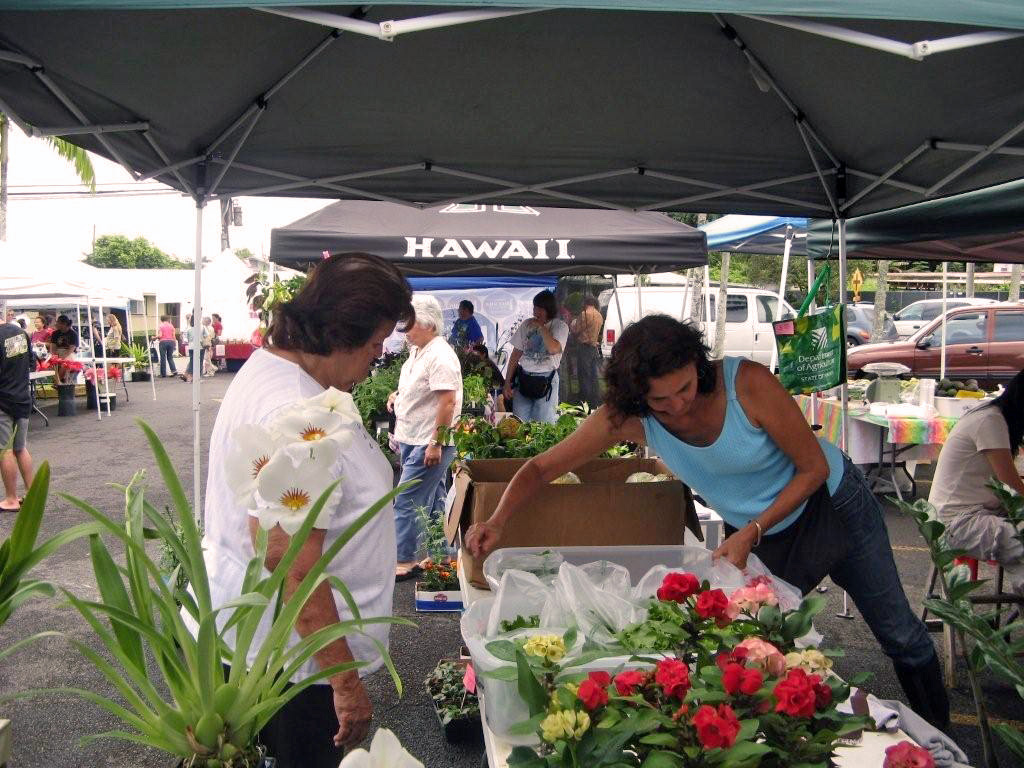
The Kino‘ole Street Farmers Market, located on Kino‘ole Street two streets mauka of Puainako Town Center, is growing. When we started last January there were maybe eight vendors’ tents. It has doubled since then and new vendors keep coming.

Kinoole farmers market 2 006

First traffic sign!

Kinoole farmers market 2 031

Kinoole farmers market 2 004

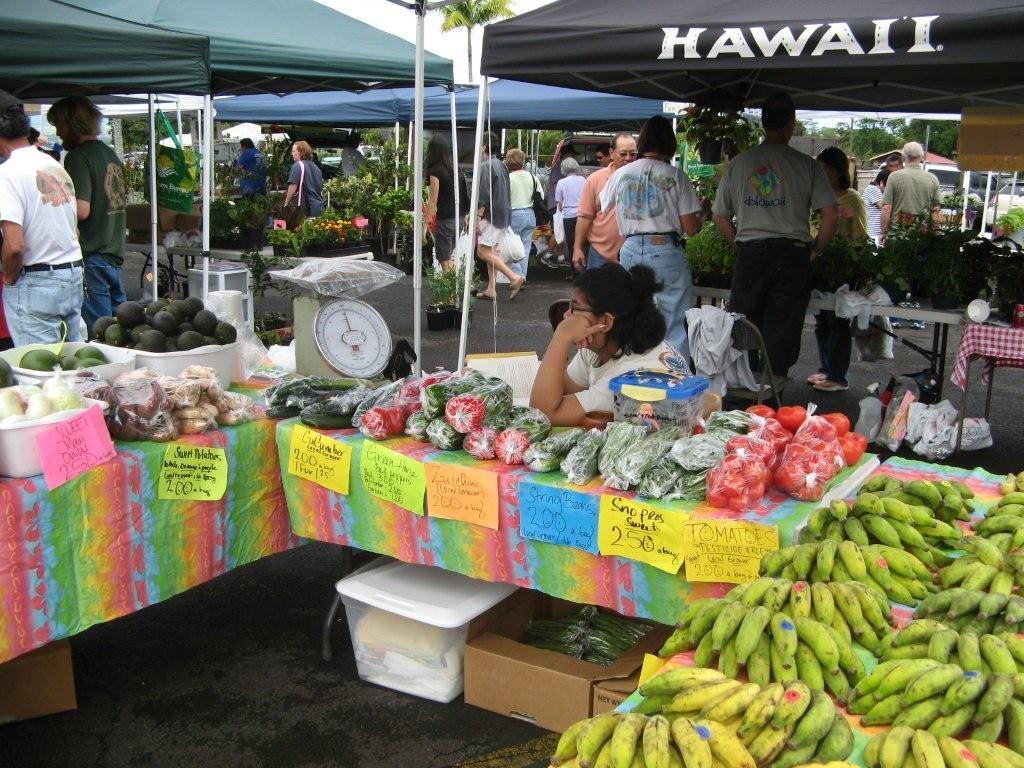
It’s great to see more and more variety of stuff. This Farmers Market is sponsored by the Big Island Farm Bureau, and most of the products are produced by the people manning the booths. There is plenty of easy parking.

The market is open on Saturdays from 7 a.m. to 12 noon. You should come early.

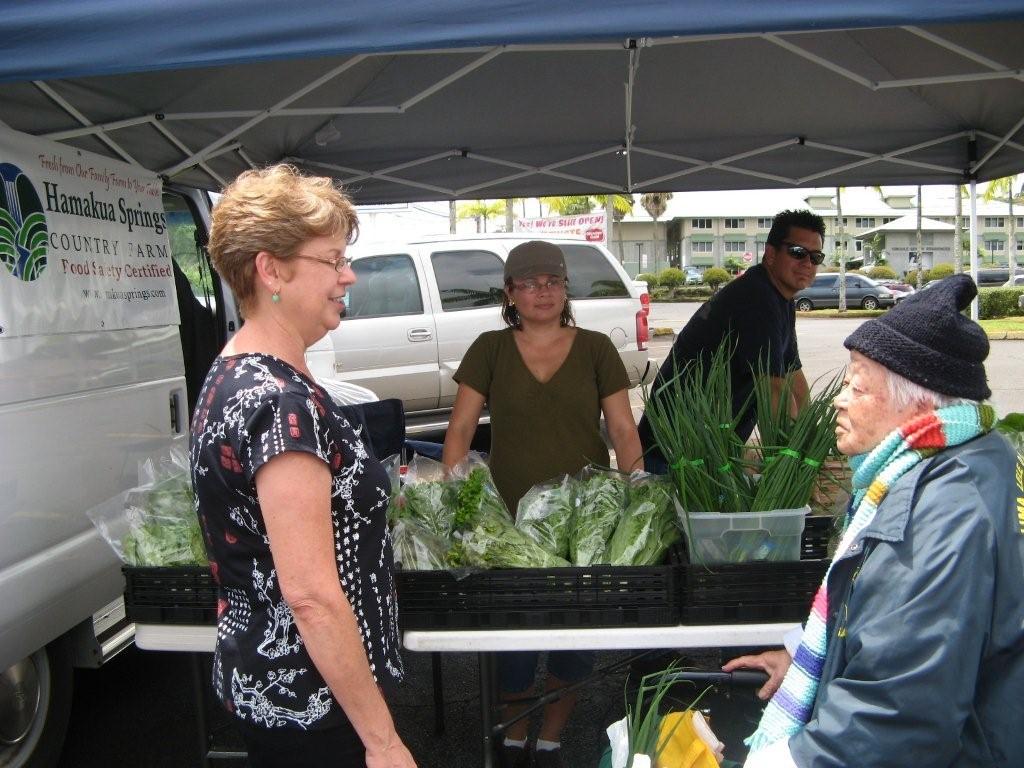
We have a booth there every Saturday morning and it is great to talk story with people. It puts one in a good mood all day.

Kinoole farmers market 2 040

This little old lady with a walker has a strong, booming voice and a strong wit. We enjoyed chatting with her.

Kinoole farmers market 2 038

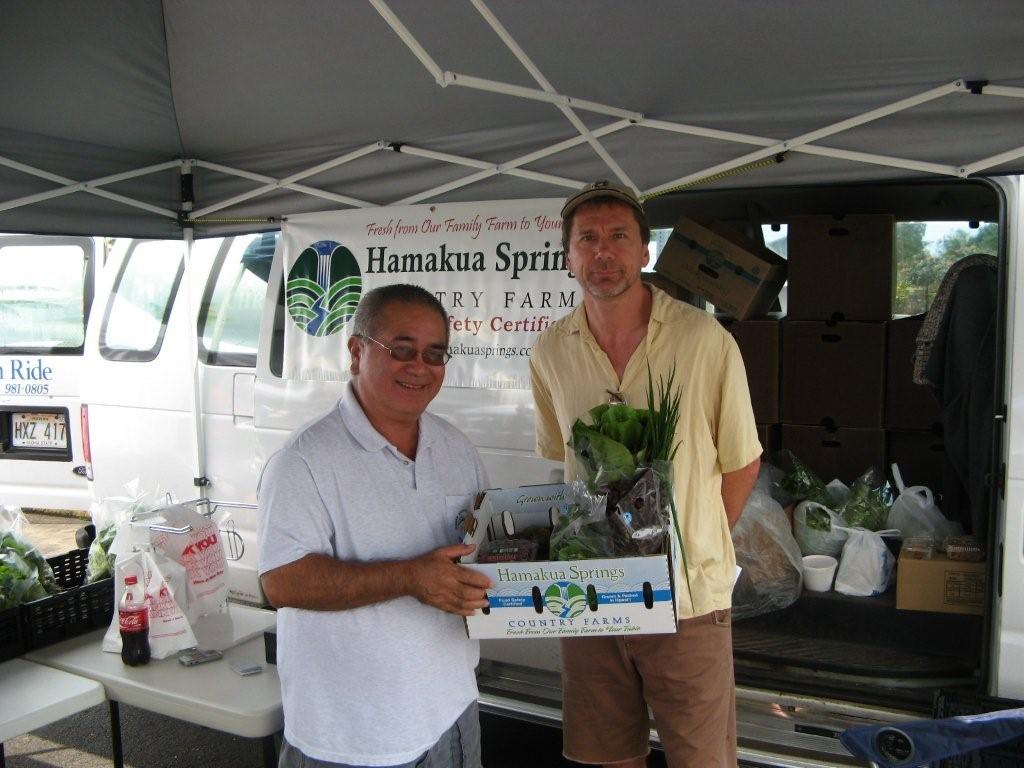
Darren, from Island Notes, who won a prize in our caption contest, picking up his box of produce.

Kinoole farmers market 2 032

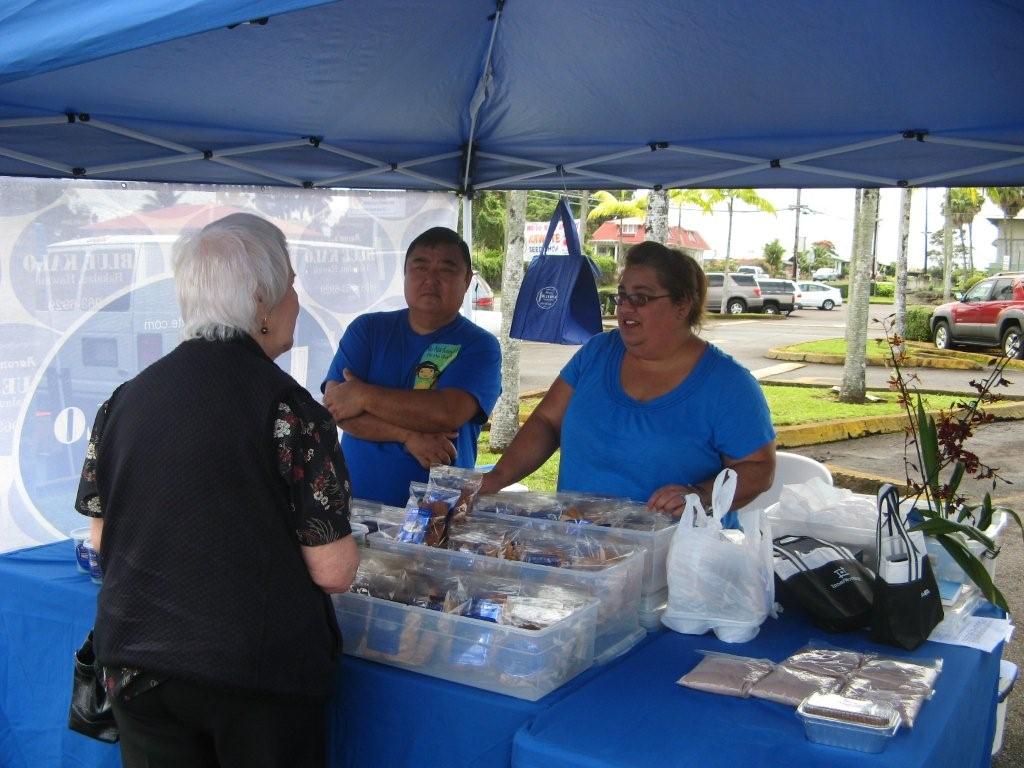
Aaron and Vionel Sugino of Blue Kalo work out of the old Fujii Bakery at Wailea.

Kinoole farmers market 2 017

More of Blue Kalo’s products.

Kinoole farmers market 2 022

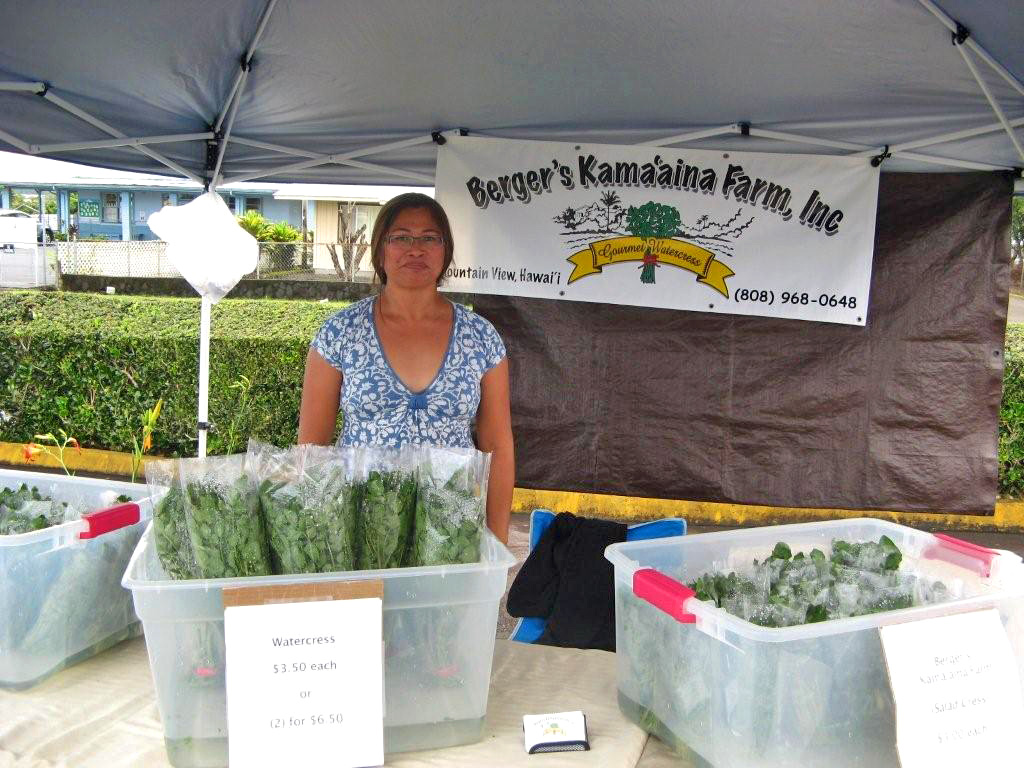
Watercress from Mountain View.

Kinoole farmers market 2 018

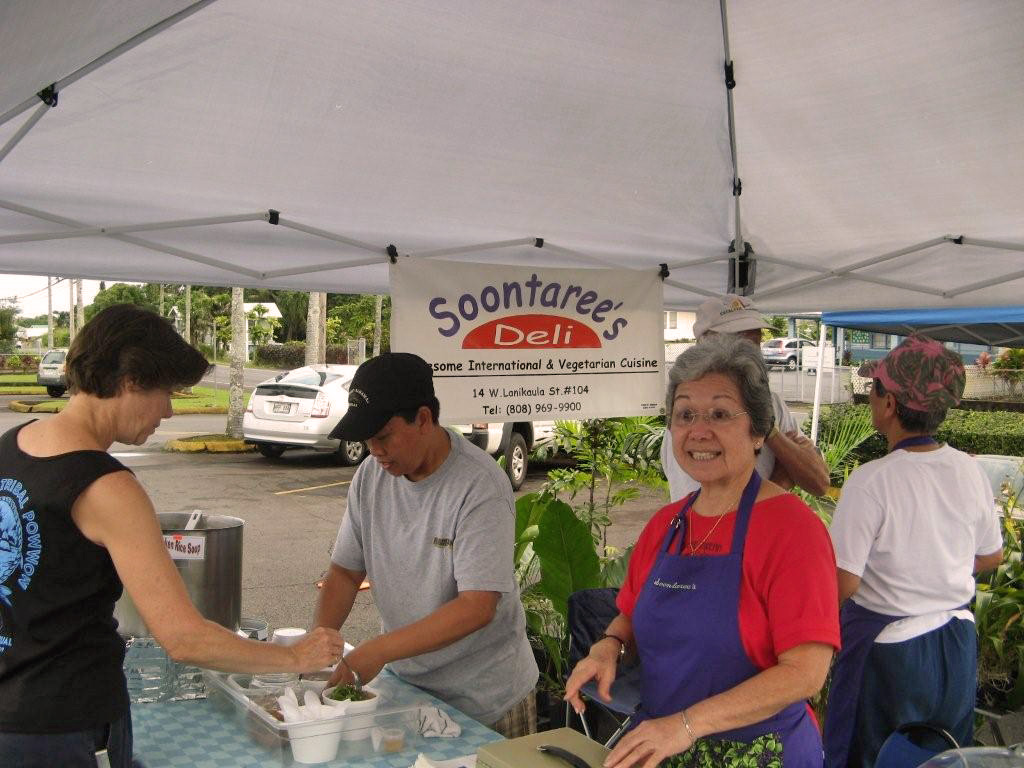
Best rice soup.

Kinoole farmers market 2 002

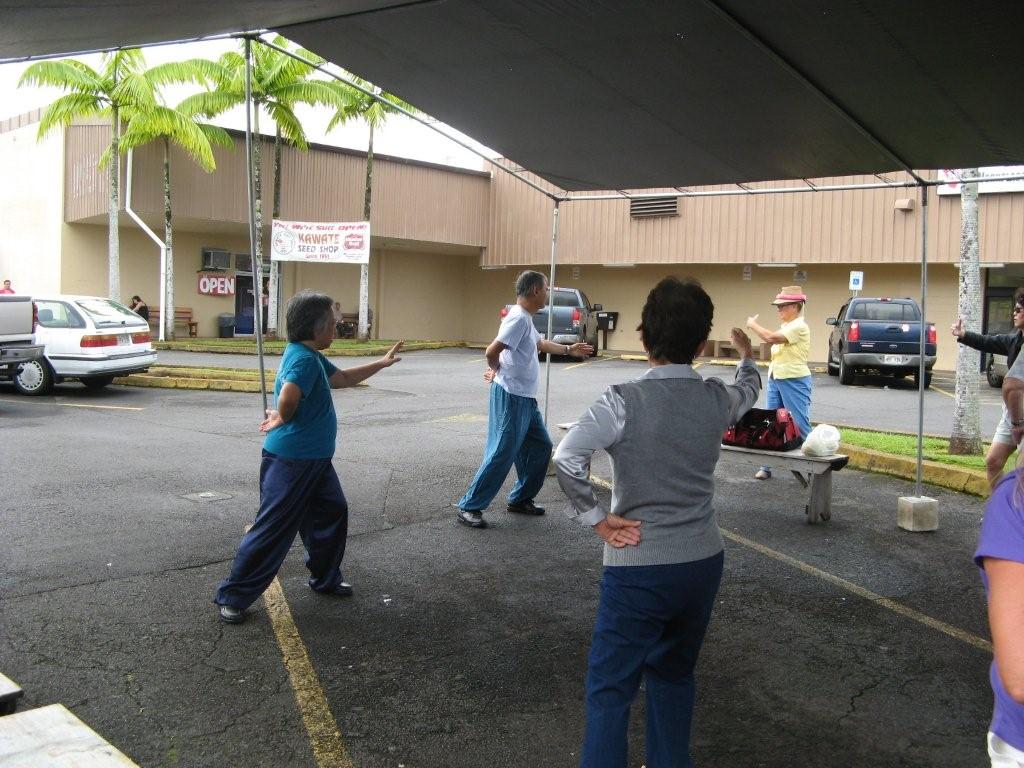
There is a class or a talk every Farmers Market day.

Kinoole farmers market 2 021

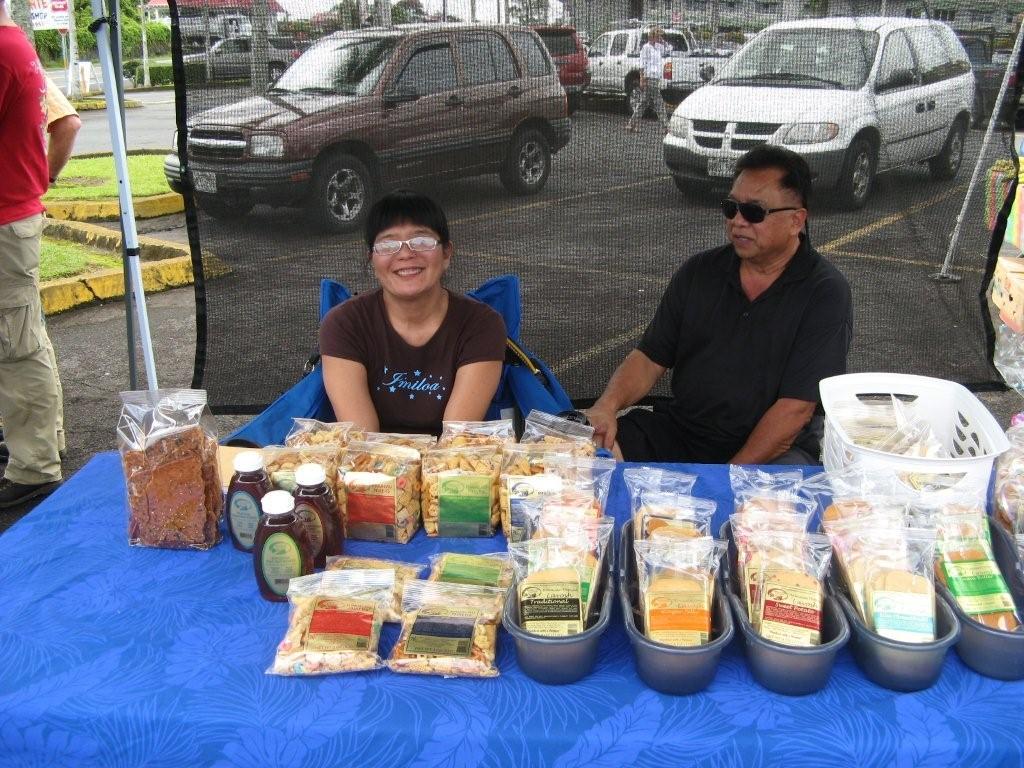
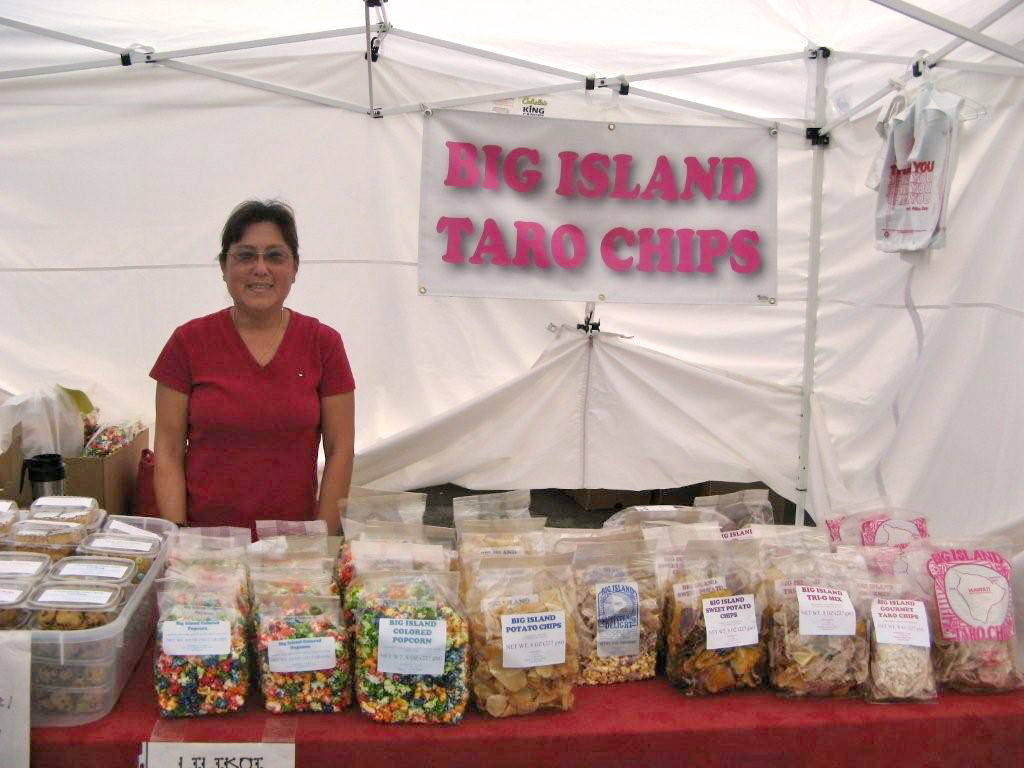
Cookies, popcorn and vegetables.

Kinoole farmers market 2 012

Coming up: Every Wednesday for awhile we’re going to tell you about one of the vendors you will find at the Kino‘ole Farmers Market.

The Mauna Kea Comprehensive Management is Accepted

After listening to two days of testimony, the Board of Land and Natural Resources accepted the Comprehensive Management Plan (CMP) with some conditions. The most significant condition is that the University of Hawai‘i Board of Regents accept responsibility for enforcing the CMP.

There is a requirement to include information from two resource plans that are nearing completion. There is an addition of a decommissioning plan, including upfront funding for returning the site to its original condition. And finally, a plan to delineate access. People did not want access to be taken away. I thought these were very good additions.

The Board of Land and Natural Resources Chair, Laura Thielen, did a very good job of giving everyone a chance to share their thoughts. I was very impressed that they spent two days in Hilo accepting testimony.

University of Hawai‘i President David McClain stayed for the better part of two days. In his introduction, he mentioned the recent Board of Regents declaration of a special relationship with native Hawaiians. This has far-reaching implications.

He went on to make three main points:

  1. That, in the interest of home rule, the University system is committed to the University of Hawai‘i at Hilo being the entity that would manage the CMP.
  2. He committed to funding that would ensure that the CMP could be implemented.
  3. He apologized for the pain and anguish that the native Hawaiian community feels due to the university’s mismanagement prior to 2000.

At the end of the session, Dr. McClain talked about compensation. There is not much that can be done to change the original lease, which gives the IfA a percentage of viewing time as compensation.

He emphasized that the University of Hawai‘i has been providing $2.5 million annually in scholarships to native Hawaiian students. This means that UH is paying the equivalent of 20 percent of what would be $10,000,000 if telescope time were monetized.

From here forward, he said, lease rents for new projects will be determined differently instead of all the telescope time going to UH Manoa. It could include telescope time for the University of Hawai‘i at Hilo, and an amount could go toward community benefits. This is in the early conceptual stages.

The people opposed to the CMP were very organized and people kept on coming through the door to testify. They did a very good job. Out of the 80 or so testifiers overall, I would say that it was evenly split; maybe slightly more in favor than not.

The people who testified in favor were also highly motivated. I have not seen that level of participation before at the eight public hearings that I attended. It clearly made a difference in the decision to accept the CMP.

People were very respectful and tolerant of each other, and this is very encouraging. We all live here on an island in the middle of the ocean and we need to be able to have these discussions, go through the process, come to a conclusion, live with the decision and remain friends. More than anything, I was pleased that we all went through this process together. The result is a better CMP.

Sign Waving Tomorrow at the Bayfront; Please Join Us!

Please come to the sign waving in support of the Mauna Kea Comprehensive Management Plan (CMP) on Monday, April 6th between 4 and 6 p.m. We will be in front of the King Kamehameha statue near the Hilo Bayfront. It will be fun!

The first 150 folks will get a container of Hamakua Springs grape tomatoes (one per family).

Coming up with a Comprehensive Management Plan for Mauna Kea has been a long and difficult process. Nevertheless, I think most of us can agree that we have a good start.

The CMP is a living document and it allows people to step up and exercise “our kuleana,” which is to malama Mauna Kea. It is a good plan because it takes special pains to be respectful of the culture, and of the people who practice the culture. Most of all, it is a good plan because we all contributed to it.

• The Office of Hawaiian Affairs issued a Resolution approving the Comprehensive Management Plan.

• The staff of the Board of Land and Natural Resources recommends approval if the Board of Regents accepts responsibility for implementation of the Comprehensive Management  Plan.

• The Association of Hawaiian Civic Clubs recommends approval of the Comprehensive Management Plan.

We hope you will join us at the Bayfront tomorrow afternoon, where we will wave signs in support of the CMP.

Mauna Kea: It’s About The Big Picture

I think it’s really important that I say something now.

I’ve been talking a lot about the Mauna Kea Comprehensive Management Plan, and I want to be very, very clear about one thing:

This is not about “sides.” It’s not about the astronomers or the business people or the Hawaiians or the labor people. It’s not about whose agenda “wins” and whose agenda “loses.”

This is about taking care of Mauna Kea. It’s all about Malama Mauna Kea in a very “big picture” way. The CMP is a process where we are taking everybody’s input and coming up with a plan that takes care of the mountain and looks to the future.

I feel very strongly about this. This is not about any one group of people and what they want. It’s a matter of everybody having their say. I’ve been meeting all the different people who have an interest in Mauna Kea, and they’re all nice people. None of them are the enemy. And I’m not the enemy, either.

We need to aloha everybody – that’s the point. No matter what side of the fence you’re on, we need to aloha you. Because we all have to live here with each other.

When we wave signs on Monday, people will be carrying signs that say “CMP Yes.” But I’m making a sign that will say, “CMP took all of us.” That’s what I’ll say when they interview me. I really feel strongly about this. It’s all of us.

If you’re going to teach the kids anything, you’ve got to teach them that we’re not fighting with each other. We’re going through a process, and it’s a good process. The process is the lesson.

Wave Signs on April 6th, 4-6 p.m.

There will be a “sign waving” event in support of the  Mauna Kea Comprehensive Management Plan, and the idea of Malama Mauna Kea, on Monday, April 6th, between 4 and 6 p.m.  near the Kamehameha statue at the Hilo bayfront.

We encourage everyone to join us to show the rest of Hawai‘i how things should be done. Bring your kids; this is going to be a historic event.

Hamakua Springs will give one clamshell of grape tomatoes per family to the first 150 people who come to the event.

The Superferry just left town. That was a prime example of how not to do things.

A much better example is what we are working on right now for Mauna Kea – putting together a Comprehensive Management Plan (CMP) that provides for taking care of the mountain, together with giving rangers on the mountain the power to issue tickets to offenders that are not following rules to that end.

Most people agree that to malama Mauna Kea – to take care of Mauna Kea – should be our top priority.

I also hear people saying that Mauna Kea is our kuleana. It is our responsibility. Let us take care.

One reason people have been so angry over the years was that although Mauna Kea was our kuleana here on the Big Island, it was being managed from O‘ahu by the University of Hawai‘i at Manoa.

The control of Mauna Kea by UH Hilo is much better, because control is here on the Big Island now. This allows us to talk story and change things if we need to. People can serve on the Kahu Ku Mauna board or the Mauna Kea Management Board. Because they are not paid, it depends on how much time and commitment one can afford to give.

Another thing people are concerned about is that there is no way to keep people from doing things that are dangerous or destructive. For example, the rangers tell about coming across unresponsive children under the age of 2. The kids cannot talk, so their parents do not know if they are okay in the high altitude or not. They deserve a ticket for being stupid.

People tear down lele, religious altars, and the rangers cannot do anything. People use two-wheel drive and slide off the mountain. Give them tickets; they could hurt other people. That does not even take into consideration the trash that the rangers have to pick up, and the spray-painted graffiti that happens. I say, give them tickets.

Cultural and religious practitioners, though, should be given free access to the mountain. I think that it is not too much to have them talk story with Kahu Ku Mauna, so they know who is legitimate and who is just trying to get around the rules. For example, if someone, as part of the culture, needs to go up the mountain for a sunrise ceremony, I think that there should no problem for that person to go up by 4 a.m. so there is enough time to prepare properly. There should be no question that this is fine. But the guys who are just trying to get around the rules should get a ticket—even if they are Hawaiian.

I testified before the Senate Water, Land, Agriculture and Hawaiian Affairs committee last week on behalf of allowing UH Hilo to do rule-making (i.e., allowing for the Mauna Kea rangers to be able to enforce set rules). There is a safety valve to this—rule making is a public process. No one can make rules without the public having input.

This is not just a UH Hilo power grab. I personally would fight UH to the end if it ever became that.

The provision to set up a fund is not for telescope rents; it is for incidental things having to do with managing the resources on the mountain.

Some people say that DLNR should make the rules and be in control of the management of Mauna Kea. I say, “Be careful about what you wish for.”

I worry about the “game warden” mentality. I would much rather have the ability to talk story with the UH Hilo Rangers and Kahu Ku Mauna. They are here on the Big Island.

I am 1000 percent against people from other islands having a say about our kuleana, Mauna Kea.

I was not there at the recent Mauna Kea Management Board hearing, but I understand that the Kanaka Council and Hanalei Fergerstrom said that they will support the CMP if religion is acknowledged as having special status. I agree with this. But we have to make sure that we are talking about Hawaiian practices.

The CMP is about Malama Mauna Kea. I think that we all can agree that this is the most important thing and needs to be done before anything else.

Specific projects will need to stand on their own merits. They will have to follow the CMP and also do an EIS.

The Superferry did not even have a Comprehensive Management Plan. Then they also went around the EIS process. They gambled, and they lost big.

All of us, pro and con, have added to the process of Malama Mauna Kea. We are not on different sides; we are all in this together!  Mahalo, everyone!

Video: Hamakua Springs Using Old Flume to Generate Electricity

Big Island Video News has a video up on Richard Ha:

The sustainably minded Richard Ha of Pepeekeo’s Hamakua Springs Country Farm seeks to have no resource go to waste. He has even found a future use for the old sugar plantation flume on his property.

The Wai‘a‘ama flume was a part of the old Pepeekeo mill and was used to transport harvested cane. According to Ha’s blog, for many years before 1935 the hydraulic head of mountain ground water (spring water) drove a hydroelectric plant that supplied all of the mill’s needs and also supplied power for housing.

Plans to restore the flume to a power generating resource once again are underway at the farm. A new hydroelectric generator will use the flume to generate enough electricity to supply the entire farming operation, and Ha believes there will still be enough left over to allow the farm’s workers workers to plug in their future electric hybrids as an extra employment benefit.

Watch the video here.

It’s part of a 5-part series; the other Hamakua Springs videos are listed at the bottom of the page.

Part 2: And Then They Cooked For Us

(Part 1 is here: We Took Alan Wong To See The Tilapia)

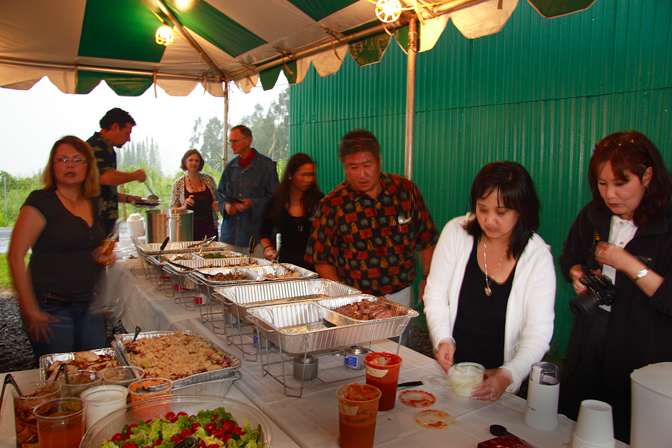
And then, everyone just pitched in to prepare the food. Chef Alan took charge of the seafood bouillabaisse, while others inside the green shack started preparing salads and other dishes. People just seemed to do whatever needed to be done.

Every once in a while someone would come up to Chef Alan with a spoonful of something for him to taste, and he would taste it and tell them to add this or add that.

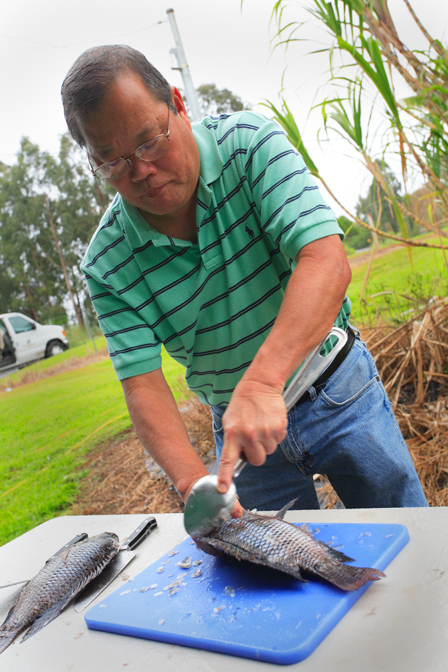
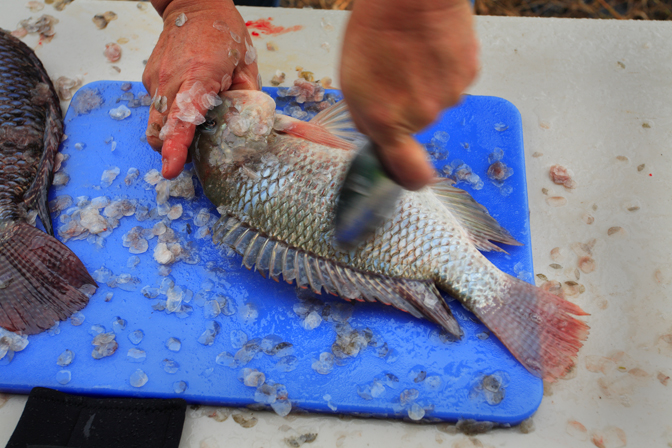
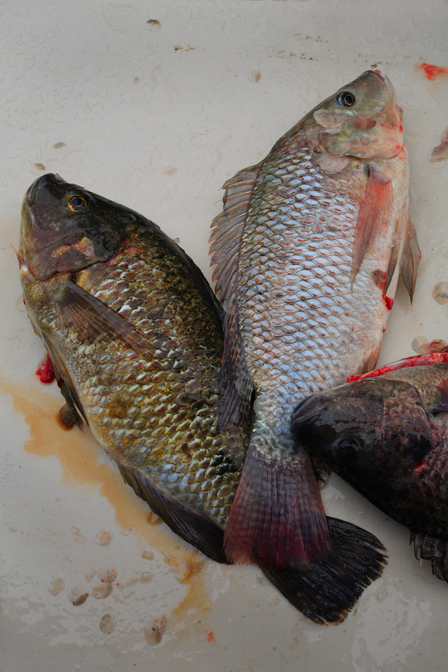
Outside, Conrad jumped in and started to scale the fish. Tilapia is a
very spiky fish, but Conrad did not even consider using the neoprene glove I had available. People just jumped in and backed him up.

IMG_451 copy

Conrad Nonaka – Director, Culinary of the Pacific

IMG_452 copy

IMG_454 copy

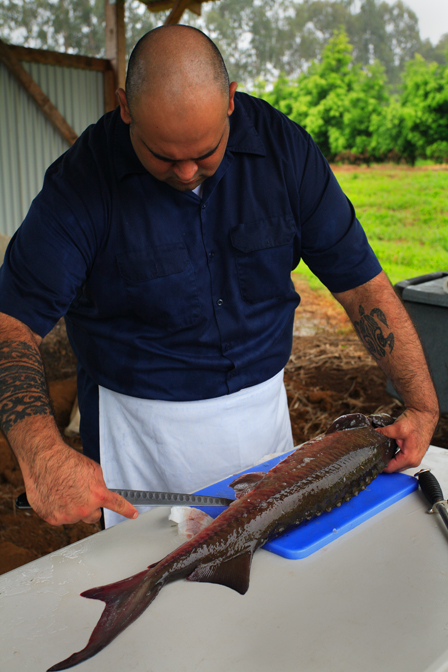
Kevin Hopkins donated a five-pound sturgeon, and Chef Marc from the Pineapple Room did the honors.

IMG_457 copy-1

Marc Urquidi

Then it was time to fire up the grills – one for steaks and another for fish. Conrad put two fish on the grill and told us something about leaving it for four minutes, and then he left to go help inside. When he came back out, instead of using a spatula he rocked the fish back and forth with his bare hands and flipped it that way.

IMG_472 copy

IMG_2912 copy

I was amazed.

Inside, they used what they had and improvised. It was amazing to see.

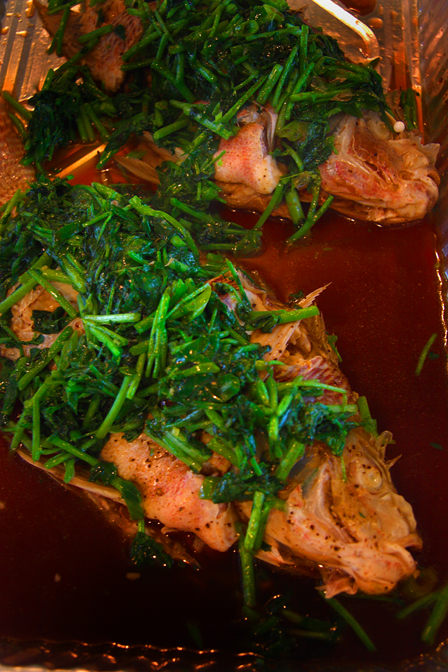
Then Chef Alan asked me to come and taste the spicy bouillabaisse. He said he was thickening it with the tilapia meat, while the sturgeon would hold its form and stay firm.

He told me to try the red ketchup made from my grape tomatoes. “Make a fist,” he said. “Try this.” And he put a spoonful of the ketchup on the back of my fist to taste.

Next, I tried the orange tomato ketchup and then the goat cheese ketchup. He said, “Try the namasu made from your Japanese cucumber.”

He said, “You can make all that.”

I thought, “We really do need to build a certified kitchen so we can do value added production.”

Dinner was served with matching wines. Some of the people attending were Bob and Janice Stanga; Michelle Galimba and Chris Manfredi from Ka‘u; Chef and Mrs. Allan  Okuda; Kevin and Dayday Hopkins; my sister Lei and her husband Dennis Vierra; my Mom Florence; June; my daughter Tracy, her husband Kimo, their daughter Kimberly and their son Kapono and his friend Matt; as well as Chef Alan’s staff and friends.

IMG_2921 copy

Left to right: Tracy Pa, Chris Manfredi, Janice Stanga, Ellis Hester, Laurene Oda, Chef Alan Wong, Kathy Kawashige, Leigh Ito

IMG_2925 copy

Left to right: Dennis Vierra, Leilani Vierra, Grandma Ha, Kimberly Pa

IMG_2927 copy

Ua and Michelle Galimba; Roy Tanaka; Kathy Kawashige

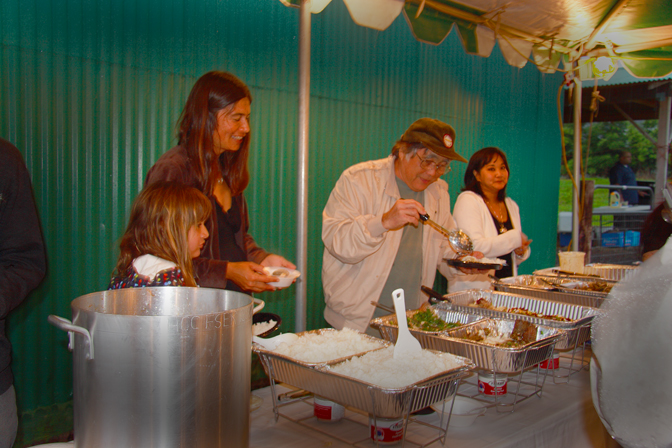
We sat there and ate and ate. We all had a great time chatting and talking story. Chef Alan Wong believes in sticking together through thick and thin. This was the fourth time he has done a cookout on our farm, and this time was very special. It was a great way to end a wonderful day of camaraderie.

Thank You, Chef Alan and crew!