All posts by Richard Ha

How Geothermal = Food Security

Our “food security” is about farmers here in Hawai‘i farming. We know that Hawai‘i imports more than 80 percent of its food, and has only a seven-day supply of food on island at any one time.

Being more food secure means growing much more of our food here. How do we make that happen?

If farmers make money, the farmers will farm.

The cost of electricity cost is directly related to farmers farming or not. Farmers are price takers, not price makers. So as electricity costs go up for consumers, wholesalers and retailers, farmers’ prices necessarily go down and so do their profits.

We all know that world oil supplies will be declining and that petroleum prices are likely to be very high in the next few years, making fossil fuel-produced electricity rise very high in price.

Do you know what the most energy-intensive part is regarding getting our food? Surprisingly, it’s not the “on farm” energy usage. It’s the energy needed for the stop-and-go transportation of getting food to your home,  the cost of refrigeration during that journey and the cost to refrigerate your food once it’s at your home.

So what will help with food security?  Cheap electricity. On the Big Island, that means geothermal electricity.

Produced locally, it is the cheapest form of electricity here. For more than 15 years it has operated without subsidies, and it even earns money for the state of Hawai‘i—currently more than $3 million a year.

Cheap electricity will lower wholesaler and retailer operating costs and therefore leave more discretionary income in the pockets of consumers, and they will be able to buy local produce. It will result in less pressure on farmers to lower their prices beyond what is reasonable, and they will make decent livings and continue to farm. And we will have increased food security out here in the middle of the ocean.

If farmers make money, the farmers will farm!

Hawaiian Common(s) Sense

I was interested in this energybulletin.net article.

Elinor Ostrom Wins Nobel for Common(s) Sense
by Fran Korten

Fran: Many people associate “the commons” with Garrett Hardin’s famous essay, “The Tragedy of the Commons.” He says that if, for example, you have a pasture that everyone in a village has access to, then each person will put as many cows on that land as he can to maximize his own benefit, and pretty soon the pasture will be overgrazed and become worthless. What’s the difference between your perspective and Hardin’s?

Elinor: Well, I don’t see the human as hopeless. There’s a general tendency to presume people just act for short-term profit. But anyone who knows about small-town businesses and how people in a community relate to one another realizes that many of those decisions are not just for profit and that humans do try to organize and solve problems.
If you are in a fishery or have a pasture and you know your family’s long-term benefit is that you don’t destroy it, and if you can talk with the other people who use that resource, then you may well figure out rules that fit that local setting and organize to enforce them…. Read more

This is the Hawaiian way, and it’s the way we are trying to go. Common(s) sense is appropriate.

The world has changed in the face of Peak Oil. So that we will be relevant years from now, we are changing. I am turning our farm, Hamakua Springs Country Farms at Pepe‘ekeo, and the resources available to us – people, water, land and hydro power – into a commons of sorts.

We are bringing more and more farmers to work together with us for the common good.

What Works, Works!

In a complex world of finite resources and inertia of technological progress, sometimes we need to stop and take a breath and appreciate the simple things that work.

Take the garden hoe — it is hard to imagine technology improving upon its simple function.

Geothermal is one of those things that work.

Here’s an article about finite resources, and some of the implications:

Western governments may not realise it yet, but consumerism as we know it is doomed and resource war with China inevitable, the world’s biggest fund managers were told yesterday.

The unsettling message, which focuses on the potentially destabilising shortfall of the rare “technology metals” used in everything from mobile phones to guided missiles, was issued in Tokyo yesterday at the close of one of Asia’s largest annual investment forums.

Jack Lifton, an expert in rare earth metals, said that many of the green ambitions of governments around the world — particularly ones involving wind farms and other high-tech responses to climate change — would be thwarted by upstream supply issues.

Particularly troubling, he said, is an impending inflection point that may arrive within the next couple of years when China becomes a net importer of rare earth ores.”

Where We Live: A Pacific View’s Slideshow of the Big Island

Richard ran across this slide show, by Tom of the blog A Pacific View, on Puna Web. The photos were so spectacular, Richard told me, he had to stop and send the link to June before he was even done viewing them.

"It's easy to forget what a special place the Big Island is," he told me. "Even Mauna Kea!" But you only have to look at these photos to appreciate where we live all over again.

Click to see the slide show:

A pacific view

– posted by Leslie Lang

Nominated to the Board of Agriculture

Richard Ha
Re: Nomination to the Board of Agriculture

Dear Mr. Ha:

Congratulations on being nominated by Governor Linda Lingle to the Board of Agriculture. To assist the Senate with its confirmation process, I am requesting that the following information be submitted to my office:

A written statement that addresses the following questions:

Why do you wish to be a member of the Board of Agriculture?

I am very interested in food security for Hawaii and I hope to be able to make a contribution toward that goal.

How do you perceive the role and responsibilities of a member of the Board of Agriculture?

I see the role of a member of the Board of Agriculture as making responsible decisions on agriculture matters, taking a broad societal view of things. I specifically see the role as an opportunity to help make Hawaii more food secure.

I am an advocate for all kinds of farmers–large and small, organic and conventional, on all islands, all elevations, wet side and dry. Although we may be considered large farmers, I think it is very dangerous for food security to depend on a few very large farms.

Given your understanding of the role and responsibilities of a member of the Board of Agriculture, why do you believe that you are qualified for the position? Please include a brief statement of your skills, expertise, or knowledge that would aid in your decision-making ability as a member of the Board of Agriculture.

After getting a degree in accounting at the UH, I started growing bananas nearly 30 years ago. We had no money so we traded chicken manure for banana pulapula. Eventually, we became the largest banana grower in the state and bought 600 acres of fee simple land. The things that failed along the way could fill a museum. This experience was very valuable. I have a very high respect for wise old small farmers. And, like them, I try not to talk too much.

What do you hope to accomplish during your term of service?

I hope to bring awareness that Food Security involves farmers farming. And that if farmers make money, then farmers will farm. This is not complicated.

Name three qualities that best describe you and that would make you stand out. How would these qualities benefit the Board of Agriculture?

  1. I see myself as a bridge between the “shiny shoe” folks and the “rubbah slippah” folks.
  2. I have the ability to see a desired goal in the future and can stay focused on that goal.
  3. There are a thousand reasons why no can. I try to look for the one reason why CAN!! Keep it simple, keep it focused and no give up.

Name one previous experience that would make you stand out. How would this benefit the Board of Agriculture?

I helped with the Thirty Meter Telescope decision to site the telescope on Mauna Kea. I was able to talk to folks on all sides of the issue. I learned from Patrick Kahawaiola‘a that the process was most important. I thought that, that being the case, then everyone contributing to the process made for a better final product. That means we need to aloha everyone who contributed input, whether or not we agree with the position.

Two or three years ago, I told Kumu Lehua Veincent, Principal of Keaukaha Elementary School, that the Thirty Meter Telescopes wanted to come to the Big Island. I suggested that as a start we ask them for a good faith offer. I told Kumu, “How about we ask them for five full ride scholarships for Keaukaha kids, to the best schools in the nation?” Kumu looked up at me and simply said: “And what about the rest?” I could feel my ears getting hot. I felt pretty stupid. Indeed, what about the rest.

These two lessons, “the process” and “what about the rest?” are principles I hold very close to me. And I think that this approach will benefit the Board of Agriculture.

Can you foresee any possible conflicts of interests that could arise during your service on the Board of Agriculture? How would you overcome any possible conflicts of interest?

I do not see conflicts of interest at this point. However, I will quickly recuse myself if I do.

Your prompt response in providing the above information will ensure that the Senate confirmation process can proceed in a timely manner. Thank you.

Sincerely,

Senator Clayton Hee
Chair, Senate Committee on Water, Land, Agriculture, and Hawaiian Affairs

Peak Oil’s Real Symptoms

Peakoil


Gail Tverberg, who I’ve written about here before, has a good article at www.ngoilgas.com about “the real symptoms of Peak Oil.” It starts like this:

Most people expect high prices to be an indication of “Peak Oil”, but are we missing the real symptoms?
 Our resident expert and one of the editors of The Oil Drum, Gail Tverberg takes a look at what she believes to be the more important symptoms of the arrival of peak oil.

If I were to ask 10 random people what they would expect to be a sign of the arrival of “Peak Oil,” I would expect all 10 to say “high oil prices.”

Let me tell you what I think the symptoms of the arrival of peak oil are:

1. Higher default rates on loans

2. Recession

Furthermore, I expect that as the supply of oil declines over time, these symptoms will get worse and worse – even though people may call the cause of the decline in oil use “Peak Demand” rather than “Peak Supply.”

Let’s think about what happens when oil prices try to increase. From the perspective of a consumer who is already spending pretty much all of his income, it seems to me the result is something like this…

Read more

The Hawaii Clean Energy Initiative Steering Committee and Me

Because of my agriculture background and my interest in energy matters, I was invited to become a member of the Hawaii Clean Energy Initiative Steering Committee. I am hopeful that this committee will be able to make significant governmental recommendations.

I believe in implementing proven technology. I believe in Research and Development. But I also realize that “hoping” is not an energy policy.

I believe in implementing processes that result in the lowest cost to rate payers. To the extent that this results in a competitive advantage to Hawai‘i, it will encourage businesses to flourish. On the Big Island, geothermal is clearly the low cost solution for the electrical utility. We must find ways to make it happen.  Not, no can. CAN!

The Hawaii Clean Energy Initiative (HCEI) was launched on January 28, 2008 with the signing of a Memorandum of Understanding.

The goal: To put Hawai‘i on a path to supply 70 percent of its energy needs with clean energy by 2030.

“…The Department of Energy will help Hawaii lead America in utilizing clean, renewable energy technologies.” – Governor Lingle

“Hawaii’s success will serve as an integrated model and demonstration test bed for the United States and other island communities globally…” – Assistant Secretary Karsner

Why We Need Geothermal

Geothermal is the cheapest of the “base power” alternatives, and we must choose the cheapest alternative first. It’s the people on the lowest rungs of the economic ladder who will have their lights turned off first. We must take care of the most defenseless among us. If they are safe, we are all safe.

Geothermal is also the only alternative that is a resource for the native Hawaiian community.

Why we need geothermal:

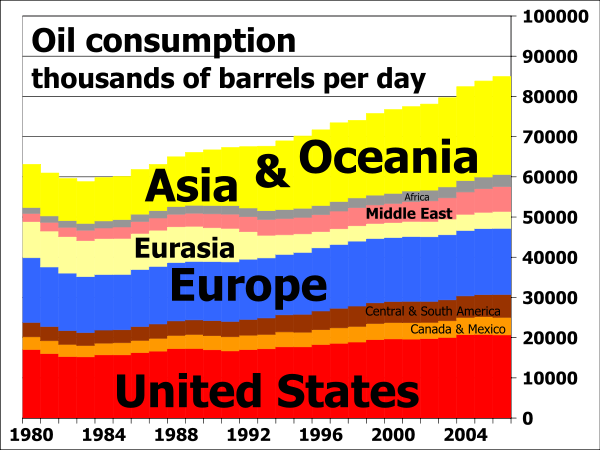
One of the most important, yet mostly unnoticed, things happening in the field of energy is that production in world oil fields is declining due to natural causes. Every year we have 4 million fewer barrels of oil than we had the year before, and this needs to be made up by new discoveries.

Saudi Arabia produces approximately 10 million barrels of oil annually. That means that in order to keep the status quo, we need to find the equivalent of another Saudi Arabia every 2-½ years. This is very unlikely.

Here in Hawai‘i, we don’t have time to waste – we must implement economically feasible, proven technology wherever possible. We must do the right things for our future generations.

The technologies:

Because of their sporadic natures, both solar and wind are not likely to supply more than 15 percent of the electric utilities’ total needs.

What about biofuels? Where can they fit? Most are not economically feasible at this time. And its Energy Return on Energy Invested is very low—less than 2 to 1. Robert Rapier, a very well-respected expert in the field, has doubts about much of its technology. I agree with his assessment.

Some say we are discovering more than enough oil, pointing to Iraq as a potential supplier of 12 million barrels per day, if everything goes according to schedule. This, though, would merely delay the “peak” by three years.

What about the Canadian tar sands? They are producing only 300,000 barrels per day now. Even if that doubled, it would be relatively insignificant.

How about the deep ocean off Brazil? If it hits full production in six years – well, oil will have declined by 24 million barrels per day by then. It is unlikely that field will have twice the production of Saudi Arabia.

Because our current economic recession has caused demand to decrease, we have not been paying much attention to oil supplies and this is why we don’t notice too much that’s unusual. But more and more people are starting to notice the seriousness of the situation and they are starting to speak up.

Several very well-respected people in the world oil industry express their concern in this short video clip. They are: Jeremy Gilbert, former chief petroleum engineer for British Petroleum; Sadad al-Husseini, former VP of Production and Exploration Saudi Aramco; and Chris Skebrowski, Editor, Petroleum Review and Principal, Peak Oil Consulting. They all say we have a very serious oil supply problem.

Jeff Rubin is the former Chief Economist of CIBC World Markets and the author of Why Your World Is About To Get A Whole Lot Smaller. He built his reputation as one of Canada’s top economists based on a number of successful predictions, including the housing bust of the early ‘90s and the rise in oil prices.

In his recent book, Mr. Rubin predicts $225 per barrel oil by 2012 and with it, the end of globalization, a movement towards local sourcing, and a need for massive scaling up of energy efficiency. In this video, Jeff Rubin explains lots of things one would not normally know. There is also a written transcription of the video, if you’d rather read it. Here’s how it starts:

You know, the world’s not running out of oil. There’s all kinds of oil left in all kinds of places. There’s 165 billion barrels of the stuff in the Alberta tar sands. And if we run out of that, there’s tar sands in the Orinoco. And there’s oil 5 to 10 miles below the ocean floor, in the Gulf of Mexico, off the coast of Brazil. And if we run out of that, there’s oil in shales, in places like Wyoming and Colorado. So it’s not about running out of oil. We’re never going to run out of oil.

But what the world is going to run out of, indeed, what the world has already ran out of, is the oil that you can afford to burn. Not just burn in your cars, and 60 percent of all the oil that we consume is consumed in the form of either gasoline or diesel fuel to power those cars. But maybe, more fundamentally, the ways that we burn oil in a million different degrees to which we’re not aware of. But most fundamentally, the way we burn oil to run a global economy. And by a global economy, I mean where we produce something at one end of the world, ostensibly to take advantage of cheap labor costs, to be sold at the other end of the world.

Because, while that model of the economy is based on wage arbitrage, it assumes, implicitly and critically, that the cost of moving goods and parts around the world is trivial or marginal at best. But no matter how we move goods around the world, whether we move them by air, whether we move them by boat, whether we move them by rail, or by truck, we are burning oil. And soon, we will no longer be able to do that…. (read more)

Geothermal is proven technology. It’s also the lowest cost “base power” source, meaning it will put more discretionary income into the hands of consumers. Businesses will flourish and people will have jobs to raise their families.

As a bonus, “off peak” geothermal power can be used to make ammonia, which can be used as a source of nitrogen fertilizer. It can also be used as a transportation fuel for gas and diesel engines, and can be moved and stored with the same infrastructure as propane.

Remember: geothermal is the cheapest answer, and it is the least well-off among us whose electricity will be shut off first when prices skyrocket beyond what we can now imagine.
Organic Farming Tunnel

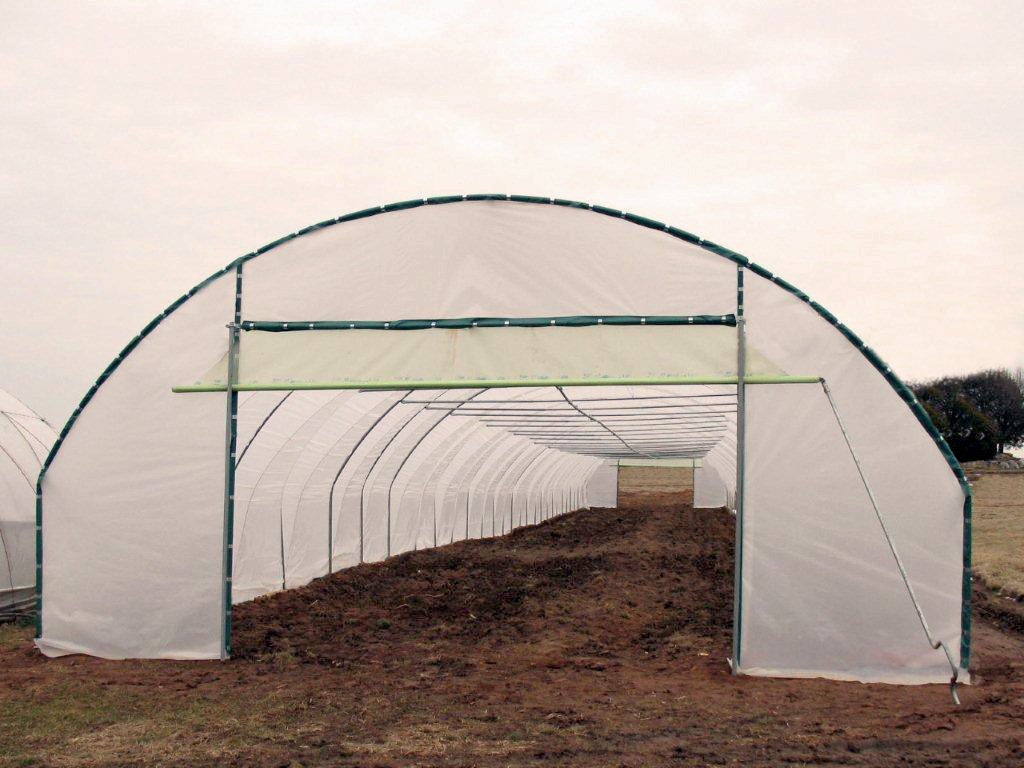
This is a simple, stand-alone plastic tunnel that people can use to start into covered, organic farming. It’s called a Super Solo tunnel.

SuperSolo
The tunnel is 25’ x 200’ x approximately 11’ tall at the top of the hoop. The roller door is 12’ wide. The poly is 6 mil, hi UV Luminance and the door poly is 12 mil poly.

It is stand-alone, and with the addition of a $300 trellis kit it is strong enough to support tomatoes, cucumbers and more.

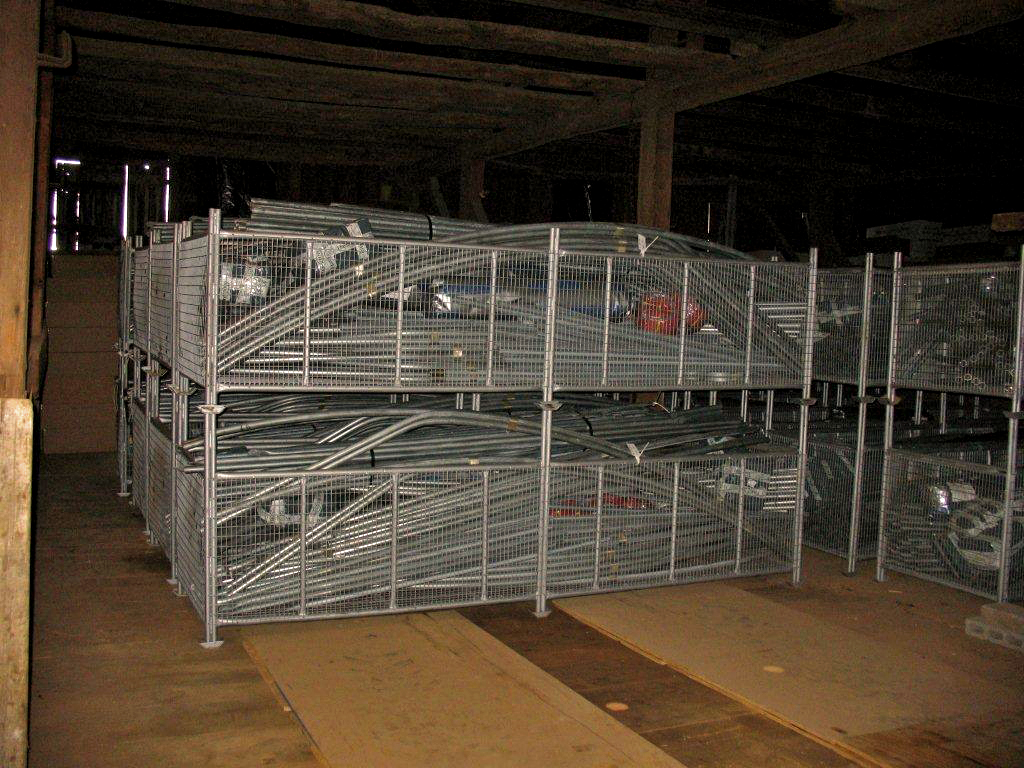
Kits are shipped in a basket with pre-bent, three-piece hoops that the grower bolts together; there’s no on-site bending or construction training required.

Stillages

Because of the need to grow cover crops, a Jamaican grower suggested building multiple Super Solo tunnels placed 25′ apart and growing cover crops between them. Then, after two years of building up the soil between the tunnels, you can move the tunnels over 25 feet to cover the “new” soil (using the anchors already in the ground) and grow cover crops on the “old” soil.

The only extra hardware needed to move all the tunnels one “space” to the side would be an extra row of anchors alongside the last Super Solo in the row. After two more years, the tunnels would be moved back to their original position.

We believe in this product and are regional distributors of it.

Looking Back at Looking Forward

Back in January 2008, before most people even realized that trouble was brewing with our economy, Gail Tverberg wrote how the financial system was in for a serious battering. Because she worked as an insurance actuary, she was in a unique position to understand the intertwining and dependencies of financial products and institutions.

Here is a link to a talk she gave in October 2009, which updates her view of what she feels will influence the world’s economies.

I ask myself: Why did we not have more warning? Is it possible we were not looking at the right things?

Being a farmer, I tend to rely on simple physical processes as a basis for explaining things. The simpler, the better. “Energy Return on Investment” is much easier for me to understand than graphs and charts. It has predictive value and it seems like common sense –- i.e., there is no such thing as a perpetual motion machine. Water does not run up hill. Things cool off by themselves. Etc.

I do think that we can still do meaningful things for our future, providing we don’t waste time. For us here on the Big Island, it is clear that we need to develop geothermal sooner, rather than later.